


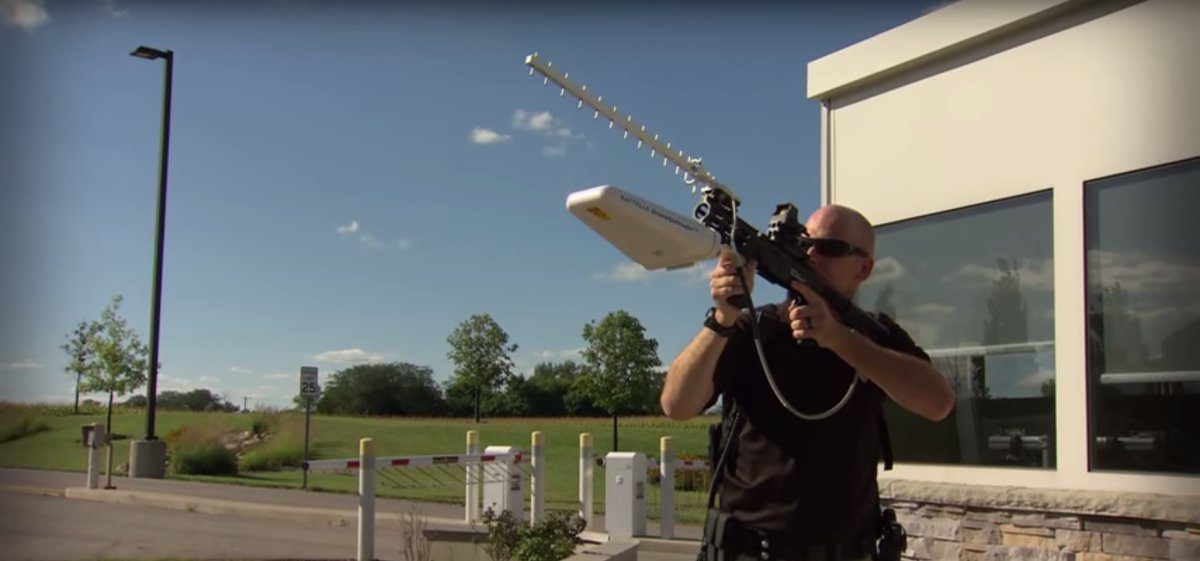
New data highlights rising investment in jamming, laser, and microwave systems as governments and industry seek scalable drone defense solutions
Global investment in counter-drone technology is accelerating, as new data shows a sharp increase in patent activity tied to the growing use of small unmanned aircraft.
According to research from intellectual property law firm Mathys & Squire, global patent applications for anti-drone technologies rose by 27% in the year ending March 31, 2025. A total of 126 applications were filed, up from 99 the previous year.
China accounted for the majority of those filings, with 82 applications. The United States recorded 22, while South Korea ranked third. The figures reflect a growing focus on systems designed to detect, disrupt, or disable drones.
Drone Threats Drive Demand for New Solutions
The rise in patent activity comes as drones play an expanding role in both military and civilian environments.
In Ukraine, small drones have become a central part of battlefield operations. Their relatively low cost and wide availability have changed how airspace threats are managed. Security planners are now seeking more cost-effective ways to counter those threats.
At the same time, incidents involving unauthorized drones have disrupted civilian infrastructure. Airports across Europe have faced temporary shutdowns due to drone sightings, highlighting the vulnerability of critical transport hubs. Reports have documented disruptions at major airports, including Munich.
These developments have increased demand for counter-drone systems that can respond quickly and operate at scale.
Shift Toward Non-Kinetic Countermeasures
The patent data suggests that innovation is moving away from traditional interception methods and toward electronic and directed-energy approaches.
Signal interference and jamming technologies accounted for the largest share of new filings, with 49 patents. These systems aim to disrupt communication links between drones and their operators or interfere with navigation signals.
Laser-related inventions reached 39 patents, while microwave systems accounted for 24. These technologies fall under the category of directed energy and are designed to disable drones without physical impact.
This shift reflects a broader industry trend. Using expensive interceptor systems to stop low-cost drones is often not practical. As a result, developers are focusing on solutions that can engage multiple targets at lower cost per use.
Companies such as Epirus are already developing high-power microwave systems designed to counter drone swarms, illustrating how these concepts are moving from research into real-world applications.
China’s Patent Lead Signals Strong R&D Activity
China’s lead in patent filings highlights its growing investment in counter-drone technologies. With 82 of the 126 applications, the country accounted for a significant share of global activity during the period studied.
However, patent filings reflect research and development efforts, not necessarily deployed systems or market share. Some counter-drone technologies, particularly those tied to defense programs, may not be publicly patented. Companies such as Dedrone, Anduril Industries, and DroneShield have active deployments in commercial and government markets, particularly in the United States and allied countries.
Expanding Use Cases Beyond the Battlefield
The demand for counter-drone solutions is no longer limited to military use.
Systems are increasingly being developed for:
- Airports
- Energy infrastructure
- Ports
- Prisons
- Large public events
These environments require reliable and scalable ways to detect and mitigate drone activity without causing disruption to surrounding systems.
The growing number of patent filings reflects this broader shift toward commercial and infrastructure protection use cases.
Regulatory and Deployment Landscape Is Evolving
In the United States, the legal framework for counter-drone operations is evolving in response to growing security demands.
Historically, only a small number of federal agencies, including the U.S. Department of Homeland Security, U.S. Department of Justice, and U.S. Department of Defense, had clear authority to detect and mitigate drone threats.
That framework began to change with the passage of the Safer Skies Act, included in the Fiscal Year 2026 National Defense Authorization Act. The legislation expands counter-UAS authority beyond federal agencies, allowing state, local, tribal, and territorial law enforcement to take action against credible drone threats after receiving appropriate training and certification.
At the same time, the Federal Bureau of Investigation is expanding its role in preparing non-federal partners. Through counter-UAS training programs, the FBI is training state and local law enforcement personnel and prioritizing regions that will host major events, including the 2026 FIFA World Cup.
These efforts are designed to close long-standing capability gaps, where local agencies were responsible for security but lacked the legal authority or technical training to respond to drone threats.
Taken together, new legislation and expanded training programs signal a shift toward a more distributed counter-UAS model in the United States, where responsibility is shared across federal and local levels.
A Growing Global Technology Race
The rise in patent filings points to a broader shift in how governments and industry are approaching airspace security.
“Drones have shifted from being a niche concern to a mainstream security challenge and the rise in patent filings reflects that change,” said Andrew White, Partner at Mathys & Squire.
He added: “Laser and microwave systems are gaining traction in the counter-drone market and this is likely just the beginning of a broader shift in how airspace threats are countered.”
Taken together, the data suggests that counter-drone technology is entering a new phase. Innovation is accelerating, use cases are expanding, and the industry is moving toward more scalable and cost-effective solutions.
Read more:

Miriam McNabb is the Editor-in-Chief of DRONELIFE and CEO of JobForDrones, a professional drone services marketplace, and a fascinated observer of the emerging drone industry and the regulatory environment for drones. Miriam has penned over 3,000 articles focused on the commercial drone space and is an international speaker and recognized figure in the industry. Miriam has a degree from the University of Chicago and over 20 years of experience in high tech sales and marketing for new technologies.
For drone industry consulting or writing, Email Miriam.
TWITTER:@spaldingbarker
Subscribe to DroneLife here.

