


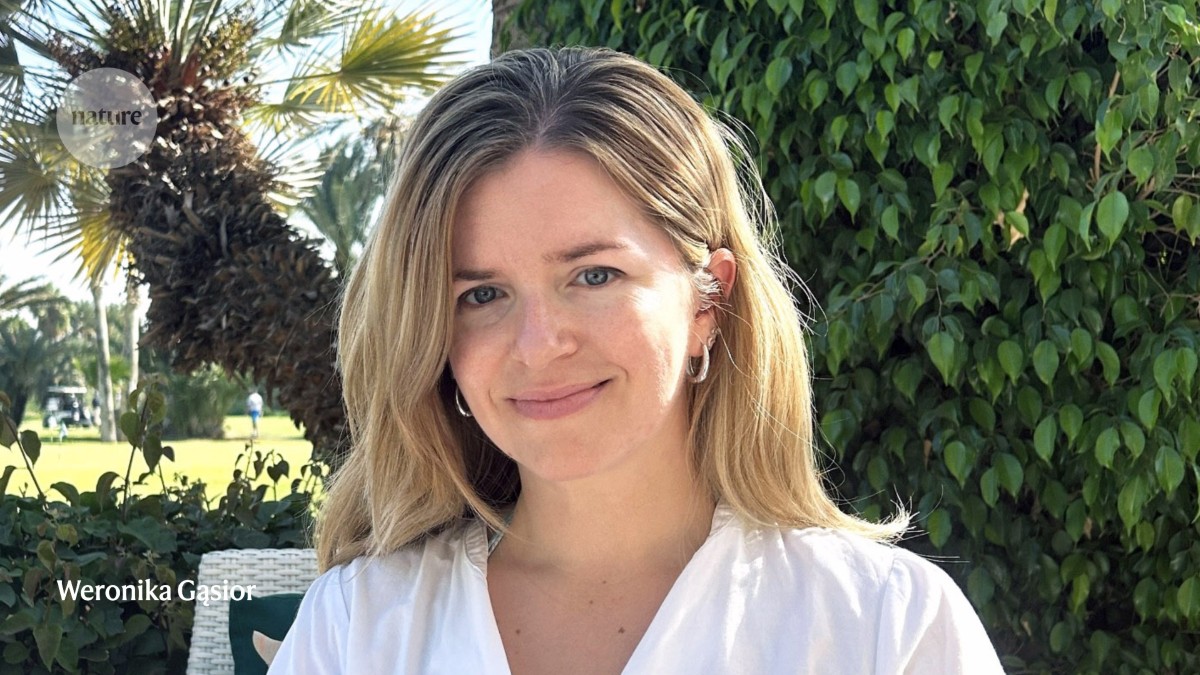

Agnieszka Olszewska-GuizzoCredit: Weronika Gąsior
Interest is growing in designing urban spaces that support, rather than harm, mental well-being. Agnieszka Olszewska-Guizzo, a landscape architect and neuroscientist at NeuroLandscape, a non-profit research group in Warsaw, spoke to Nature about the emerging field of neurourbanism, and what it means to take a more scientific approach to urban design.
What is neurourbanism?
Neurourbanism is at the intersection of landscape architecture, neuroscience, environmental psychology and urban planning. It has arisen in the past decade from the need to make cities more mentally healthy places to live. According to a meta-analysis published in 2010 (J. Peen et al. Acta Psychiatr. Scand. 121, 84–93; 2010), people who live in a city have a roughly 40% higher risk of mental illness than people living in non-urban settings. That’s huge. And there are more people living in urban spaces than ever. Neurourbanism emerged as a way to measure the impact of the built environment in a more systematic and objective way than using questionnaires and surveys.

Nature Outlook: Cities
Is it just about creating more green spaces?
Urban nature does promote health, but I wasn’t happy with just greening everything. Only some characteristics of green spaces benefit people, so I wanted to discover what particular scenes induce the most positive response in most people. What combination of features works best? We’re trying to diagnose spaces and work out how to redesign them to better serve communities.
How do you characterize spaces?
One way is based on the content of landscapes. I developed a ‘contemplative landscape model’ (CLM) that breaks down landscape views into seven features that our brains register and react to. One is how deep the view is — deeper views are beneficial, but often lacking in cities. Another is how the ground and sky interact — a more diverse skyline is better. Other beneficial elements include streams or waterfalls, seasonality of vegetation, a warm colour palette and visible movement of shade.
Our brains cannot isolate one element and stop perceiving the rest, and benefits are fragile and easily erased by other factors, such as overcrowding. So to create a reliable measure, we need to consider everything at once. These features’ aggregated impact on the brain can be captured in a ‘CLM score’.
How do you measure responses?
We have a lot of tools to bring neuroscience experiments outside the lab. Heart rate and other stress measures can be collected using wearable technologies. We’re also trying to popularize taking electroencephalogram (EEG) technology out into the wild.
Our approach is to expose people to two spaces, and manipulate just one aspect, such as depth of view, colour or biodiversity. Then we compare their responses. We look for patterns of brain activity related to relaxation and positive emotion, such as frontal alpha asymmetry (differences in alpha-band brainwave activity between the left and right frontal lobes). We’re also looking at bonding and social cohesion of communities, in which we measure brain synchrony between participants.

A study participant has their brain activity recorded in a public therapeutic garden in Singapore.Credit: Zachariah Ow
What have you found?
The core finding is that not all nature exposure is equally beneficial. To promote health, landscapes need a higher CLM score than that in typical urban green spaces. For instance, a neighbourhood park surrounded by residential blocks, with manicured vegetation, a playground and clean, organized space scored low, with no improvement in mood.
It can surprise some people, but Euclidean geometry — straight lines and squares, for example, that are the basis for most of our architecture — causes mental strain. Natural asymmetry and fractal geometries are easier for our brains to process.
Have your findings been implemented anywhere yet?
We’ve run projects with Singapore’s National Parks Board. It has to be very intentional about its parks and gardens, because space in Singapore is so limited. It’s rolling out a network of public therapeutic gardens to promote residents’ health that were informed by our research findings.
I’ve also worked alongside the National University of Singapore’s psychiatry department, evaluating green spaces and their impact on people, including those with clinical depression (A. Olszewska-Guizzo et al. Front. Psychiatry 13, 757056; 2022). People with depression had favourable frontal alpha asymmetry in the therapeutic garden, but not in another green or urban space. We also saw lower frontal blood flow, suggesting more relaxation. These findings were supported by mood self-reports.
What are you planning next?
We’re developing a tool for evaluating mental health in cities, called the Neurourbanism Assessment index. It integrates neuroscience measurements with multiple measures related to well-being, such as noise and air pollution, and combines them into a single, simple value that we intend to be useful to policymakers.
This work is part of a broader European Union-funded project to improve urban spaces with nature-based solutions, called GreenInCities. So far, we’ve completed data collection in two cities that will be partly redesigned as part of the project: Helsinki in Finland and Nova Gorica in Slovenia. It’s a huge opportunity, because we have a chance to go back to the same neighbourhoods after construction is done and invite the same participants to retake the measurements. We’ll almost have a clinical trial, with data from before and after the intervention.
Once we have enough data, it will be possible to build a machine-learning model that predicts mental well-being based on environmental features, in many more cities. It will then be easier to adjust urban planning with community well-being in mind.

