


Jeff Bezos’ Blue Origin fired a rocket across the bow of Elon Musk’s SpaceX this week, announcing a brand-new satellite constellation called TeraWave that allegedly will deliver data speeds 6,000 times faster than Starlink will. That amazing improvement will come courtesy of two major departures from Starlink’s model. Where Starlink only operates in low-Earth orbit (LEO), TeraWave will operate both there and in the more distant medium-Earth orbit (MEO), which is where the fastest connections will be parked. Also, where Starlink wants to be a service for everybody, TeraWave will restrict its users to enterprise and government entities, meaning fewer demands on its bandwidth. This gives Blue Origin a specific market segment where it can outcompete the established SpaceX.
Specifically, Blue Origin announced that TeraWave will eventually put 5,280 satellites into LEO, communicating through RF with symmetrical upload/download speeds of 144 Gbps. That will be supplemented by a further 128 satellites in MEO, communicating through optical links with symmetrical upload/download speeds of 6 Tbps. Starlink, meanwhile, currently only has download speeds of a measly 400 Mbps, with even slower upload speeds; that will get bumped up to 1 Gbps download speeds with the next wave of satellites. Of course, Starlink’s main advantage is that it actually exists, and you can get it right now. Plus, you don’t have to be a data center to qualify as a customer. If you do happen to be a data center, you’ll still have to wait for TeraWave to be launched into space, currently scheduled for Q4 2027.
The commercial value of space
When new NASA Administrator Jared Isaacman talks about unleashing the orbital economy, this is what he’s talking about. TeraWave can theoretically solve terrestrial problems from space, such as ensuring remote facilities can have access to ultra-high speed data. Meanwhile, Google is considering putting the data centers into space directly, which would solve their threat to Earth’s natural resources. Constellations may be part of how we continue to advance into the 21st century in a sustainable way.
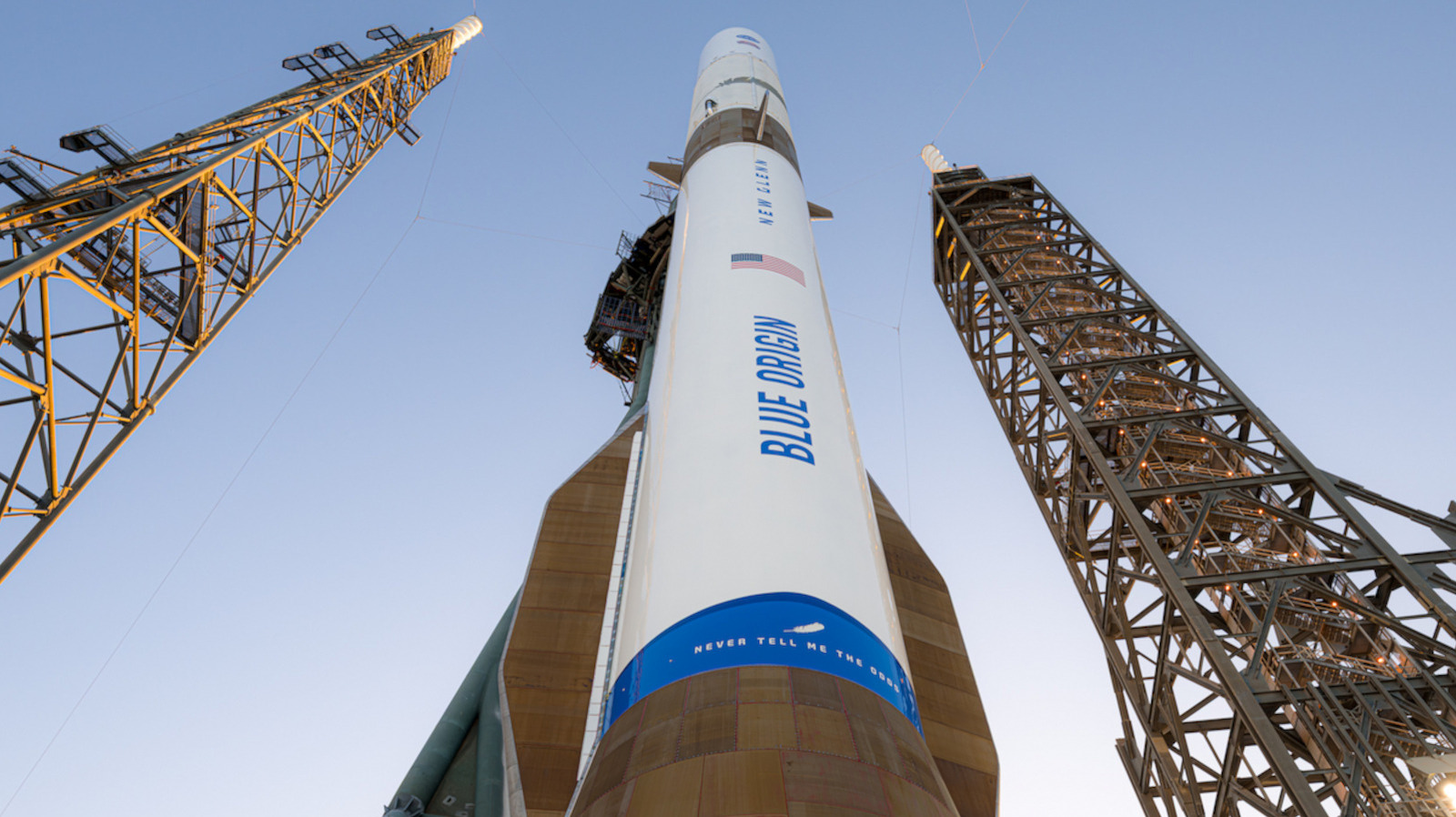
Part of that process is competition, which is something SpaceX has had precious little of for the last decade. But now that Blue Origin has successfully launched a payload into space and recaptured the New Glenn rocket’s booster, Earth’s various orbits are becoming commercial battlegrounds as well as geopolitical ones. In the best case scenario, this will lead to innovation, lower costs, and whole new opportunities for businesses and consumers alike. In the worst, an ever-more crowded LEO will lead to satellite crashes and debris falling on our heads. Worse than the worst-case would be if these satellites become critical to our society, and thus vulnerable targets in an international conflict. Whichever way you look at it, Earth’s future touches the sky.

