


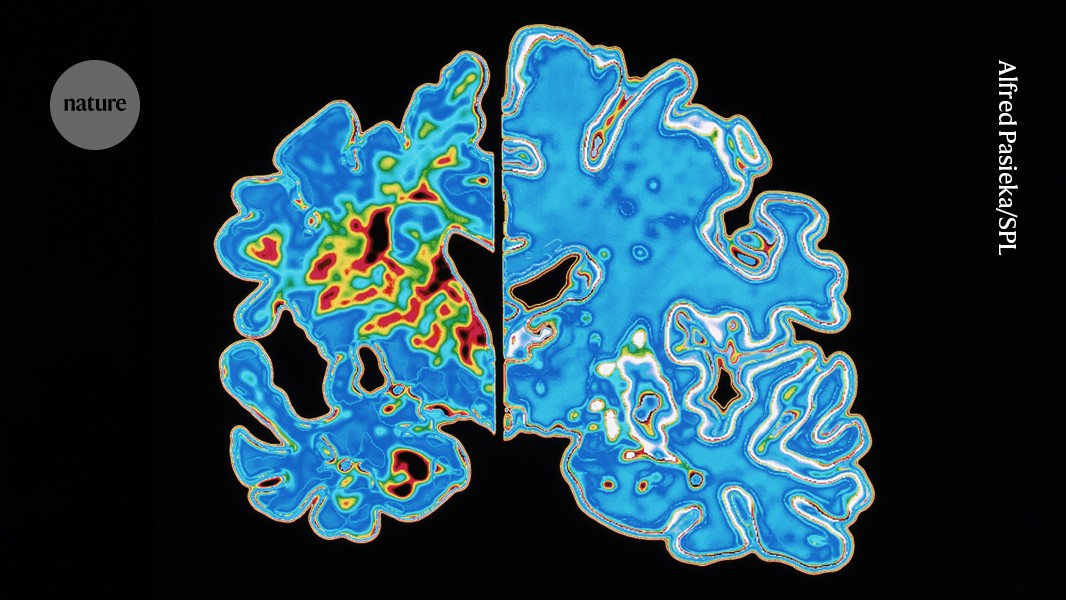

Abnormal tau proteins can form tangled fibres that accumulate in the brains of people with Alzheimer’s (slice at left). (Brain without Alzheimer’s shown at right.)Credit: Alfred Pasieka/Science Photo Library
A simple blood test might one day serve as a molecular ‘clock’ that predicts not only whether someone will develop Alzheimer’s disease — but when.
Blood tests are now approved for Alzheimer’s: how accurate are they?
The test, published in Nature Medicine on 19 February1, is based on an abnormal form of a protein called tau that circulates in the blood, and begins to accumulate in the brains of people with Alzheimer’s well before symptoms such as memory loss appear. If validated in larger studies, the test could provide a way to intervene in the neurodegenerative disease at an earlier stage, when treatment is more likely to be effective.
It could also provide a measurable biological marker, or ‘biomarker’, to make clinical trials of potential Alzheimer’s disease treatments easier and cheaper. “Predicting if and when patients are likely to develop Alzheimer’s symptoms could be useful in designing trials of interventions to prevent or delay symptom onset,” says Howard Fink, a physician at the Minneapolis Veterans Affairs Health Care System in Minnesota.
But until further studies are done, people should not take the test themselves, says Suzanne Schindler, a neurologist at Washington University School of Medicine in St. Louis, Missouri, and lead author of the study. (In-home blood tests for the form of tau that the study focuses on are available to consumers.) “At this point, we do not recommend that any cognitively unimpaired individuals have any Alzheimer’s disease biomarker test,” Schindler adds.
Tick tock, building a clock
Abnormal tau proteins can form tangled fibres that disrupt communication among the brain’s nerve cells. Brain-imaging tests that detect tangled tau are sometimes used when diagnosing Alzheimer’s, and preliminary studies suggest that such tests might also be able to predict when a person’s Alzheimer’s symptoms will appear2,3.

Blood tests could soon predict your risk of Alzheimer’s
But the imaging techniques are cumbersome and expensive, Schindler says. Meanwhile, researchers have been exploring simpler, blood-based tests that can also track tau.

