



Young people in Australia can no longer use popular social media platforms.Credit: David Gray/AFP via Getty
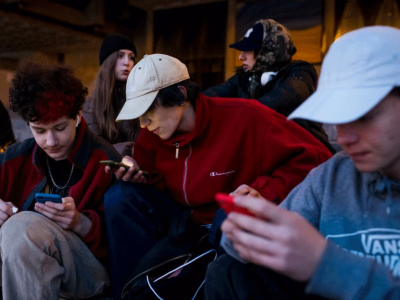
This week, Australia became the first country to ban children aged under 16 from using most social media platforms. Many teenagers in the country are furious about the policy, but for social scientists, it offers a natural experiment to study the effects of social media restrictions on young people.
Technology companies have had a year to come up with ways to stop teens using their platforms, including Facebook, X, Reddit, YouTube, Threads and Snapchat. From 10 December, companies must take reasonable steps to prevent Australian’s under 16 from creating or keeping accounts, or risk fines of up to Aus$49.5million (US$33 million).
Do smartphones and social media really harm teens’ mental health?
Other countries including France, Denmark and Spain have introduced social media restrictions for young people, or announced plans to, but no policy is as far reaching as Australia’s. The government there says social media is harming young people’s mental health, causing teens to lose sleep because of addictive design features, and exposing them to harmful content. Researchers say the evidence that social media causes harm is mixed. In some cases, young people’s access to their peers online is a vital support system, particularly those in minority groups and those living in remote areas.
Nature spoke with researchers who will be studying the effects of the social media ban.
New avenues of research
For Susan Sawyer, a clinician researcher specializing in adolescent health at the Murdoch Children’s Research Institute in Melbourne, Australia, the start of the social media ban this week meant entering the next phase of her research. Over the past two months, Sawyer and her colleagues interviewed 177 teenagers aged between 13 and 16 about their social media use, screentime, and mental health before the ban came into effect. She and her colleagues plan to survey the teens again in six months, to see whether the ban has affected their use of the platforms or their mental health. They’ll also be surveying the children’s parents about problematic internet and social media use.
Another research collaboration between The Kids Research Institute Australia, The University of Western Australia and Edith Cowan University, all in Perth, will also examine whether the new laws are presenting new parenting challenges, and what family conflicts have arisen as a result.
Amanda Third, a researcher from Western Sydney University, says the ban is an opportunity to collect data about the effect of policies that restrict young people’s access to the internet/social media. She is going to investigate how teenagers engage with technology, the internet, and their face-to-face interactions following the ban.
But she says it might be hard to tell whether any changes following the ban are a direct result of the policy or other policies designed to make the internet safer, such as new industry standards for technology companies to prevent exposing children to sexually explicit or violent content on the internet, which will start later this month. The social media ban could undercut some of the very well-thought-out efforts to positively impact children’s experiences online, she says. These measures are about keeping children on social media and ensuring they have positive experiences. “The ban is about booting them out.”
Zareh Ghazarian, a political scientist at Monash University who studies role of social media in young people’s political development, says online platforms can be an important way young people engage with politics. Teachers can discuss contemporary issues, political debates and policy issues that come up on social media, he says. Now that the ban is in place, he plans to interview teachers to find out how it is affecting students’ political knowledge, and what alternate platforms they are turning too. “Part of education is to be able to engage with issues and ideas that may not be covered in the classroom – and that was the benefit social media was bringing,” he says.

