


Animals
Animal procedures were conducted under a protocol approved by the Institutional Animal Care and Use Committee of Icahn School of Medicine at Mount Sinai (IPROTO202200000184). All of the mice were maintained on the C57BL/6J genetic background for at least three generations. Animals were housed in a specific-pathogen-free barrier facility under a 12 h–12 h light–dark cycle with ad libitum access to food and water. Ambient temperature was maintained at approximately 18–23 °C with relative humidity of 40–60%. Mice were group-housed (up to five per cage) in corn bedding-lined cages with standard pellet chow and water bottles and were acclimatized to the facility for at least 2 weeks before experimentation. All of the mice used in the study were young adults (aged <30 weeks), unless otherwise indicated.
Mouse strains were obtained from The Jackson Laboratory: C57BL/6J (JAX, 000664); Tg(Thy1-cre/ERT2-eYFP)HGfng (JAX, 012708, known as SLICK-H)54,55; B6.Cg-Tg(Nes-cre)1Kln/J (JAX, 003771, known as Nescre)56; Ahrtm3.1Bra/J (JAX, 006203, known as Ahrfl)57; and B6;129-Gt(ROSA)26Sortm5(CAG-Sun1/sfGFP)Nat/J (JAX, 021039, known as INTACT)58; and Arntfl/fl mice59 were provided by F. Gonzalez.
The following primers were used for genotyping by PCR using mouse tail DNA: Ahrfl/fl mice: F1: GTCACTCAGCATTACACTTTCTA, F2: CAGTGGGAATAAGGCAAGAGTGA, R1: GGTACAAGTGCACATGCCTGC. Expected band sizes: 106 bp for wild-type allele, 140 bp for the floxed allele and 180 bp for the excised floxed allele. Arntfl/fl mice: F1: TGCCAACATGTGCCACCATGT, R1: GTGAGGCAGATTTCTTCCATGCTC. 290 bp for the wild-type allele, 340 bp for the Arnt floxed allele. Nescre mice: F1: CCGCTTCCGCTGGGTCACTGT, R1: TGAGCAGCTGGTTCTGCTCCT, R2: ACCGGCAAACGGACAGAAGCA. 379 bp for the wild-type allele, 229 bp for the transgenic cre allele. Rosa26INTACT mice: F1: GCACTTGCTCTCCCAAAGTC, R1: CATAGTCTAACTCGCGACACTG, R2: GTTATGTAACGCGGAACTCC. 557 bp for wild-type allele, 300 bp for the knock-in allele. Thy1-creERT2 mice: F1: TCTGAGTGGCAAAGGACCTTAGG, R1: CGCTGAACTTGTGGCCGTTTACG, Int-F2: CAAATGTTGCTTGTCTGGTG, Int-R2: GTCAGTCGAGTGCACAGTTT. 200 bp for the wild-type allele, 300 bp for the transgenic cre allele.
Pharmacological treatments
To induce CreER-mediated cKOs, tamoxifen (Sigma-Aldrich, T5648) in corn oil (Sigma-Aldrich, C8267) was injected into adult mice i.p. (100 mg per kg) once daily for 5 days.
AhR agonists
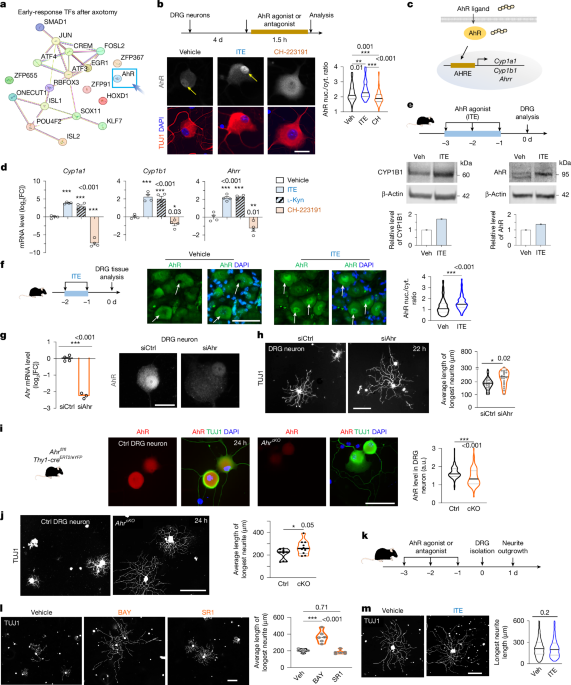
2-(1′H-indole-3′-carbonyl)-thiazole-4-carboxylic acid methyl ester (ITE; Tocris 1803), l-Kyn (Tocris 4393), 6-formylindolo[3,2-b]carbazole (FICZ; Tocris 5304) and norisoboldine (NOR; Selleckchem S9092) were reconstituted in DMSO. For in vitro studies, the applied concentrations are indicated in the main text. For in vivo experiments, ITE was diluted in 12.5% kolliphor/PBS (Sigma-Aldrich, C5135) to a final volume of 600 µl and injected i.p. at 10 mg per kg.
AhR antagonists
CH (Tocris, 3858), 6,2′,4′-trimethoxyflavone (TMF; Tocris, 3859), StemRegenin-1 (SR1; Selleckchem, S2858) and BAY (Selleckchem, S8995) were reconstituted in DMSO. For in vivo studies, TMF was further diluted in 12.5% kolliphor/PBS, and injected i.p. at 10 mg per kg (or, for SR1 and BAY60, 25 mg per kg) using a Hamilton fine syringe (Hamilton, 80920).
HIF1α translational inhibition
KC7F2 (Cayman, 14123), a small-molecule inhibitor targeting HIF1α through translational control was used previously61.
ISR inhibition
ISRIB (Sigma-Aldrich, 5.09584)62 was reconstituted in DMSO.
Antibiotics treatment
Broad-spectrum depletion of gut microorganisms was performed according to a published protocol with minor modifications63. In brief, wild-type C57BL/6J mice received drinking water containing ampicillin sodium (1 g l−1; Sigma-Aldrich, A9518), vancomycin hydrochloride (0.5 g l−1; Sigma-Aldrich, V2002), neomycin sulfate (1 g l−1; Sigma-Aldrich, N1876), metronidazole (1 g l−1; Sigma-Aldrich, M1547), sucrose (50 g l−1; Sigma-Aldrich, S0389) and acetic acid (4 mM) for 18 days before sciatic nerve crush. Solutions were provided ad libitum in light-protected bottles and replaced every third day.
Indole metabolite
3-Indolepropionic acid (IPA; Selleckchem S4809) was dissolved in DMSO. As vehicle controls for drug treatments, either DMSO or DMSO dissolved in 12.5% kolliphor/PBS were used as appropriate.
SNL
Male and female mice, aged 8–18 weeks unless otherwise specified, were anaesthetized by isoflurane inhalation (5% for induction, 2% for maintenance). A small skin incision was made at mid-thigh using a scalpel blade after skin preparation and disinfection. To clearly expose the sciatic nerve, the fascial space between biceps femoris and gluteus superficialis muscles was opened gently without causing haemorrhage. The nerve was then freed from surrounding connective tissue under microscope, avoiding shearing or traction forces. For sciatic nerve crush model, the nerve was crushed with an Ultra-fine Hemostat (Fine Science Tools, 13020-12) for 15 s at the third click. For the sciatic nerve transection model, the nerve was cut with a 3 mm Vannas Spring Scissor (Fine Science Tools, 15000-00). For sham surgery, the sciatic nerve was exposed as described but left intact. Mouse skin was closed using the Reflex 7 mm Wound Closure System (Braintree Scientific, RF7 CS) after surgery. Mice were left to recover in a warm cage. All of the surgical instruments were autoclaved before surgery and aseptic techniques were maintained throughout.
SCI model
T7–T9 laminectomy was performed on 8-week-old mice (wild-type C57BL/6 female). The mice were then clamped using two pairs of Adson forceps before using the Infinite Horizon Impactor at 60 kdyn of force with a 2 s dwell time to induce a moderate T8 contusion and compression as described previously64,65,66. The muscles and skin were closed with 5.0 sutures, and the skin was sealed with Dermabond. After surgery, mice recovered in a warmed cage and were then moved to a normally temperate cage and provided with food and water ad libitum. All of the animals received subcutaneous injections of 1 ml saline, 10 mg per kg Baytril, and 0.05 mg per kg buprenorphine daily for the first week after surgery. All surgeries were performed in the morning (08:00–12:00) to limit potential circadian influence. Bladders were expressed manually twice daily. All drug administrations were performed by individuals blinded to the experimental groups.
DRG isolation
DRG dissections were conducted under a Nikon SMZ645 stereomicroscope. Euthanized mice were positioned supine and secured to a dissection pad. The ventral thoracic and abdominal skin and viscera were removed to expose the ventral spinal column using surgical scissors (Fine Science Tools, 14054-13) with tissue forceps (Fine Science Tools, 11021-12) for support. Ventral paraspinal muscles were cleared using spring scissors (Fine Science Tools, 15751-11) to visualize the lumbosacral nerve plexus. To expose the lumbosacral DRGs, ventral vertebral elements were removed using the same spring scissors, aided by octagon forceps (Fine Science Tools, 11042-08), while avoiding nerve transection. L4–L6 DRGs were then isolated by gently elevating the ganglion with Dumont #3 forceps (World Precision Instruments, 50037) and severing connecting nerves with Vannas spring scissors (Fine Science Tools, 15000-00).
Primary DRG neuron culture
Adult DRGs from adult C57BL/6J mice were dissected and placed into ice-cold DMEM/F12 (Gibco, 11330057). DRGs were washed three times with ice-cold calcium-free and magnesium-free HBSS (Gibco, 14175095) including 10 mM HEPES (Gibco, 15630106) before incubating in 0.3% collagenase I (Worthington, LS004196) for 90 min at 37 °C. DRGs were then washed three times with HBSS buffer with HEPES at room temperature, followed by additional digestion in 0.25% trypsin-EDTA (Gibco, 25200072) containing 50 μg ml−1 DNase I (Worthington, LK003172) for 30 min at 37 °C. Trypsinization was stopped with warm DMEM medium (Gibco, 10569044) containing 10% FBS (Gibco, 26140079) and DNase I. DRGs were dissociated by trituration with fire-polished Pasteur glass pipets (Fisherbrand, 13-678-20D). To remove myelin debris and cell clumps, a partial-purification step was performed by centrifugation through a BSA (Thermo Fisher Scientific, BP9700100) cushion. Specifically, the DRG suspension was mixed with 8 ml NS-A basal medium (NeuroCult 05750) and then 2 ml of 15% BSA in HBSS was added at the bottom of the 15 ml centrifuge tube followed by centrifugation at 1,000 rpm for 6 min. The supernatant was carefully removed and DRGs were resuspended in NS-A basal medium containing 2% B27 (Gibco, A3582801), 0.725% glucose, 0.5 mM l-glutamine and 0.4% antibiotic–antimycotic (Gibco, 15240062). DRG neurons were plated onto poly-l-ornithine-coated (Sigma-Aldrich, P4957) and laminin-coated (Gibco, 23017015) chamber slides or 6-well plates for subsequent experiments. siRNA-mediated knockdown studies were conducted as previously described with modifications67. Around 4,000 DRG neurons were resuspended in 1.5 ml of titration medium (without DNase I) and gently mixed with 0.5 ml of transfection complex containing 2 μl of DharmaFECT 2.0 (Dharmacon, T-2002-02) and 2 μl of siRNA at 20 μM stock concentration in Neurocult NB-A medium and seeded on PLO-/laminin-coated plates/coverslips. ON-TARGETplus SMART pool siRNA oligos were obtained from Dharmacon (Ahr, siRNA-L-044066-00; Arnt, siRNA-L-040639-01-0005; and non-targeting pool, D-001810-10-05).
Generation of induced human neurons
The studies using human embryonic stem cells were approved by the Embryonic Stem Cell Research Oversight Committee (ESCRO) at Icahn School of Medicine at Mount Sinai. The H9 human embryonic stem cell line (WA09) was acquired from WiCell through the Mount Sinai Stem Cell Core. Induced neurons were generated as described previously5. In brief, H9 embryonic stem cells were induced to neuroprogenitor cells (NPCs) using STEMDiff SMADi neural induction kit (Stem Cell Technologies, 08581). NPCs were passaged at a density of 1.2 × 10⁶ in 2 ml of STEMdiff neural progenitor medium (Stem Cell Technologies, 05833). Mixed cortical neuron culture was induced from NPCs as described previously68. Differentiation medium contained BrainPhys medium (Stem Cell Technologies, 05790) with 1× N2 (Gibco, 17502048), 1× B27 (Invitrogen, 12587-010), 20 ng ml−1 brain-derived neurotrophic factor (BDNF, Peprotech 450-02), 20 ng ml−1 glial-derived neurotrophic factor (GDNF, Peprotech 450-10), 200 µM l-ascorbic acid (Stem Cell Technologies, 72132) and 250 µg ml−1 dibutyryl cyclic AMP sodium salt (db-cAMP, Stem Cell Technologies, 73884). Half of the medium volume was changed with fresh differentiation medium every other day for 10 to 13 days before analysis.
Mouse cortical neuron culture
The cortical adult neuron assay was conducted as described previously25. In brief, wild-type 6-week-old C57BL/6 male mice were euthanized using CO2 and the cortex was isolated and transferred to a MACS C-tube, then dissociated using the Miltenyi gentleMACS octo-dissociator on a preset protocol. This was followed by the removal of debris and endothelial blood cells using the Mitlenyi MACS Adult Brain Dissociation Kit (Miltenyi Biotec, 130-107-677). Next, using the Adult Neuron Isolation Kit (Miltenyi Biotec, 130-126-603), according to the manufacturer’s instructions, the negative fraction (fraction enriched with neurons) was collected and used for the cortical neurite outgrowth assay. High-content confocal imaging was carried out using the ImageXpress Micro Confocal (IXM) High-Content Imaging System (Molecular Devices).
For cultures of early postnatal cortical neurons, cortices from postnatal day 0–2 wild-type mouse pups were isolated after careful removal of meninges. Tissue was minced, washed in cold HBSS and dissociated using the Neural Tissue Dissociation Kit-T (Miltenyi, 130-094-802). After cell counting, 1 × 10⁵ cells were seeded per well onto 24-well plates containing glass coverslips coated with poly-l-ornithine (Sigma-Aldrich, P4957) and laminin (Gibco, 23017015).
Neurite outgrowth assays
L4–L6 DRG neurons were seeded onto PLO-/laminin-precoated four-well chamber slides (Falcon, 10384501) at around 1,000–2,000 neurons per well. Neurons were fixed with ice-cold 4% PFA and stained with anti-tubulin β3 (TUJ1) to visualize outgrowing neurites.
For pharmacological experiments, DRG neurons from wild-type C57BL/6J mice were plated onto a PLO-/laminin-precoated six-well plate, using neurons from 8–10 DRGs per well. Neurons were cultured for 24 h with pharmacological AhR modulators. Cells were either fixed for IF staining or used directly for RNA lysis and RT–qPCR analysis.
A replating assay was performed on induced neurons between differentiation day 10 to 13 as described previously5,69. In brief, cells were washed twice with PBS and incubated in 0.025% trypsin for 5 min at 37 °C. Trypsin was gentle removed while keeping neurons attached and replaced with differentiation medium. Gentle pipetting was then carried out to dissociate the neurons followed by counting and seeding in 4-well chamber slides at a density of 55,000 cells per well in differentiation medium containing AhR agonists or antagonists for 1 day before analysis.
The adult mouse cortical neurite outgrowth assay was performed as described previously25. In brief, primary adult cortical neurons were seeded onto PDL-coated plastic-bottom plates (Greiner-Bio, 781091) at 10,000 cells per well for 2 days. SR1 (TargetMol T1831) and vehicle were added at the time of plating and left in the medium for 2 days without medium change. Neuronal medium consisted of MACS neuro media (Miltenyi Biotec, 130-093-570), 2 mM l-alanine-l-glutamine dipeptide (Sigma-Aldrich, G8541) and 1× B27 Plus supplement (Thermo Fisher Scientific, A3582801).
For postnatal mouse cortical neurite outgrowth assays, at seeding, cultures were treated with AhR modulators or vehicle control in Neurobasal-A medium (Gibco, 10888022) supplemented with 2% B27 Plus (Gibco, A3582801), 2 mM GlutaMAX-I (Gibco, 35050061), 5% FBS and 1% penicillin–streptomycin (Gibco, 15140122) and maintained at 37 °C with 5% CO2. Neurons were fixed after 24 h for immunostaining, imaging and quantification of neurite length.
Puromycylation (SUnSET) assay for nascent protein synthesis
Puromycin dihydrochloride (MP Biomedicals, 210055280; Sigma-Aldrich, P8833) was dissolved in water to generate a 10 mg ml−1 stock solution. During optimization for neuronal cultures, puromycin was applied at 0.3–10 µg ml−1 for up to 30 min at 37 °C, followed by three washes with ice-cold PBS and IF analysis using an anti-puromycin antibodies. Vehicle-treated cultures served as negative controls and were processed in parallel. For experimental studies, DRG cultures from control or cKO mice were pulsed with 1 µg ml−1 puromycin in fresh medium for 10 min at 37 °C, washed twice with ice-cold PBS and analysed as described above.
In vivo puromycylation assay was performed as previously described70,71. Puromycin was prepared as a 4.8 mg ml−1 stock in PBS and administered i.p. at 21.8 mg per kg (0.040 µmol g−1). Mice were euthanized 30 min after injection; DRGs were dissected, fixed in 4% PFA for 1.5 h at 4 °C, and processed for IF analysis using anti-puromycin antibodies.
RNA isolation and RT–qPCR
Total RNA of cells or tissues was extracted using the RNeasy Plus Mini kit (Qiagen, 74134). For RNA collection from tissue, dissected DRGs were initially stored in RNAlater stabilization solution (Invitrogen, AM7024) and then homogenized in RLT Plus buffer including 1% β-mercaptoehanol using RNase-free disposable pellet pestles (Fisherbrand, 12-141-364). For RNA collection from cells, cell cultures were washed once with PBS and then lysed by vigorous pipetting. Genomic DNA was eliminated through a gDNA eliminator column according to the manufacturer’s instructions. RNA was eluted in RNase-free water and stored at −80 °C. cDNA was prepared with the SuperScript III First-Strand Synthesis System (Invitrogen, 18080051) from equal amounts of RNA (approximately 200 ng from DRG tissues and 500 ng from cell culture for each reaction). RT–qPCR was performed with PerfeCTa SYBR Green FastMix Rox (Quanta Bioscience, 95073-012) with an ABI 7900HT quantitative PCR system (Applied Biosystems) at the Mount Sinai qPCR CoRE. Hprt1 was used as the house-keeping gene to normalize RT–qPCR results. Data were analysed using SDS software v.2.4. A list of the primers for RT–qPCR analysis is provided in Supplementary Table 9.
Western blot
Sciatic (L4–L6) DRGs were collected and immediately frozen in liquid nitrogen and stored at −80 °C for later analysis. Tissues were homogenized and lysed with RIPA buffer (Sigma-Aldrich, R0278) containing EDTA-free protease inhibitor cocktail (Roche, 04693159001) and phosSTOP (Roche, 4906845001). The frozen DRGs in a 1.5 ml tube were disrupted with RNase-free disposable pellet pestles (Fisherbrand, 12-141-364) on ice. Then, 1 U μl−1 benzonase nuclease (Millipore, E1014) was added to lysis buffer. The samples were mixed on a rotator at 4 °C for 30 min and then spun on a tabletop centrifuge at 13,000 rpm for 10 min to remove undissolved pellet. An equal volume of 4× LDS sample buffer (Invitrogen, NP0008) was added to the lysates, which were then boiled at 95 °C for 5 min. The lysates from an equal number of DRGs were loaded and separated by electrophoresis on 4–12% ExpressPlus gels (Genscript, M41210), followed by transfer to a PVDF membrane. Membranes were blocked in Intercept blocking buffer (LI-COR Biosciences, 927-70001) at room temperature for 1 h and subsequently incubated with primary antibodies diluted with Intercept antibody diluent (LI-COR Biosciences, 927-75001) at 4 °C overnight. The blots were washed with PBST (five times for 5 min) and incubated with secondary antibodies at room temperature for 1 h. Bands were detected using the Odyssey Infrared Imaging System (LI-COR Biosciences) and the band intensity was quantified using Image Studio software (v.5.2.5; LI-COR Biosciences).
Primary antibodies for western blots were as follows: anti-AHR (rabbit, 1:1,000, Enzo, BML-SA210, AB_10540536), anti-CYP1B1 (rabbit, 1:1,000, Invitrogen, PA5-95277, AB_2807081), anti-HIF1α (rabbit, 1:500, Novus, NB100-479, AB_10000633), anti-ATF3 (rabbit, 1:1,000, Santa Cruz, sc-188, AB_2258513) and anti-β-actin (mouse, 1:10,000, Sigma-Aldrich, A1978, AB_476692). Secondary antibodies for western blots were as follows: 800CW donkey anti-rabbit IgG (1:10,000, LI-COR Biosciences, 926-32213) and 680RD donkey anti-mouse IgG (1:10,000, LI-COR Biosciences, 926-68072).
IF analysis
For IF analysis of cultured cells, cultures were washed once with PBS and then fixed in 4% ice-cold PFA for 15 min. For IF of cryosections of DRG tissues, sciatic nerves and spinal cords, tissues were fixed in 4% ice-cold PFA/PBS for 12 h, washed in PBS, soaked in 30% sucrose overnight and then embedded in OCT compound (Thermo Fisher Scientific, 23-730-571). Cryosections were cut at a thickness of 12 μm and placed onto SuperFrost Plus slides (VWR, 48311-703) and stored at −20 °C before analysis. The sections were washed with PBS and incubated in blocking buffer containing 5% normal donkey serum (Jackson Immunoresearch, 017-000-121) and 0.3% Triton X-100 (Acros Organics, 9002-93-1) in PBS for 1 h at room temperature. Primary antibodies were diluted in antibody dilution buffer containing 1% BSA (Fisher BioReagents, BP9700100) and 0.3% Triton X-100 in PBS and incubated at 4 °C overnight. Alexa-coupled secondary antibodies were diluted in antibody dilution buffer and added on sections after three washes with PBS and incubated for 1 h at room temperature. DAPI (Invitrogen, D1306) was used for nuclear counterstaining (1:1,000). Slides were washed three times with PBS and mounted with Fluromount G (Southern Biotech, 0100-01). Whole-mount staining of footpad was performed as previously described5. In brief, the footpad skin of the injured hind paw was dissected, cleaned from connective tissue, washed with PBS and fixed in 4% PFA overnight at 4 °C. Tissue was rinsed ten times for 30 min with PBS containing 0.3% Triton-X (0.3% PBST) followed by incubation with primary antibody in blocking buffer (0.3% PBST containing 5% goat serum and 20% DMSO) for 5 days at room temperature with gentle shaking. Tissue was washed ten times for 30 min with 0.3% PBST and incubated with secondary antibody in blocking buffer for 3 days at room temperature with gentle shaking. Subsequently, tissue was washed ten times for 30 min with 0.3% PBST, dehydrated in 50% methanol for 5 min, 100% methanol for 20 min, and cleared in a 1:2 benzyl alcohol: benzyl benzoate mix overnight at room temperature.
Primary antibodies for IF were as follows: anti-AHR (rabbit, 1:300, Enzo, BML-SA210, AB_10540536), anti-ATF3 (rabbit, 1:300, Santa Cruz, sc-188, AB_2258513), anti-tubulin β3 (TUJ1, mouse, 1:1,000, BioLegend, 801201, AB_2313773), anti-tubulin β3 (D71G9, rabbit, 1:300, Cell Signaling, 5568S, AB_10694505), anti-SCG10/STMN2 (rabbit, 1:1,000, Novus, NBP1-49461, AB_10011569), anti-GFP (chicken, 1:1,000, Aves Lab, GFP-1020, AB_10000240), anti-IBA1 (rabbit, 1:1,000, Wako, 019-19741, AB_839504), anti-pS6 ribosomal protein-S235/236 (rabbit, 1:300, Cell Signaling, 2211, AB_331679), anti-5hmC (rabbit, 1:500, Active Motif, 39769, AB_10013602), anti-CD8a (rat, 1:100, Invitrogen, 14-0081-82, AB_467087), anti-CD4 (rat, 1:100, Invitrogen, 14-0041-82, AB_467063), anti-CD68 (rat, 1:100, BioLegend, 137002, AB_2044004), anti-CD45 (rat, 1:100, BD Pharmingen, 550539, AB_2174426), anti-PU1 (E.388.3) (rabbit, 1:300, Thermo Fisher Scientific, MA5-15064, AB_10986949), anti-F4/80 (rat, 1:300, Thermo Fisher Scientific, 14-4801-81, AB_467557), anti-CD206 (goat, 1:200, R&D systems, AF2535, AB_2063012), anti-SOX10 (goat, 1:50, R&D systems, AF2864, AB_442208), anti-PGP9.5 (rabbit, 1:800, Neuromics, RA12103, AB_2315126), anti-NF-H (chicken, EMD Millipore, AB5539, 1:1,000, AB_11212161), anti-CSPG (CS-56) (mouse, Sigma-Aldrich, C8035, 1:100, AB_476879), anti-GFAP (chicken, Aves Labs, GFAP, 1:500, AB_2858088), anti-puromycin (mouse, DSHB, PMY-2A4, 1:100, AB_2619605), anti-p-eIF2α (S51) (D9G8) (rabbit, Cell Signaling, 3398, 1:300, AB_2096481), anti-E-cadherin (24E10) (rabbit, Cell Signaling, 3195, 1:300, AB_2291471), anti-Ly6G (rat, BioLegend, 127601, 1:100, AB_1089179), anti-HIF1α (rabbit, Novus, NB100-479, 1:300, AB_10000633), anti-CGRP (rabbit, Cell Signaling, 14959, 1:300, AB_2798662).
The following Alexa-conjugated donkey secondary antibodies (Jackson ImmunoResearch) were used at 1:300 dilution of a 1 mg ml−1 stock solution (in 50% glycerol): AlexaFluor 488 anti-rabbit IgG (711-545-152), AlexaFluor 488 anti-chicken IgY (703-545-155), AlexaFluor 594 anti-rabbit IgG (711-585-152), AlexaFluor 594 anti-mouse IgG (711-585-150), AlexaFluor 594 anti-rat IgG (712-585-153), AlexaFluor 647 anti-rabbit IgG (711-605-152) and AlexaFluor 647 anti-mouse IgG (715-605-151).
Mouse intestinal tissue preparation
Mouse intestines were prepared according to the Swiss-roll methodology that allows efficient analysis of epithelial morphology72,73. In brief, mouse intestines were isolated from freshly euthanized mice and placed immediately in ice-cold PBS. Intestines were carefully handled with forceps and flushed multiple times using a 20 ml syringe to clear stool and any remaining debris. At this stage, the colon and small intestines were cut and handled separately. A 1 ml glass pipette was inserted into the tissue and carefully laid on a large piece of Whatman filter paper. A sharp blade was used to cut intestines longitudinally down the length of the pipette which was then lightly rolled sideways to flatten the tissue on filter paper. The flattened tissue was subsequently rolled on a Gmark cotton swab stick and immersed in ice cold 4% PFA for overnight fixation at 4 °C. The next day, intestines were washed three times with ice-cold PBS and soaked in 15% sucrose/PBS followed by 30% sucrose/PBS solution each overnight to preserve tissue morphology. Tissues were subsequently embedded in OCT, sectioned and stained as described above.
Motor and sensory behavioural testing
Studies of behavioural recovery of mice after SCI with Ahr cKO were conducted randomized and blinded. Other behavioural data collection experiments were not randomized, and investigators were not blinded. All animals were acclimatized to the isolated procedure room for 30 min before testing. For motor function recovery testing after sciatic nerve injury, hindpaw prints were collected before and after sciatic nerve crush injury. Hindpaws were pressed on an ink pad and mice were then allowed to walk on white paper to collect the prints. The SFI was calculated by measuring dimensions of the paw prints74, using the following formula: SFI = −38.3 × (experimental print length − normal print length)/normal print length + 109.5 × (experimental total spread − normal total spread)/normal total spread + 13.3 × (experimental intermediate toes − normal intermediate toes)/normal intermediate toes − 8.8. For analysis of sensory functional recovery, von Frey filament tests were performed75. The plantar surface of the hindpaw was pricked with a series of fine filaments and the mechanical threshold that evoked a withdrawal reflex was recorded. For ladder walking test, regular rungs were spaced evenly at 1 cm and irregular rungs were arranged in a pseudorandom pattern with variable spacing (1–3 cm). Mice were allowed to walk the length of the ladder while a video was recorded. Each hindlimb step was categorized as correct placement, partial slip or full slip. The number of errors was normalized to the total number of steps to calculate an error rate for each animal. To conduct open-field BMS testing, mice were placed in an open field for 5 min to allow two observers to evaluate freely roaming mice by assessing the following parameters: ankle movements, stepping pattern, coordination, paw placement, trunk stability and tail movement. The mice were scored according to the BMS scoring system64,76,77. Mice were tested before injury (baseline), 2 days after injury and then weekly thereafter. Mice with BMS scores above 5 at 2 days after injury (incomplete injuries) or any mouse that died prematurely before the end of the study were excluded from analysis.
Image analysis
Fluorescence images of mouse DRG neurons, human induced neurons, cortical neurons, sciatic nerves, DRGs, spinal cords and intestinal tissues were acquired using the Zeiss Axioscope microscope equipped with an AxioCam MRm camera and controlled by AxioVision Rel. 4.8 or ZEN 3.6 (Blue edition) software. Where indicated, confocal imaging of mouse footpad tissue and DRG neurons was performed using the Zeiss LSM 780 confocal microscope with ZEN 2012 software. Quantifications were performed using Fiji/ImageJ (v.2.3.0/1.53q) as previously described5.
The length of the longest neurite of each neurite-bearing neuron (neurite longer than the diameter of its soma) was measured using the Simple Neurite Tracer (SNT v.4.0.3). The percentage of neurite-bearing neurons was calculated by counting neurons with neurites longer than the diameter of soma relative to total neurons. Quantification of cytoplasmic to nuclear shuttling was performed by measuring the nuclear signal relative to total signal for each individual neuron for both cultured cells and DRGs. For DRG tissue image analysis, the threshold function was used to quantify the percentage area per section or cell number relative to total determined by DAPI staining. Quantification of cell markers in intestines was conducted by manual cell counting in multiple villi per section.
Adult mouse cortical neuron images were quantified using the Neurite Outgrowth Analysis Module in MetaXpress 6 software (Molecular Devices). The number of valid neurons was determined by quantifying the number of TUBB3+DAPI+ cells in a well with ≥10 µm of total neurite outgrowth. Total neurite outgrowth was determined by dividing the length of all neurites in a well by the number of valid neurons in that respective well.
To establish a regeneration index of injured sciatic nerves, tiled images were merged using Photoshop CC 2019 or Paint (v.11.2511.291.0). The SCG10 fluorescence intensity was measured along the length of the nerve using ImageJ. A rectangular region of interest containing the lesion site and adjacent proximal and distal areas was selected to generate a plot profile. The position with maximal SCG10 profile intensity was used to normalize the regeneration index and the position with minimal intensity was used for subtraction of background value. The most-distal SCG10 fluorescence intensity above background was used to determine maximal axonal length. For skin reinnervation analysis, maximal-intensity projections of 400 mm z-stack images were used for quantification of percentage of PGP9.5+ puncta normalized to the area of footpad using Fiji/ImageJ. Data organization and figure preparation were performed using Microsoft Office, PowerPoint and Excel (v.2601).
RNA-seq analysis
Ipsilateral and contralateral sciatic DRGs were collected from control or AhrcKO mice at 1 d.p.i. after sciatic nerve transection. For next-generation sequencing, RNA was isolated from DRG tissues using the Qiagen RNeasy plus mini kit, and cDNA libraries were sequenced on the Illumina NovaSeq platform (Psomagen). Preprocessing, quality control and alignment of FASTQ files was performed using the NGS-Data-Charmer pipeline. Trim-Galore tool (v.0.6.5)78 was used for adaptor trimming and alignment to the mouse mm10 genome assembly was performed with Bowtie2 (v.2.4.1)79. The ‘rmdup’ module of SAMtools (v.1.10)80 was used to remove duplicated read pairs. FeatureCounts was used to obtain a gene expression matrix, using the parameters ‘–fraction -t gene’ on the GENCODE annotation (vM25). For gene filtering, genes with >5 read counts and in >5 samples were retained before performing differential gene expression analysis with DESeq2. For visualization of genome-wide RNA-seq read distribution, aligned BAM files were further processed into BigWig file format and visualized in the Integrative Genomics Viewer (IGV)81 for inspection of Ahr exon read coverage.
Bioinformatics
TF interaction networks were generated using STRING database82, with the default setting of medium confidence. AhR and HIF1α putative target genes were identified using ChIP-X Enrichment Analysis with ChEA383. Heat maps, volcano plots, bubble plots, bar graphs, box plots and violin plots were generated with FLASKi84, OriginPro 2019/2020b and GraphPad Prism v.9/v.10. GSEA was performed using the GSEA v.4.3.2 software provided by the Broad Institute85, using the non-preranked whole DRG genome and Hallmark_MSigDB gene sets. Pathway enrichment in gene sets was performed with Enrichr86,87 and Ingenuity Pathway Analysis Qiagen knowledge database (IPA; v.153384343)88 with the whole list of expressed genes as background. For Enrichr, pathways with adjusted P < 0.05 (Fisher’s exact test, Benjamini–Hochberg correction) were retained and ranked by combined score. Pathways shown were subsequently curated for biological relevance to the study context. Identification of experimentally validated promoter motifs was conducted using the Eukaryotic Promoter Database platform89. RSS analysis of Ahr-cKO-dependent PL-DEGs was calculated as Δlog2[FC] = log2[FC (cKO)] − log2[FC (control)]. Adjusted P values (Benjamini–Hochberg FDR correction) were derived from the original differential expression analyses used to define differentially expressed genes (|Δlog2[FC]| ≥ 0.3, adjusted P < 0.05) before calculation of RSSs. The RSS itself represents a derived comparative metric and was not subjected to additional statistical testing.
Statistical analysis
For each dataset, the Shapiro–Wilk test was performed to test data normality (P > 0.05 determined as parametric and P ≤ 0.05 determined as nonparametric). For parametric data, unpaired two-tailed Student’s t-tests were used for comparisons between two groups, one-way analysis of variance (ANOVA), Holm–Šidák multiple-test correction was used for comparisons of three groups, and two-way ANOVA followed by Bonferroni’s multiple-comparison test was used for multiple-group comparisons. For nonparametric data, Mann–Whitney two-tailed t-tests were used for comparisons between two groups and Kruskal–Wallis test with Dunn’s multiple-test correction for comparisons between multiple groups. All statistical analyses were performed with GraphPad Prism v.9 or 10. The GraphPad Prism setting NEJM (New England Journal of Medicine) for reporting of P values was applied. P ≤ 0.05 was considered to be statistically significant. Statistical significance for pathway enrichment was evaluated using GSEA with permutation-derived nominal P values and FDR q values as recommended by the Broad Institute guidelines.
Reporting summary
Further information on research design is available in the Nature Portfolio Reporting Summary linked to this article.

