


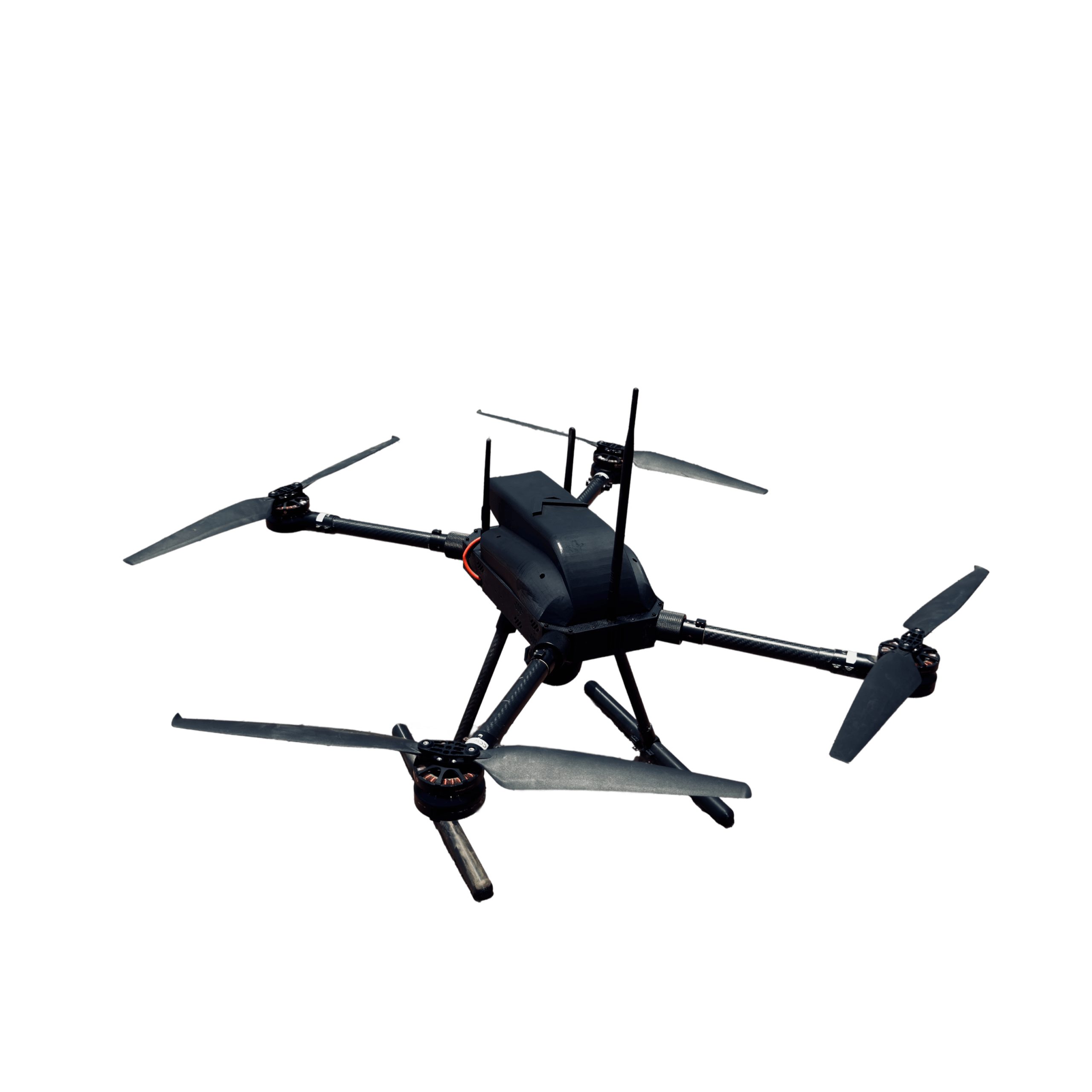
Nigeria-based Terra Industries scales production with backing from U.S. investors, pointing to a third path beyond the U.S. and China
A Nigerian startup is drawing global attention as it works to scale drone manufacturing in Africa. According to reporting from TechRadar, Terra Industries is building production capacity that could reach 30,000 drones per year. The effort highlights a shift in how and where small drones are designed and produced.
The company’s growth comes at a time when global supply chains are under pressure. U.S. policy has tightened restrictions on foreign-made drones. At the same time, demand continues to grow across public safety, infrastructure, and industrial markets.
Terra’s approach suggests a new model. Instead of relying on imports, the company is building a vertically integrated system that combines local manufacturing with AI-driven software.
Building a Local Manufacturing Base
Terra Industries operates a facility near Abuja, Nigeria. TechRadar reports that the company is producing key components in-house, including airframes, propellers, and battery systems. It imports only select parts such as sensors.
This level of vertical integration is uncommon in the drone industry. Many manufacturers rely on global supply chains for most components.
By contrast, Terra’s model aims to:
- reduce dependence on foreign suppliers
- control production costs
- support local industry development
The company is already exporting drones to multiple countries, including several African markets and Canada.
Lower Costs Could Expand Adoption
One of the most significant claims in the TechRadar report is cost. Terra’s drones are said to be up to 55% less expensive than comparable international systems.
Lower pricing could have a direct impact on adoption. In many regions, cost remains a major barrier to deploying drone programs at scale.
More affordable systems may support:
- infrastructure inspection for utilities and telecom
- monitoring of oil, gas, and mining assets
- public safety and security operations
Software Platform Drives the Model
Hardware is only part of the offering. Terra pairs its drones with a software platform called ArtemisOS.
The system aggregates data from drone operations and applies AI-based analysis. It can detect anomalies and send alerts in real time. This supports faster decision-making in environments such as energy and industrial sites.
The platform also introduces a recurring revenue model. Drones require an active software subscription to operate. This aligns with broader trends toward Drone-as-a-Service and system-of-record platforms.
Backed by U.S. Venture Capital
Terra’s rapid expansion has been supported by significant funding. The company initially operated with limited capital. It later raised $11.75 million in January 2026, followed by an additional $22 million in February.
Investors include firms such as 8VC, Lux Capital, and Valor Equity Partners. These groups are known for backing companies in autonomy and defense technology.
The funding brings Terra’s total capital raised to roughly $34 million. The speed of these rounds suggests strong investor interest in the company’s model and market.
Data Sovereignty and Regional Control
Another notable aspect of Terra’s approach is data management. The company emphasizes the use of local cloud infrastructure. This keeps operational data within regional control.
This focus reflects a broader global trend. Governments and enterprises are placing greater importance on data sovereignty. Concerns about foreign technology providers have shaped policy in the U.S. and Europe.
Terra’s model aligns with these concerns by combining local production with local data storage.
Challenges to Scaling
Despite strong momentum, several challenges remain.
Scaling manufacturing to tens of thousands of units per year will test quality control and supply chains. Infrastructure limitations may also affect software performance in areas with limited connectivity.
The subscription model could present hurdles in markets with constrained budgets. Long-term success will depend on balancing affordability with ongoing service costs.
A Third Path in the Drone Market
For years, the global drone industry has been defined by two poles. China has dominated production at scale, while U.S. and European companies have focused on compliance-driven and higher-cost systems.
Terra Industries points to a potential third path.
By combining local manufacturing, lower costs, and AI-driven software, the company is positioning itself within a new regional ecosystem. If successful, this model could influence how drones are produced and deployed worldwide.
For operators facing limited options and rising costs, that shift could arrive at an important moment.
Read more:

Miriam McNabb is the Editor-in-Chief of DRONELIFE and CEO of JobForDrones, a professional drone services marketplace, and a fascinated observer of the emerging drone industry and the regulatory environment for drones. Miriam has penned over 3,000 articles focused on the commercial drone space and is an international speaker and recognized figure in the industry. Miriam has a degree from the University of Chicago and over 20 years of experience in high tech sales and marketing for new technologies.
For drone industry consulting or writing, Email Miriam.
TWITTER:@spaldingbarker
Subscribe to DroneLife here.

