


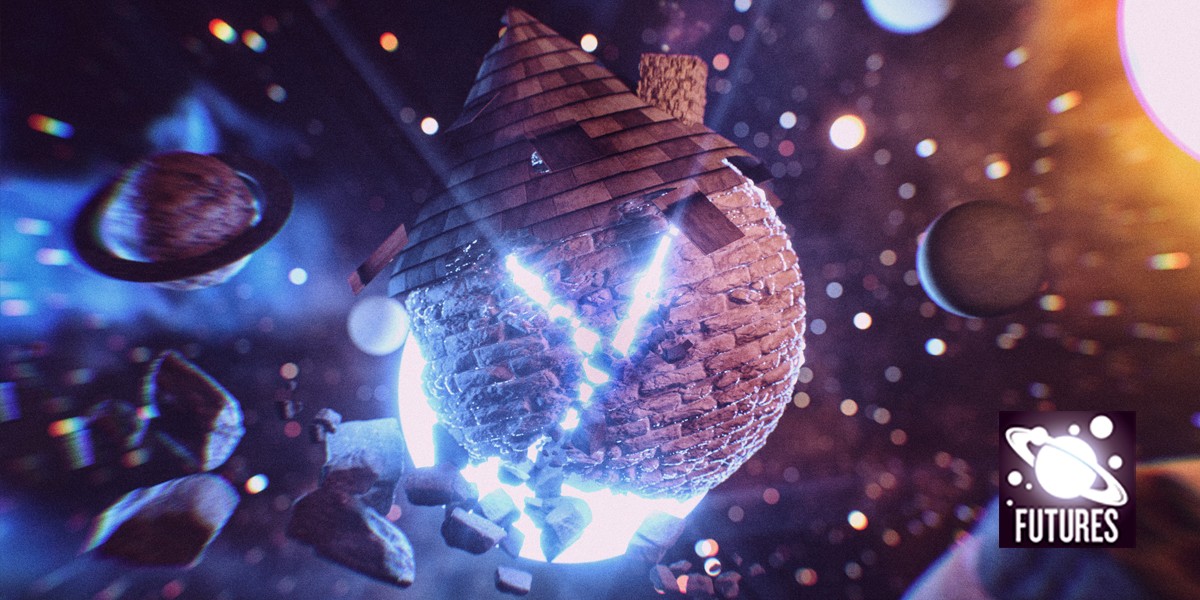
It took the last traces of Homo sapiens 10,000 desperate years to reach the semi-oxygenated rock orbiting Proxima Centauri. Widely known as a cosy bothy among the stars, it was a place where stellar ramblers in all their multitudes could pause and rest as they meandered the lightyears. They came in so many forms it took the humans a couple of decades to realize they weren’t alone.
Take Gustari centralis. Best known in their mechanical state, a cluster resting at Proxima-b decided to adopt a mycelial form for a change. The humans breathed them in and breathed them out. Almost. Spores latched onto lungs nearly causing the human colony to collapse. Humanity fought back the only way they knew how. Doctor Indira Sharma led the effort, bombarding the unsuspecting Gustari with antibiotics until the Dishan intervened.
“Your weapons are forbidden here,” the Dishan envoy explained, deigning to use movable tongues for the first time in this instance’s living memory.
Indira dropped the tray of pills she was carrying. Nurse Dino Seeton crouched to sweep them up. Better that than stare at the eldritch thing that had suddenly materialized in the sickbay, its ‘head’ more beaks and squawks than anything else.

Read more science fiction from Nature Futures
The Dishan envoy made some guttural pronouncements and the first of the bedridden patients stirred with hints of regained consciousness. “The Gustari will no longer trouble you. Please forgive them. They’re a younger species. They probably misunderstood.”
“The Gustari?” Indira asked.
“One of the many rambling kind who frequent this stop,” the Dishan explained. “We believe they mistook your bodies for part of the surrounding landscape and went about exploring. An unfortunate error now rectified. I’ve told them to ask permission next time.”
“Much appreciated,” Indira said.
“The fungus was sentient?” Dino asked.
“Yes, and most sophisticated, if you can appreciate true art.”
“I don’t know how to ever thank you,” Indira said. “That infection was a terrible setback, but otherwise this world is a miracle. Without it, humanity wouldn’t have got another chance.”
“Yes, it’s a lovely place to visit,” the envoy agreed.
“Visit? This is our new home,” Dino said.
“You can’t settle here.” It took all the envoy’s ambassadorial protocols to mask as much disgust as they did. “It’s a bothy not … a homeworld.”
“Sorry,” Indira said. “I’m unfamiliar with that alien term.”
“I’m speaking your language.”
“Maybe it’s not from my culture,” Indira suggested. “We’ve many where I’m from.”
The Dishan ignored the insult of the implied greater social complexity. Instead, they requested Indira’s consent then mind-parasited with her. The two exchanged thoughts, lifetimes, whole perspectives. Indira departed the split-second encounter a changed woman.
“We can’t stay, Dino.”
It was like the fabled campgrounds of old Earth. Like the campgrounds if the commons hadn’t been a tragedy.
“No one can,” the envoy said, “and remember when a species departs, they must leave this place unchanged to the best of their abilities.”
“Can’t stay? They must not understand.” With heroic effort Dino turned to the Dishan and looked right into what must have been an eye. “It took everything we had to reach this planet. We’ve exhausted all our resources. If we can’t stay, then we and every species we brought from Earth will go extinct.”
“The Caaadadar tried staying once. Their privileges were revoked. A most unpleasant end for a civilization. If one could call what was the Caaadadar civilized.” The envoy’s humour was lost on Indira and Dino who until that afternoon had mistaken humanity for the only true intelligence in the lonely cosmos. “Surely, you’ve other places to go? There’s so much to experience. This is but a convenient pitstop.”
“No, we’re desperate,” Indira said. “Our whole ecology collapsed. This was a last-ditch effort to preserve our planet’s lifeforms by finding a suitable new home around a nearby star.”
“You mean you travelled here organically?” The envoy convulsed in horror. “The whole lot of you?”
“We had no choice.”

