


Hidden Creatures: Luscious Leeches, Bashful Botflies, and the Wondrous, History-Shaping World of Parasites Dino Martins Knopf (2026)
Togetherness: How Symbiosis Can Change the Way We Understand Our World, Ourselves and Our Future Rowan Hooper Fern (2026)
Humans often fancy that we are independent creatures, living sealed off from other species. Yet, that false sense of separation vanishes when bacteria make us sick or a bear raids the rubbish bin. Whether we like it or not, we are interconnected with the living world. Two books explore the ties that bind all living things.
In Togetherness, biologist and science journalist Rowan Hooper proposes that interspecies cooperation is the key driver of life’s evolutionary journey. Hidden Creatures, by entomologist and evolutionary biologist Dino Martins, takes a darker view. Life lives off life, the author explains. “Half of all living things are mooching off others!”
Nature’s villains
Take parasites, which, Martins notes, have afflicted humans since the beginning of recorded history. Inscribed in ancient Canaanite on an ivory comb are the words: “May this tusk root out the lice of the hair and the beard.” It is the oldest known sentence written using an alphabet. Lice continue to prey on humans nearly 4,000 years later — as do countless other parasites.
Rights for rivers and ice cream for all: top reads for the summer holid
Martins invites us to take a second look at these oft-villainized creatures that are, nevertheless, integral to life. Many today who profess to ‘love nature’ tend to edit out the less savoury and less inspiring parts. But that is misguided, the author says. You must “seek to understand all of nature”, he insists, or “you will end up loving and understanding none of it”.
His book is not for the squeamish. Martins introduces us to caterpillars that are eaten alive by squirming wasp pupae. He devotes a chapter to a rogues’ gallery of worms; one species (Stephanurus dentatus) lives in the urinary tract of pigs, another (Rhabditis orbitalis) in the eyes of mice and voles, and even more species live in the lungs of birds.
Others dwell in the human body. Today, one-third of the human population is infected with nematode worms, often with grisly consequences. Hookworms, once called the “vampires of the south” owing to their prevalence in the southern United States, live for years in the intestine, sapping millions of their strength and vitality.
Tsetse flies in Africa carry the protozoan parasites that cause sleeping sickness. Brain worms infest moose, deer and elk. Thirty-metre-long tapeworms have been found in the bellies of whales. The list goes on.

Wasps can lay eggs inside caterpillars, which the larvae consume after hatching.Credit: Jim Lane/Education Images/UIG/Getty
Parasites can even drive their hosts to kill themselves, when it is to the parasite’s advantage to do so. Take the Gordian worm, which infects the brain of praying mantises and alters gene expression in a way that makes them jump into a body of water and drown. Only then can the worm fulfil its biological destiny by laying its eggs, which hatch in the water.
But there is a silver lining to the parasitic cloud. Some creatures have come up with ingenious ways to combat their parasites, such as birds that evict itchy parasites from their feathers by rubbing themselves with formic acid secreted by the ants that bite them.
Leech therapy shows promise in treating osteoarthritis. Leeches secrete substances with anti-inflammatory and anaesthetic properties, which relieve pain and reduce swelling. They are sometimes used in specialized microsurgeries and skin grafts: the anti-clotting agent that they secrete prevents the surgeon’s incision from prematurely closing.
Martins’s final verdict on the parasites that he so exuberantly describes? They are crucial actors that clean up Earth by decomposing dead flesh and recycling it. Without this invaluable service, ecosystems could not function.
Productive partners
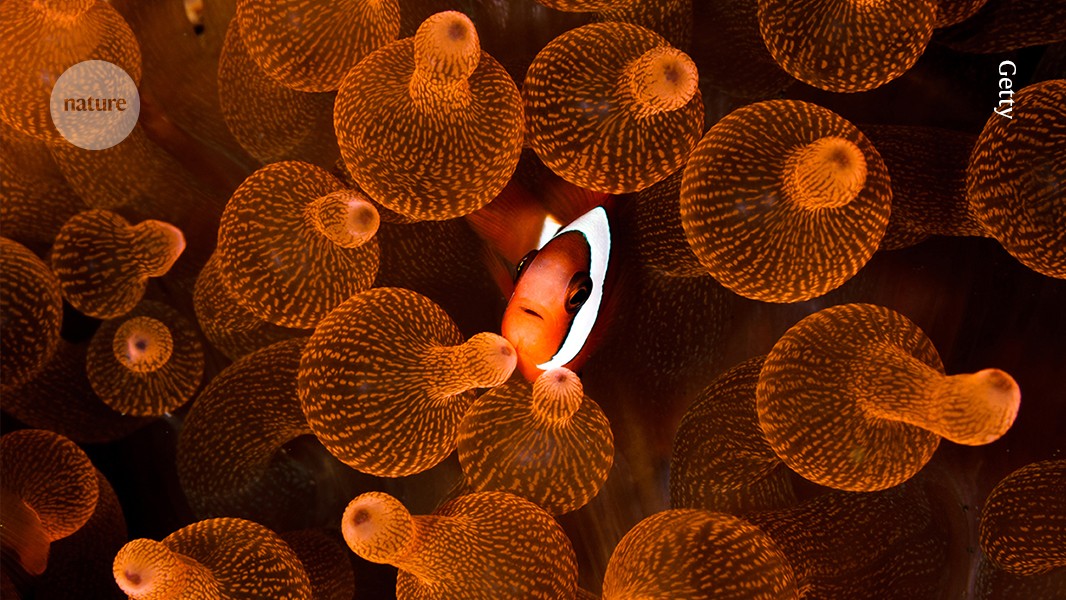
Hooper’s book focuses on the more harmonious side of life. Symbiotic relationships in which two or more species live in partnerships that benefit all parties have been essential in the evolution of life — yet scientists have taken a long time to fully recognize this. “Cooperation is much harder to see than competition,” Hooper explains. “Fights are easier to measure than favors.”
How AI is revealing the secret lives of animals from hummingbirds to pumas
Lichen, Hooper says, provided the first evidence that individuals are not as delineated as we had once thought. What looks like a single organism is in fact a partnership in which algae feed fungi with photosynthesized sugars, and fungi provide algae with water, minerals and a secure structure in which to live. Lichens have been known since ancient times, but it was not until the nineteenth century that scientists recognized their nature as a composite organism.

