



Chris Rocheleau’s exit comes as the FAA continues work on long-term safety and drone integration initiatives.
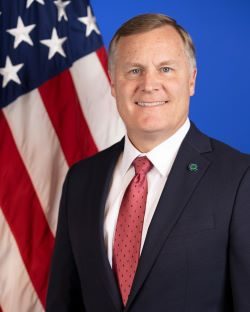
The Federal Aviation Administration (FAA) will see another leadership change as Deputy Administrator Chris Rocheleau steps down from the agency, according to Reuters. Rocheleau became one of the FAA’s most visible leaders following the January 2025 midair collision near Ronald Reagan Washington National Airport, helping oversee the agency’s response and the implementation of subsequent safety reforms.
His departure comes at a time when the FAA is managing an unusually broad agenda. Alongside ongoing safety initiatives, the agency continues work on air traffic modernization, controller staffing, Advanced Air Mobility (AAM), and the long-awaited Beyond Visual Line of Sight (BVLOS) rulemaking for drones.
For the drone industry, the announcement also serves as a reminder of the number of leadership transitions the FAA has experienced during the development of several major initiatives. Politico commented: “He’s the latest in a string of high-ranking officials that have headed for the exits as the FAA undergoes a major reorganization and an ambitious relocation from its Washington headquarters.”
FAA Leadership Timeline
- Michael Huerta served as FAA Administrator from 2013 to 2018.
- Daniel Elwell served as Acting Administrator from 2018 to 2019.
- Stephen Dickson served from 2019 until his resignation in 2022.
- Billy Nolen served as Acting Administrator from 2022 to 2023.
- Polly Trottenberg briefly served as Acting Administrator in 2023.
- Mike Whitaker served from October 2023 until January 2025.
- Chris Rocheleau served as Acting Administrator before returning to the Deputy Administrator role.
- Bryan Bedford became FAA Administrator in July 2025.
While leadership has changed frequently, the agency’s long-term regulatory work has continued. Career staff are responsible for much of the technical development behind complex rulemakings, including BVLOS, which has progressed over several years from the FAA’s 2022 Aviation Rulemaking Committee recommendations to the publication of the Notice of Proposed Rulemaking in 2025.
Still, major regulatory initiatives often depend on sustained leadership and clear strategic priorities. Each new Administrator inherits responsibility for balancing aviation safety, modernization of the National Airspace System, controller staffing, certification programs, and the integration of new technologies such as drones and advanced air mobility aircraft.
Whether frequent leadership transitions affect the pace of those efforts is difficult to measure. The FAA has continued advancing major initiatives despite changes at the top, but the agency’s leadership turnover raises a reasonable question about continuity as it undertakes some of the most significant aviation reforms in decades.
For the commercial drone industry, that question is particularly relevant as stakeholders await the final BVLOS rule, widely viewed as one of the most consequential regulatory developments for the sector.
Read more:

Miriam McNabb is the Editor-in-Chief of DRONELIFE and CEO of JobForDrones, a professional drone services marketplace, and a fascinated observer of the emerging drone industry and the regulatory environment for drones. Miriam has penned over 3,000 articles focused on the commercial drone space and is an international speaker and recognized figure in the industry. Miriam has a degree from the University of Chicago and over 20 years of experience in high tech sales and marketing for new technologies.
For drone industry consulting or writing, Email Miriam.
TWITTER:@spaldingbarker
Subscribe to DroneLife here.

