


Oil is in the news yet again, and you can’t talk oil, especially in the Middle East, without talking about the Organization of the Petroleum Exporting Countries, or OPEC. Typically, when you look into the history of OPEC, it starts in 1960 when Iran, Iraq, Kuwait, Saudi Arabia, and Venezuela teamed up to coordinate oil production. Their decision to team up transformed the global oil and gas industry into the one we know today, but OPEC countries didn’t come up with the idea on their own. Instead, they borrowed the idea from the ole U.S. of A. Specifically, the Texas government’s Railroad Commission.
Unlike in a lot of other industries, oil demand is largely inelastic. Demand isn’t completely stagnant, but oil is still essentially an ingredient used to make other things people buy, and consumers can only buy so many of those things. Even if gasoline dropped to $2 a gallon, there’s only so much more driving most people want to do, and at $8 a gallon, we’d still have to do the vast majority of the driving we do now. Oil supply, however, can swing drastically, whether a war breaks out and interrupts production, or someone discovers a new oil field that floods the market.
From a business perspective, the booms are great, but the busts are a real doozy. When the Spindletop oil field was discovered near Beaumont, Texas in 1901, production tapered off quickly, but where there’s some oil, there must be more. Fast forward to 1930, and they finally found the big one: the East Texas Oil Field. That discovery yielded so much oil that by 1938, Texas reportedly supplied 40% of oil for the U.S. and accounted for 25% of the world’s oil production. The massive East Texas Oil Field made a whole lot of people very rich, but it also created another problem — a price crash.
Risky business
The post-WWI U.S. had largely been a free-for-all for the wealthy, as a string of “small-government, pro-business” conservatives served in the White House, ultimately causing the Wall Street crash of 1929 and the Great Depression. The opportunity to make big money in Texas meant a massive rush of investment and speculation in the area. Large companies moved in, but so did wildcatters, independent operations who went into unproven areas hoping to strike it rich. Wildcatters who struck black gold usually carried a lot of debt, which only incentivized them to pay it off pumping as much oil as they could as fast as possible.
In a matter of months, oversupply caused the price of a barrel of oil to fall far below what it cost to produce. But with the Great Depression in full swing and so many wildcatters desperate to unburden themselves from debt, politely asking oil producers to slow down didn’t work. Threaten the wealthy’s money, though, and it’s only a matter of time before the government steps in to stop it. Conveniently for the Texas oil industry, the governor at the time was Ross Sterling, an oil and railroad executive who co-founded ExxonMobile’s predecessor, the Humble Oil Company.
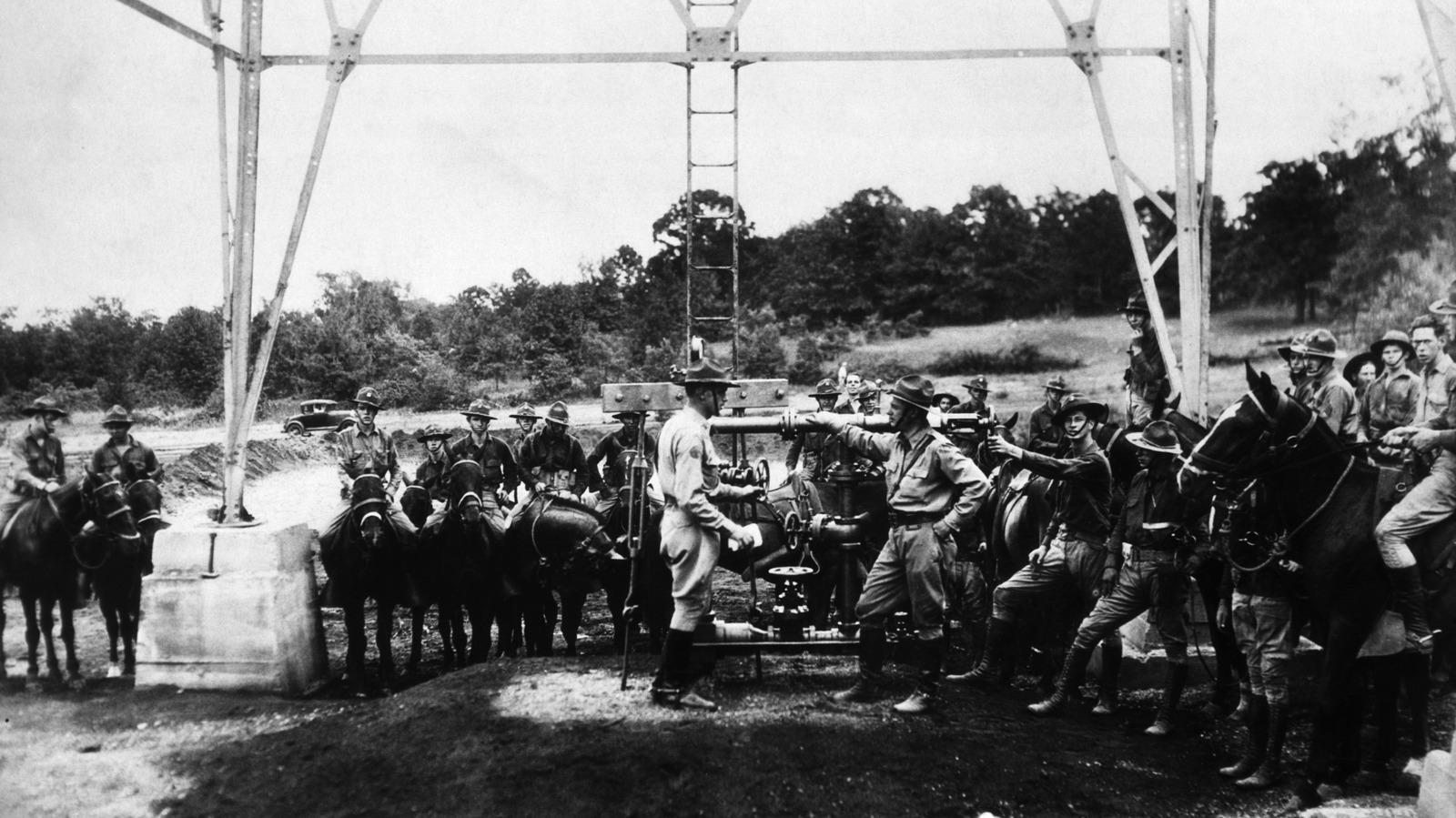
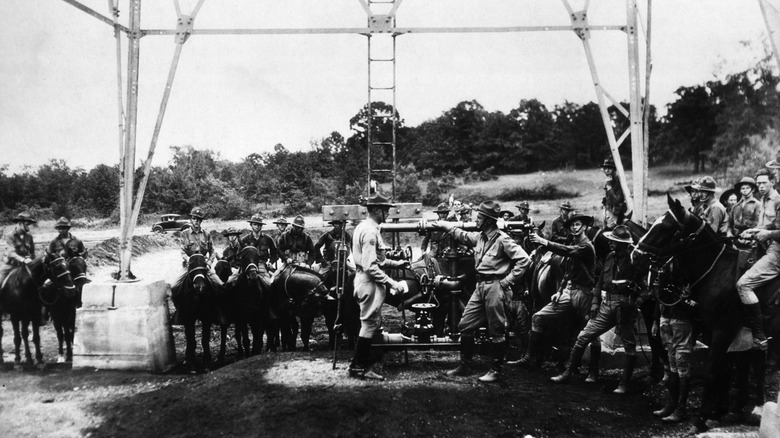
On August 17, 1931, Sterling declared that Gregg, Rusk, Smith, and Upshur counties were in a “state of insurrection” and would be subject to martial law. He deployed more than 1,000 Texas National Guard troops to the East Texas Oil Field and put the entire area under military control. Eventually, the courts would decide Sterling went too far when he declared martial law, but controlling oil production had become popular enough that the Railroad Commission of Texas gained the authority to regulate oil production. The only way to save the Texas oil industry ended up being government regulation of how much oil each well could produce.
Creating OPEC
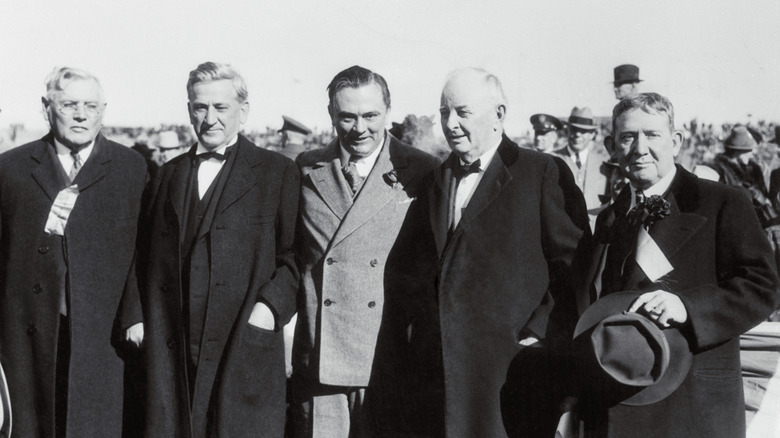
After seeing the success Texas and Oklahoma had regulating oil production, the federal government created the Interstate Oil Compact Commission to do the same thing nationally. But the feds weren’t the only ones to see the potential in regulating oil production. Venezuelan politician Juan Pablo Pérez Alfonzo began to study the TRC’s success, and he soon got it in his head that maybe it could also work internationally. In 1959, Pérez Alfonzo began talking with a few oil-exporting countries in the Middle East, and on September 10, 1960, Iran, Iraq, Kuwait, Saudi Arabia, and Venezuela officially formed OPEC.
Before OPEC, oil production had been controlled by a group of companies known collectively as the Seven Sisters: the Standard Oil Company of New Jersey, which later became Exxon; the Standard Oil Company of New York, which later became Mobil; the Standard Oil Company of California, which later became Chevron; the Texas Oil Company, which later became Texaco; Gulf Oil; Anglo-Persian, which later became British Petroleum; and Royal Dutch, which is now Shell. Those companies still exist or have merged, but even in its early days, OPEC still turned the industry on its head.
OPEC countries nationalized their oil industries and were able to coordinate production with longterm goals and stability in mind, without pressure from private shareholders only concerned with seeing the biggest return on their investments. And they shifted the industry toward a model that’s more focused on each country’s production instead of individual companies. That hasn’t always gone so well for the U.S., and as we’ve seen since Trump attacked Iran in late February and earlier when Putin invaded Ukraine, the global oil industry is still vulnerable to price swings caused by war. But if you didn’t know OPEC only exists because a Venezuelan politician saw what the Texas Railroad Commission was doing and decided to go bigger, hey, now you do.

