


The tournament suggests that layered counter-drone security can work. The next challenge may be preventing unnecessary incidents before they happen.
For more than a year, the commercial drone industry watched preparations for the FIFA World Cup with a mix of optimism and concern.
Could agencies coordinate across dozens of venues? Would local law enforcement have the training and authority they needed? Could multiple counter-drone technologies work together in a real-world environment? And perhaps most importantly, was anyone truly ready for what became one of the largest security operations in U.S. history?
Now that the tournament has concluded, the Federal Aviation Administration (FAA) believes the answer is yes.
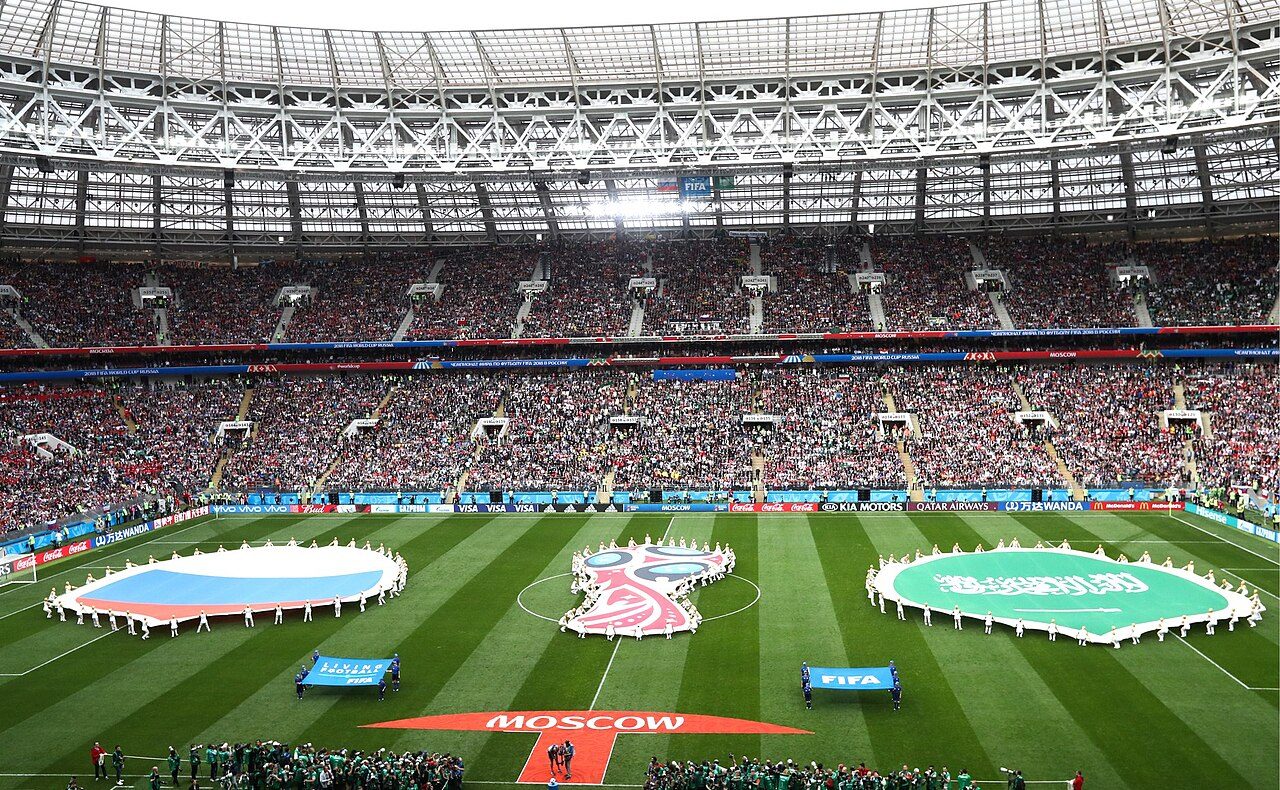
According to the agency, federal, state, and local partners carried out “the most comprehensive airspace security and drone mitigation effort in U.S. history,” helping protect millions of spectators while seizing more than 700 unauthorized drones operating in restricted airspace. The operation included nearly 250 Temporary Flight Restrictions (TFRs) covering stadiums, fan festivals, team hotels, and training sites across the 11 U.S. host cities.
For the drone industry, the numbers are significant. But the larger story may be what they reveal about how counter-drone operations have matured.
From Planning to Execution
In the months leading up to the World Cup, DRONELIFE Features Editor Jim Magill covered the enormous planning effort required to protect the tournament.
In interviews with federal authorities, vendors, and state and local agencies, security experts repeatedly emphasized that there was no single technology capable of solving the drone problem. Instead, success would require multiple layers working together: airspace restrictions, detection systems, trained personnel, intelligence sharing, public communication, and clear enforcement authorities.
That appears to be exactly what happened.
Rather than highlighting one sensor or one mitigation technology, the FAA credits a coordinated approach involving the FAA, FBI, Department of Homeland Security, state and local law enforcement, Ground Intercept Teams, and the White House Task Force established for the tournament. The agency says the effort established “a new standard” for protecting major events and will help shape preparations for future events, including the 2028 Olympic Games.
The lesson is an important one. Counter-UAS systems are increasingly becoming ecosystems rather than standalone products. Detection, communications, operational procedures, and enforcement all played a role.
Success Doesn’t Mean the Threat Has Disappeared
It would be tempting to view the tournament as proof that the counter-drone challenge has been solved.
That would go too far.
The World Cup benefited from extraordinary planning, dedicated funding, extensive federal coordination, and more than a year of preparation. Those resources are unlikely to be available for every stadium, concert venue, or public gathering.
What the tournament does demonstrate is that a layered strategy can be effective when agencies have clear authority, trained personnel, and coordinated operations.
Equally important, officials reported no major drone-related disruptions despite hundreds of unauthorized flights entering restricted airspace. While every unauthorized drone was treated as a potential threat, the security system prevented those flights from disrupting tournament operations.
That is a meaningful accomplishment.
The Next Opportunity May Be Communication
The FAA’s announcement also raises another question.
How many of the more than 700 seized drones represented malicious actors, and how many belonged to recreational pilots who simply ignored or never understood the restrictions?
The government was right to treat every unauthorized drone as a potential threat. Security personnel cannot determine an operator’s intent after a drone is already in protected airspace.
At the same time, the tournament highlights the continuing burden created by careless or uninformed operators.
Before and during the World Cup, federal agencies repeatedly warned drone pilots to leave their aircraft at home, promoted the tournament’s no-drone zones, and reminded operators to check TFRs before flying.
Those efforts likely prevented many violations before they occurred.
Looking ahead, communications may become one of the industry’s most effective counter-drone tools. Ticket confirmations, hotel check-ins, airport messaging, flight-planning applications, manufacturer alerts, B4UFLY notifications, and social media campaigns could all reduce the number of pilots who inadvertently fly into restricted airspace.
Every recreational operator who decides not to launch because they already know the rules is one less drone that security teams must investigate.
A New Phase for the Drone Industry
A recently published federal counter UAS guidebook argued that the “happy time” for nefarious drones may be coming to an end as governments around the world adopt stricter oversight of drone operations.
The FIFA World Cup may represent another milestone in that transition.
The story is not simply that more than 700 drones were seized. The story is that one of the world’s largest sporting events demonstrated that a coordinated, layered counter-drone strategy can protect complex venues at an unprecedented scale.
Instead of asking whether governments are capable of defending major events against unauthorized drones, the next question may be how efficiently they can do it, and how much of that workload can be reduced through better education and communication before a drone ever leaves the ground.
Read more:

Miriam McNabb is the Editor-in-Chief of DRONELIFE and CEO of JobForDrones, a professional drone services marketplace, and a fascinated observer of the emerging drone industry and the regulatory environment for drones. Miriam has penned over 3,000 articles focused on the commercial drone space and is an international speaker and recognized figure in the industry. Miriam has a degree from the University of Chicago and over 20 years of experience in high tech sales and marketing for new technologies.
For drone industry consulting or writing, Email Miriam.
TWITTER:@spaldingbarker
Subscribe to DroneLife here.

