


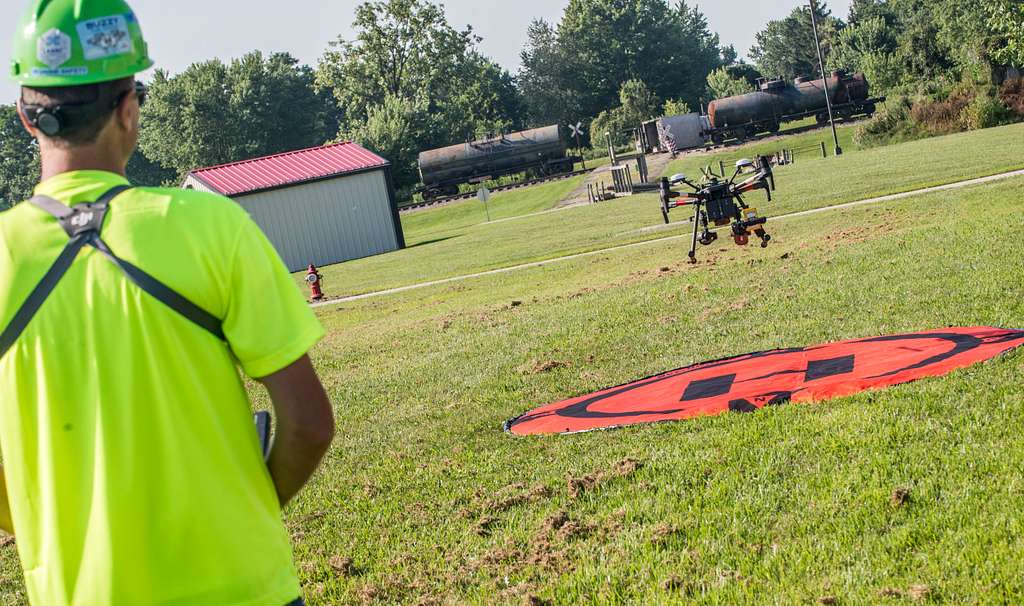
Part 1 of DRONELIFE’s Exclusive Series: The Human Edge: People, Perception, and the Future of Drone Operations
In this three-part DRONELIFE guest series, transportation and aviation experts Aloha Ley and Giovanni Carnaroli examine the human dimension of drone operations through the lens of current research and operational experience. Rather than focusing solely on technology, the series explores how cognitive science, regulatory frameworks, and operational design must evolve together as commercial UAS missions become more complex.
Part One examines cognitive workload, pilot fatigue, and the growing body of evidence that human factors remain one of the most significant contributors to drone incidents. Future installments will explore how regulators around the world are addressing these challenges and what enterprise operators can do today to build safer, more resilient drone programs.
The following article appears as submitted by the authors.
The Moment Everything Unravels
by Aloha Ley and H. Giovanni Carnaroli
Picture a late-afternoon power-line inspection in the Mojave Desert, June 2025. A licensed Part 107 pilot is forty-five minutes into an extended flight corridor, managing telemetry data on a ground control station screen, coordinating with a distant visual observer over radio, and simultaneously monitoring wind-speed alerts from a weather app on a tablet propped against his field case. The drone is operating at the edge of visual range. The sun is low and directly in his line of sight. He has been on-site since before dawn.
Then the drone’s obstacle-avoidance system flags an anomaly — a transformer relay closer to the flight path than the pre-planned route indicated. The pilot processes the alert. He reaches for the tablet. He glances at the radio. He looks back at the screen. In that span of approximately four seconds, attention tunneling — the human brain’s tendency to fixate on the most immediately salient task while blocking out peripheral inputs — strips him of the situational awareness he needs to make a clean recovery decision. The drone contacts a power line. Phew, no injuries, but there is significant equipment loss. A near-miss with an energized cable that the ASRS incident report later describes as “pilot workload saturation.”
This scenario is a composite, drawn from the pattern of incidents logged in NASA’s Aviation Safety Reporting System (ASRS), which as of 2025 had processed nearly 700 UAS-related reports (approximately 18 per month) with a growing share attributable to the operator’s cognitive limits. It is not an anomaly. It is becoming a template.
By the Numbers: Human Factors in UAS Incidents
- Early military UAS research found that human factors contributed to 60.2% of 221 recorded accident cases — establishing from the outset that the weakest link in unmanned aviation was not the aircraft.
- Commercial Part 107 operators report human factors as a contributing element in the majority of ASRS-logged incidents, with equipment failures, GPS malfunctions, and lost links occurring at a rate of roughly 1 in every 1,000 flight hours, which is far above comparable commercial aviation rates, and human decisions amplifying the consequences of each technical failure.
- The Air Charter Safety Foundation’s 2025 Annual Safety Overview confirmed that “human factors continue to be the primary root cause” of reports across aviation safety programs, with situational awareness and pilot-ATC communication failures accounting for nearly one-third of all logged events.
Sources: NASA ASRS UAS Database (2025); MDPI Examination of UAS Incidents; Air Charter Safety Foundation 2025 Annual Safety Overview.
- 60%+ of military UAS accidents attributed to human factors in foundational research
- 1/1,000 flight-hour equipment failure rate in UAS — far higher than crewed commercial aviation
- 18/mo: UAS incident reports to NASA ASRS per month as of 2025, with human factors as a growing share
Sources: NASA ASRS (2025); Cambridge Aeronautical Journal; MDPI UAS Safety Review.
The Science Behind the Screen: Cognitive Load in Drone Operations
Cognitive load theory was first formalized by educational psychologist John Sweller in the late 1980s, he describes a simple but brutal truth about the human brain: working memory is finite. We can hold and process only a limited amount of information at any given moment. When the demands of a task push us toward that ceiling, performance degrades, often silently, and often catastrophically in safety-critical environments.
For drone pilots, that ceiling is reached faster than most appreciate. A contemporary commercial UAS operation is, at its core, a parallel-processing nightmare for the human nervous system. The operator must simultaneously maintain visual contact with the aircraft (or interpret telemetry data as a proxy), read and respond to ground control station displays, manage battery and connectivity status, communicate with visual observers or ATC, navigate regulatory airspace boundaries, make real-time mission decisions, and often operate mission-specific payloads — all while remaining physically stationary in variable weather conditions and without the proprioceptive feedback that a cockpit provides to a manned aircraft pilot.
Researchers at MDPI’s 2025 review of machine learning applications for UAS cognitive assessment define cognitive load in this context as “the amount of mental effort required to process task-related information within the limits of working memory capacity,” a multidimensional construct shaped by task complexity, time pressure, experience, stress, fatigue, and environmental context. When task demands exceed those cognitive resources, the results are measurable and dangerous: slower response times, reduced situational awareness, impaired decision-making, and elevated error rates.
Attention Tunneling: The Hidden Hazard
One of the most insidious cognitive phenomena in drone operations is attention tunneling, also called cognitive fixation or perceptual narrowing. It occurs when an operator becomes so focused on one element of a complex task that critical peripheral information is effectively filtered out. In manned aviation, spatial disorientation is the tunneling equivalent; in UAS, it often manifests as a pilot locked onto telemetry data while the physical aircraft drifts toward an obstacle or focused on a payload sensor feed while battery levels drop toward a critical threshold.
The problem is compounded by what researchers call the “absence of shared fate.” In crewed aviation, a pilot’s survival is directly tied to the aircraft’s performance, an evolutionary pressure that sharpens situational awareness. A drone pilot, physically removed from the aircraft, does not experience that visceral stake. Academic research on UAS situational awareness, published in 2024, notes that this absence of co-location may cause some operators to “maneuver the UAV in a more aggressive manner” or, conversely, delay corrective action because the threat does not feel immediate. Neither outcome is safe.
The Multitasking Myth
Industry culture often valorizes the ability to “multitask”, particularly in high-paced commercial drone environments where a single operator may be expected to serve simultaneously as remote pilot in command, mission planner, data analyst, and compliance officer. Neuroscience is unambiguous on this point: true multitasking, the genuine parallel processing of complex cognitive tasks — does not exist in the human brain. What we call multitasking is rapid serial task-switching, each transition incurring a cognitive cost in terms of time, accuracy, and mental energy. Over the course of a long mission or multi-day deployment, those costs accumulate into what researchers describe as decision fatigue: a measurable decline in the quality of choices as the number of decisions made increases.
“When task demands exceed cognitive resources, operators may experience cognitive overload, leading to slower response times, reduced motivation, fatigue, and increased error rates, ultimately impairing UAS operators’ performance and compromising situational awareness.”
— MDPI Systematic Review: Machine Learning for UAS Cognitive Load Assessment, 2025
Coming Next in the Series
Part 2: How the World Is Addressing Human Factors in Drone Operations
The science behind cognitive workload is becoming increasingly clear, but regulation is still catching up.
In the next installment, Ley and Carnaroli examine how aviation authorities around the world are beginning to incorporate human performance into drone operations. The article compares approaches taken by the FAA, EASA, the UK Civil Aviation Authority, ICAO, Japan, and Australia, while exploring what commercial operators can learn from decades of military UAS experience.
As beyond visual line of sight operations expand and enterprise drone programs continue to grow, understanding the regulatory treatment of human factors may become just as important as understanding the aircraft itself.
 Aloha Ley is a nationally recognized transportation leader, founder of eNoLux, and creator of the Syntara Path Architecture — a human-centered systems philosophy for moving individuals and organizations from fragmentation to synchronization. With more than 30 years of service across the U.S. Department of Transportation, including roles as Chief of Staff, Senior Advisor, and Director of Safety at the FAA, FTA, and Office of the Secretary, she has shaped national aviation safety policy, Safety Management Systems (SMS) standards, and public-sector innovation. Aloha’s thought leadership explores the intersection of AAM, SMS, safety culture, human factors, human dignity, counter human trafficking, and next-generation mobility systems.
LinkedIn: www.linkedin.com/in/aloha-ley
 H. Giovanni Carnaroli is a nationally recognized transportation technology executive and former Deputy Chief Information Officer (CIO) of the FAA, with more than 30 years of federal leadership spanning digital transformation, cybersecurity, and advanced aviation systems. A licensed commercial airplane and helicopter pilot (single- and multi-engine, land and sea, instrument) and FAA Part 107 UAS pilot, Giovanni currently works in Airworthiness, bringing rare operational depth to his strategic perspectives on drones, AAM, and low-altitude systems.
LinkedIn: www.linkedin.com/in/giovanni-carnaroli

Miriam McNabb is the Editor-in-Chief of DRONELIFE and CEO of JobForDrones, a professional drone services marketplace, and a fascinated observer of the emerging drone industry and the regulatory environment for drones. Miriam has penned over 3,000 articles focused on the commercial drone space and is an international speaker and recognized figure in the industry. Miriam has a degree from the University of Chicago and over 20 years of experience in high tech sales and marketing for new technologies.
For drone industry consulting or writing, Email Miriam.
TWITTER:@spaldingbarker
Subscribe to DroneLife here.

