


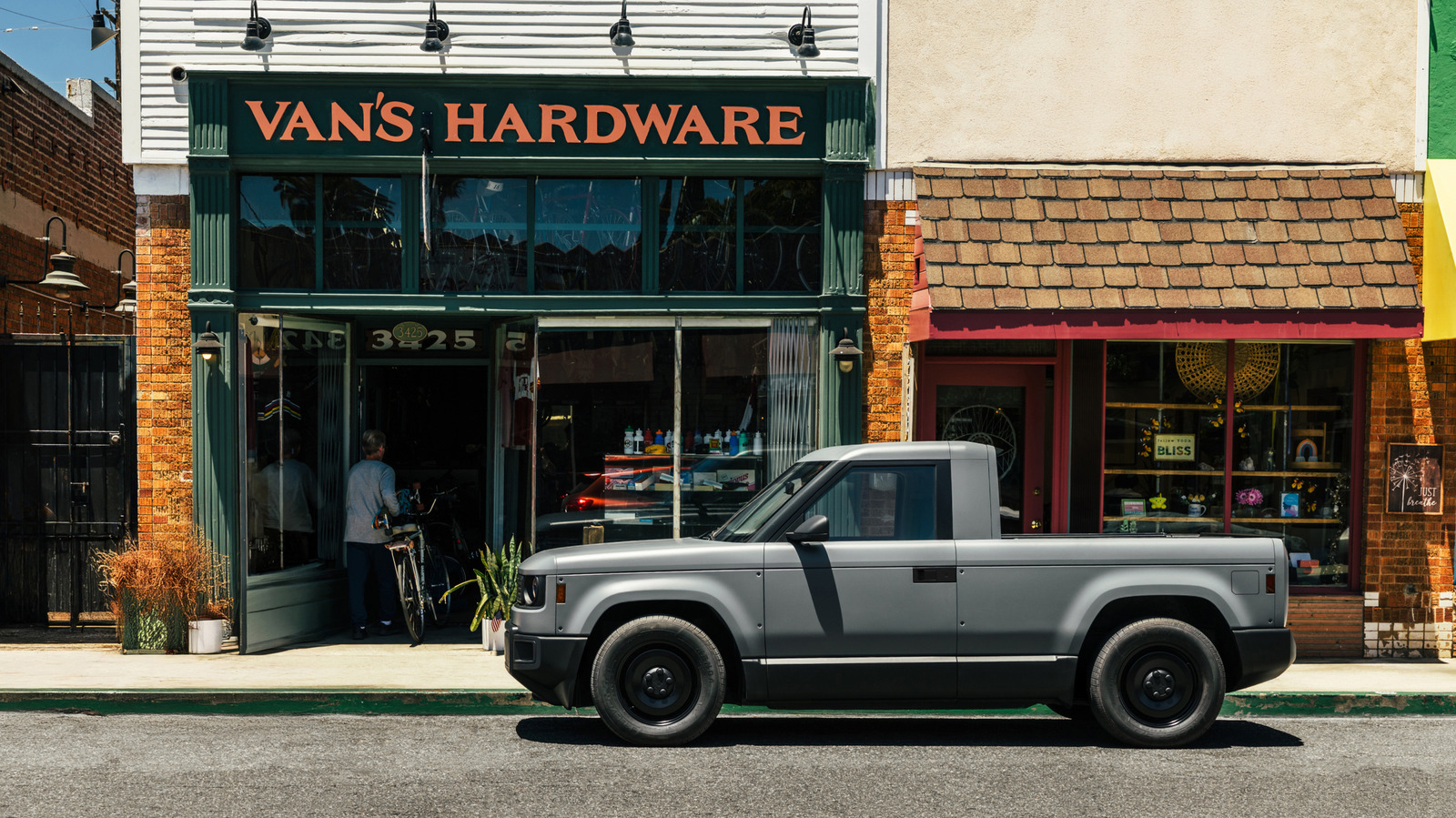
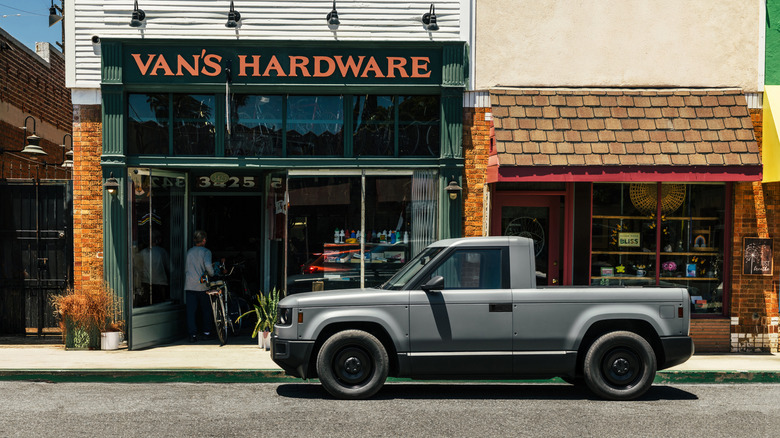
When the Slate truck was announced, and later when the official MSRP number dropped, the pricing was the main selling point: Just $24,950 gets you a brand-new fully-electric pickup truck, provided you don’t care about it being much more than four wheels, two doors, and a bed. But as anyone who’s bought a new car knows, there’s always a destination fee lurking somewhere, waiting to bump your thousands digit up, and Slate hadn’t announced it yet. Now we know that fee is $1,450, bringing the truck’s MSRP to $26,400.
That bumps the Slate truck over the magic $25,000 point, and might make it feel unreasonably close to other competitors like the Ford Maverick — especially considering that the Mav offers such incredible luxuries as “power windows,” “a stereo,” and “door pockets.” Look a bit deeper, though, and you’ll find that the Slate is still a deal: Counting destination, the Maverick starts at $28,990, and other competing trucks only go up from there.
Still the cheapest

Destination fees actually increase the price gap between the Slate and the Maverick, as Ford’s destination charge of $1,845 is higher than Slate’s. The larger Ford Ranger‘s destination fee is even higher at $1,895, bringing the starting price up to $34,445. Nissan’s destination fee on the Frontier is $1,745, for a base price of $33,895, and Toyota charges the same fee on the Tacoma for an even higher base price of $34,190. Chevy beats all, with a $2,095 destination fee on the Colorado that makes for a starting price of $34,495.
The Slate is still the cheapest truck on the market, and far and away the cheapest EV with a bed — the Silverado EV will run you more than twice as much. Every automaker has its destination fees, and most of them are higher than Slate’s. Whether it’s worth the cost difference to the Maverick is up to every individual buyer’s cross-shopping, but destination fees likely won’t make or break a deal.

