


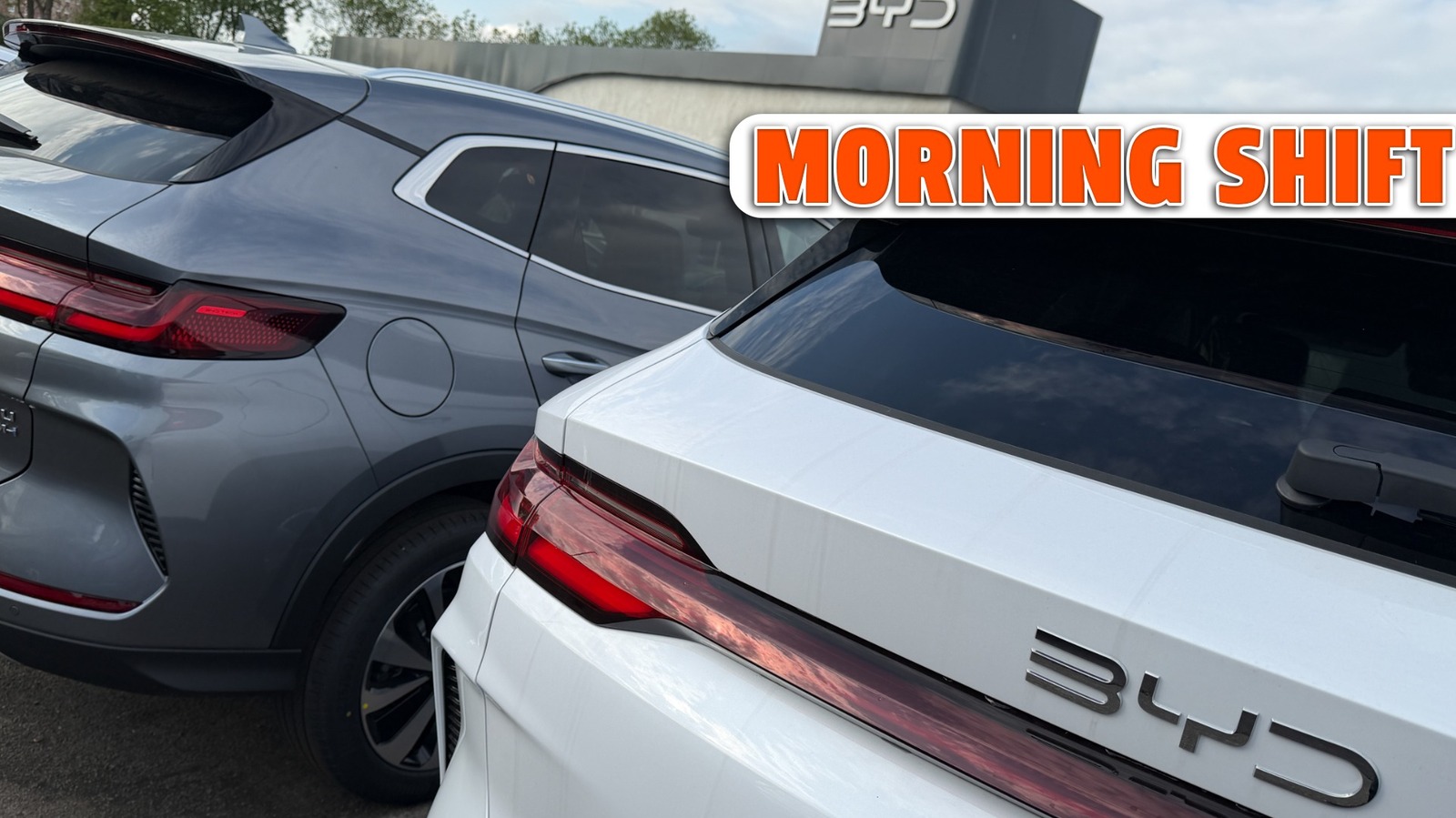
The U.S. Senate Commerce Committee is set to vote next week on a piece of goofy-ass bipartisan legislation that’ll somehow toughen the already-tough government ban on Chinese automakers entering the U.S. vehicle market. The legislation, spearheaded by Republican Ohio Senator Bernie Moreno and Democratic Michigan Senator Elissa Slotkin, codifies regulations imposed by the Biden administration.
It effectively bans all Chinese automakers from selling passenger vehicles in the U.S. and takes other steps to prevent China from entering the light-duty market here. It would also ban vehicles designed in China if they had advanced connectivity as well as vehicle software.
Some could argue that this is government overreach; others, anti-competitive, anti-capitalists and anti-consumer. I’m not saying it is those things, but someone could certainly argue it. Of course, this is all being done under the guise of “national security.” We can just assume the Flock cameras popping up everywhere aren’t letting the U.S. government follow us wherever we go, and the Chinese-made phones in our pocket aren’t enabling the Chinese government to do the same thing if they please. From Reuters:
The Biden administration imposed sweeping regulations in January 2025 that sought to ban Chinese automakers from selling passenger vehicles in the U.S., citing national security concerns linked to the ability of vehicles to collect sensitive data on American owners.
In March, auto trade groups representing nearly all major car companies — including the Detroit Three, Volkswagen, Hyundai and Toyota, parts manufacturers, auto dealers and others — urged the U.S. government to keep out Chinese carmakers, citing “serious concerns about China’s ongoing efforts to dominate global automotive manufacturing and to gain access to the U.S. market.”
They added China poses “a direct threat to America’s global competitiveness, national security, and automotive industrial base.”
Chinese autos face high tariffs, but U.S. consumers have become more interested in the vehicles, recent surveys show, and lower-priced Chinese EVs have gained significant market share in Mexico and Europe.
Of course, the low, low prices of Chinese vehicles are due in no small part to subsidies from the government, so I doubt we’d see the same sort of savings if they were to theoretically come over here. Still, it would still be great to see them stateside, because, by all accounts, they’re pretty damn great.
President Trump seems to think so, too, because you never really know what the hell he’s thinking. Back in January, he said he was open to Chinese automakers building vehicles in the U.S., but there hasn’t been anything announced since then — not even after a Trump-Xi summit in May. My best guess is that he was just sort of shooting from the hip, and nothing will ever come of those comments.

