


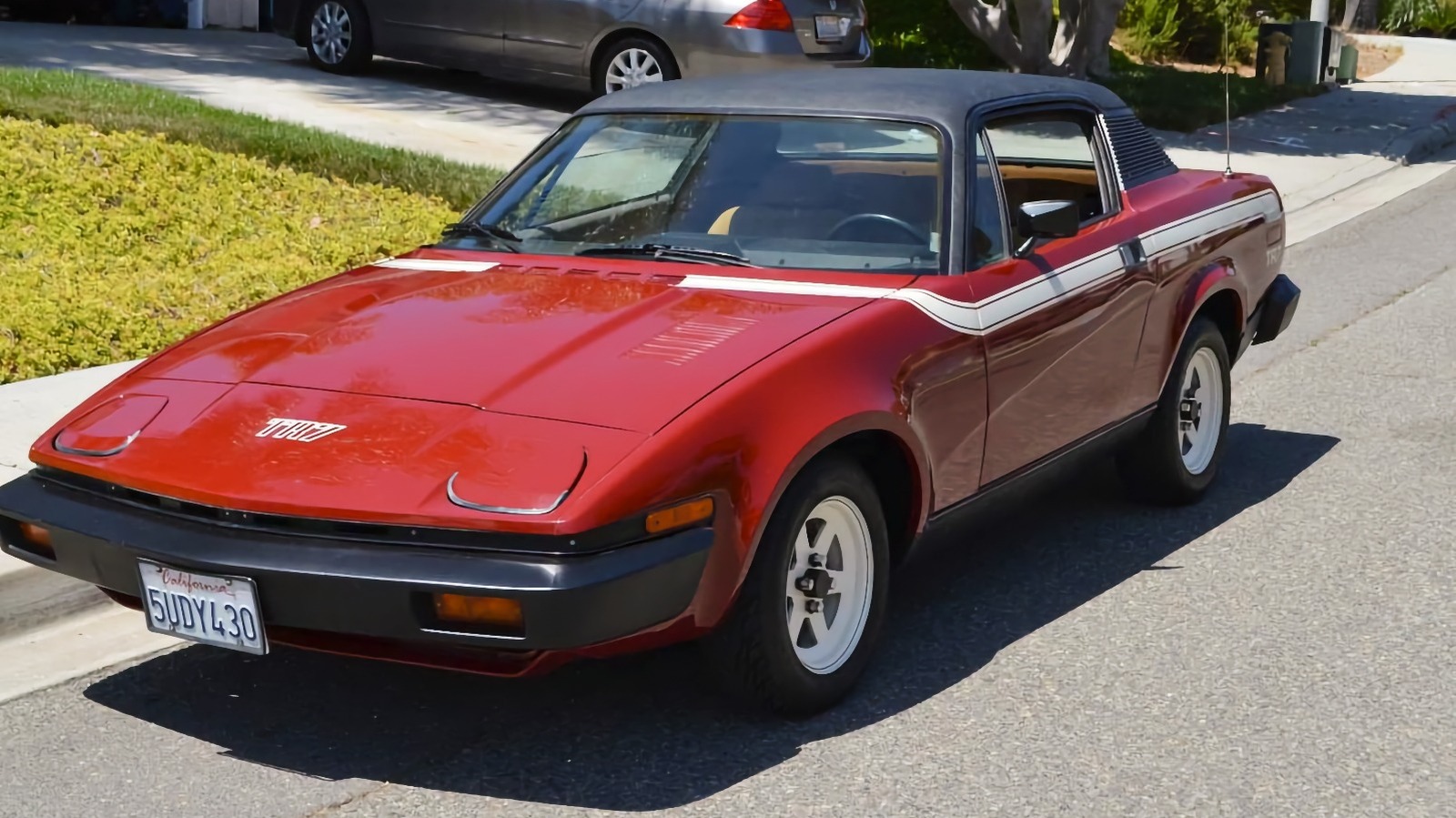
When it debuted, many fans of the hairy-chested traditional British sports car didn’t know what to make of Triumph’s TR7. Today’s Nice Price or No Dice Victory Edition might still elicit consternation, but we’ll still have to determine if its price, at least, gets a pass.
At present, the Mustang has the dubious distinction of being the “last car standing” in Ford’s U.S. lineup. Everything else the marque makes for sale here in the States is some sort of truck, van, or tall wagon. It’s fitting that the Mustang continues to fly the flag for Ford as it’s been an icon of the brand for decades. It even survived the ignominy of Mustang II in the ’70s and the besmirching in song in the unwanted association with rap clown Vanilla Ice.
None of that mattered when it came to the 1999 Mustang GT convertible we looked at on Tuesday. Well-equipped, seemingly appropriately maintained, and in need of nothing, that Mustang still carried a banner of honor at its $5,900 asking price. You all acknowledged that in the comments, and with the 86% ‘Nice Price’ win, you awarded the car.
Past shape of things to come
As we discussed, Ford’s Mustang went through some hard times in the 1970s. It was a rough patch for pretty much all car makers and models as the double whammy of multiple gas crises coupled with strangling emissions and safety regulations sapped performance across the board.
One of the weirdest and arguably saddest stories of the ’70s is that of the Triumph TR7. Triumph, then part of the sinking ship known as HMS British Leyland, debuted the TR7 in 1976 as the next iteration of the company’s long-running TR line, which dates back to 1953. Unlike all prior TR models, which were roadsters, the TR7 initially arrived as a closed coupe due to unfounded fears that regulators in the lucrative U.S. market were on the cusp of banning open-topped cars over rollover safety concerns.
And, while the outgoing TR6 offered a six-cylinder engine and independent rear suspension, the TR7 had to make do with a smaller four-cylinder engine and a live rear axle. On the plus side, the TR7 had sexy pop-up headlamps, a feature that actually would eventually be regulated out of existence in the North American market. The TR7 and its offspring, the Rover-powered TR8, were the last sports cars built by Triumph. In fact, they were the company’s swan song, as the marque’s next (and last) model was a badge-engineered version of the Honda Ballade saloon.
Wedge issue
All animosity aside, the 1976 Triumph TR7 that we’re looking at today appears to be a wonderfully intact and carefully restored example of what Triumph thought the future would look like back in the 1970s. This is a special Victory Edition, as denoted by its jaunty stripes, the vinyl roof (so sporty!), white-painted steel wheels that wouldn’t look out of place on a light-duty trailer, and factory air conditioning. Of course, we have to acknowledge the car’s Harris Mann-penned wedge shape, which underlies all that and which the company touted in its advertisements of the time as the “Shape of Things to Come.”
Power for the wedgie TR7 comes from a 2.0-liter SOHC inline-4 with twin Zenith Stromberg carburetors. In U.S. trim, that made a meager 92 horsepower. According to the seller, this car’s engine was fully rebuilt not that many miles ago. In total, the car now rocks a claimed 16,263 miles. Behind the rebuilt motor is a four-speed manual which feeds the live rear axle we noted earlier. Everything on the car has either been replaced or renewed, and it looks terrific both on top and underneath. Receipts for the work and the phone number of the mechanic who performed much of it can be included in the sale.
Victory dance
One other place where the TR7 diverged from its immediate predecessor was in the cabin. Not only was the new car a coupe, but it traded the plank of walnut burl that served as a dashboard on the earlier car for molded black plastic. Someone has sought to spruce this car up by adding woodgrain trim to the instrument cluster, center console, and even the ashtray caps on the doors. While unoriginal, it actually does warm up the look of the dash considerably.
Other elements of note in the cabin include the broadcloth upholstery on the seats, which looks to be in great condition. Another extra with the car is a second set of seat covers in the same material and color. A later Blaupunkt AM/FM/CD stereo has been fitted to the dash, flanked by some of the most confusing climate controls ever conceived. Supposedly, all of those work, and the A/C compressor is new, so it blows cold. The car comes with a clean title and all its original tools and manuals.
A real Triumph?
The TR7 has always been the red-headed stepchild of the Triumph family. Unlike the previous models, values on these cars haven’t inched up appreciably. The coupe model is an especially hard sell because it lacks the charm and joie de vivre of the open-topped model. It’s also not the engaging brute that the TR8 is.
That all makes this car a big of a conundrum. Yes, it’s in awesome shape and is an interesting slice of history, but at $7,000, is it interesting enough? What do you think? Could this TR7 find a new home at that $7,000 asking price? Or, despite all the work done and its present shape, is that just too much for a history lesson?
You decide!
Las Vegas, Nevada, Craigslist, or go here if the ad disappears.
Hat tip to Steve Reilly for the hookup!
Help me out with Nice Price or No Dice. Hit me up at [email protected] and send a fixed-price tip. Remember to include your commenter handle.

