


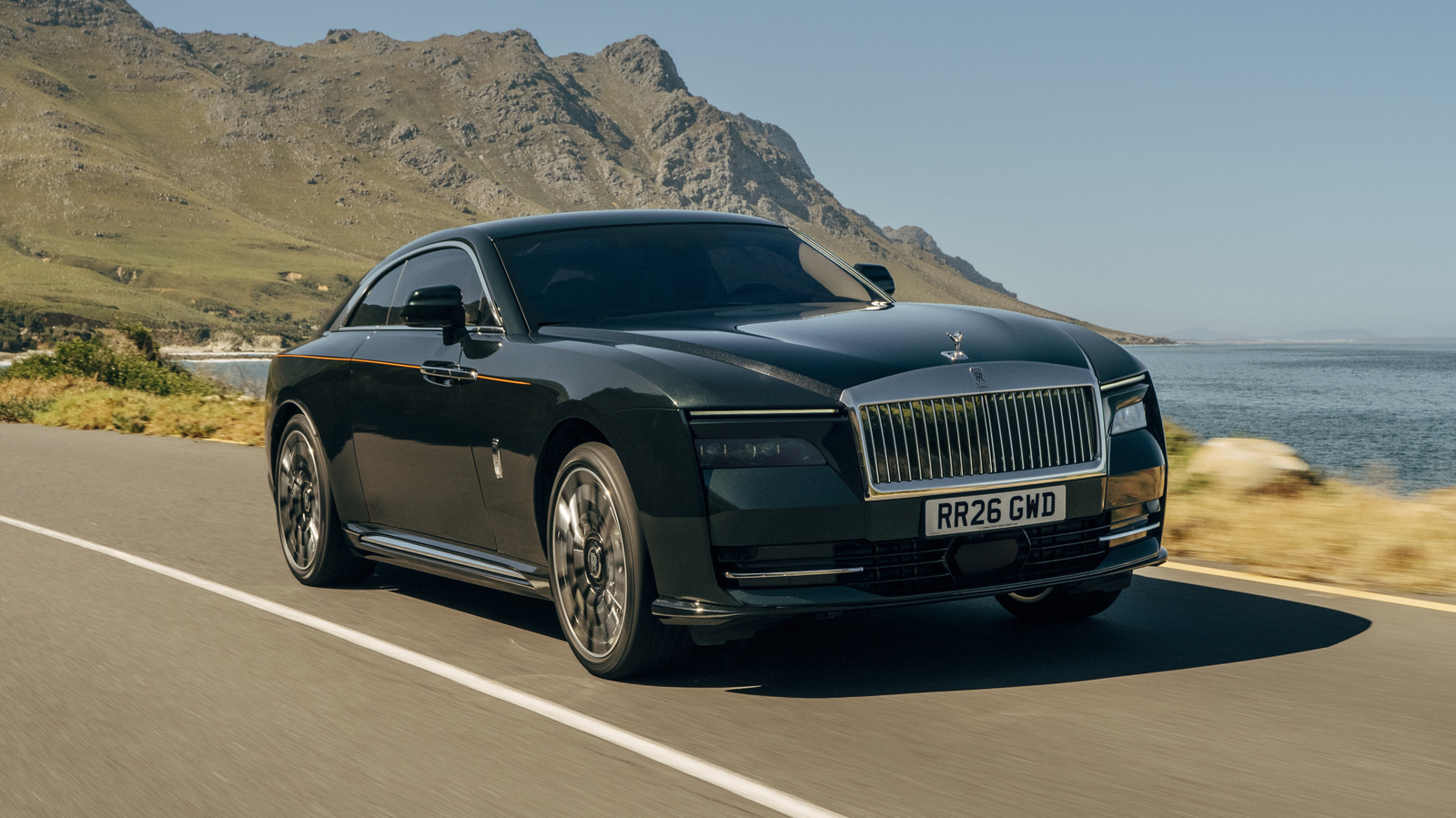
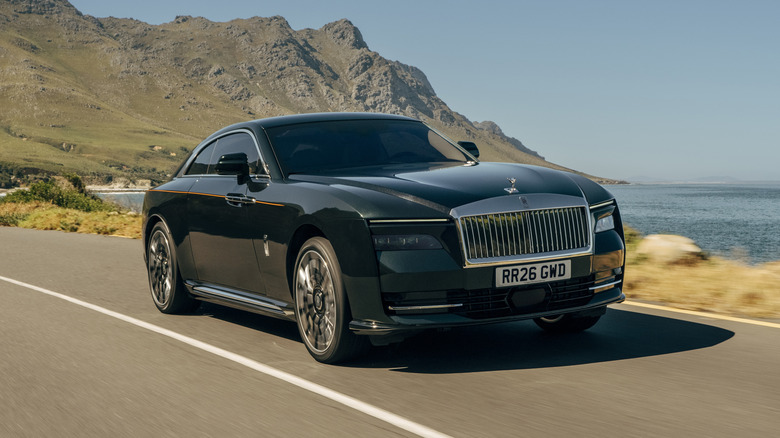
Rolls-Royce was one of the first ultra-luxury automakers to introduce an electric car, launching the Spectre in 2023, and while other brands were delaying or outright canceling EV plans, the Spectre quickly became one of Rolls-Royce’s biggest modern successes. Like the year before, in 2025 the Spectre was Rolls’ second best-selling model, after the Cullinan, and it’s extremely popular in terms of bespoke commissions.
After listening closely to its customers, seeing how they use their Spectres and what they want out of a car, Rolls-Royce is now introducing the Spectre Series II. Though its design hasn’t materially changed compared to the Ghost Series II and Cullinan Series II facelifts, the updated Spectre has more power, a longer range, quicker charging, and a whole bunch of new customization options. You can now get textile upholstery or leather with perforation that looks like clouds, but the real nerds will be the most excited about the new clock that’s inspired by planes.
There’s more power and range, even though it wasn’t needed
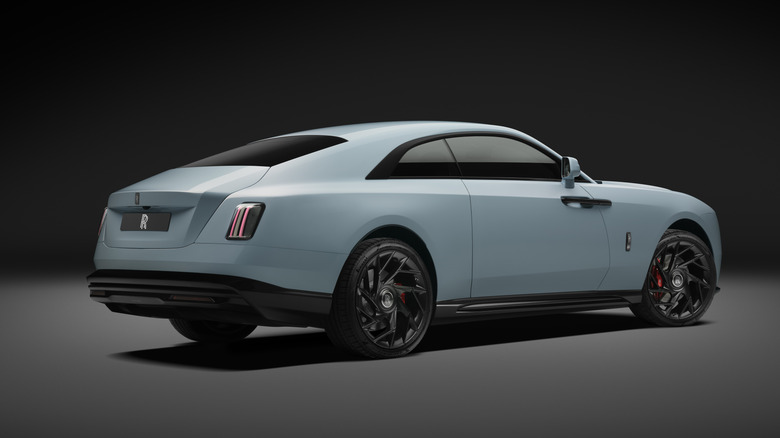
I’ll start with the boring stuff first. Rolls-Royce hasn’t said if the battery powering the Spectre has gotten any bigger, but new cell technology has increased the Spectre’s range by up to 18%, which should bring the EPA rating to around 320 miles. Charging times have also been reduced by 14%, and in the U.S. it’ll have a NACS port. The regular Spectre now has 593 horsepower and 749 pound-feet of torque, increases of 16 hp and 85 lb-ft, while the Black Badge gets 671 hp and 811 lb-ft, up 21 hp and 18 lb-ft.
Rolls-Royce said the car’s performance and range “already exceeded client expectations,” so it didn’t have to do much. The average owner drives their Spectre around 4,000 miles per year, similar mileage to Rolls’ other modern two-doors (the average Rolls-Royce in general drives about 10,000 miles every year), and they have six other cars. But the company says the car is “increasingly used for driving enjoyment,” and that Spectres are usually driven solo, almost always are charged at home, and are often daily driven.
These wheels take six hours to finish
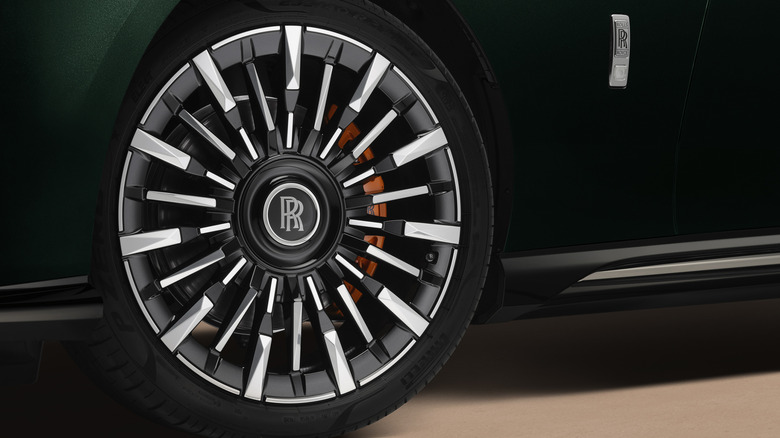
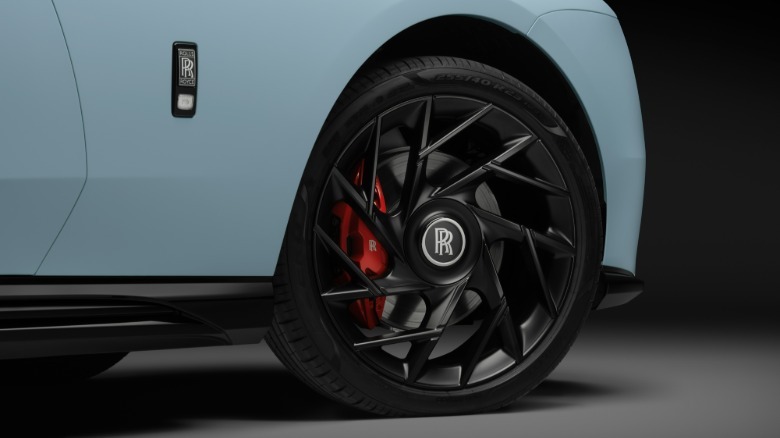
There’s a new 23-inch wheel design that I don’t really like, which is too bad, because a lot of work is put into each wheel: the radii are not even a tenth of an inch (that’s very sharp), and each wheel requires six hours of hand-finishing. The Black Badge also has a new seven-spoke wheel design with fine glass flakes in the finish that I like more, though they still aren’t directional. There’s also the option for Iced Black exterior detailing instead of the standard shiny trim, and if you do go for the matte trim, the vanes of the front grille remain purposefully shiny. For the first time on a Rolls-Royce, you can get a gradient two-tone paint finish, though at least on the configurator it’s restrictive as to what colors are possible.
 Rolls-Royce
Otherwise, the outside of the Spectre Series II looks identical to the old one — there haven’t even been tweaks to typical facelift things like the lights or bumpers. The Spectre was already one of Rolls-Royce’s best-looking modern cars, so why mess with success? Domagoj Dukec, Rolls-Royce’s director of design, says the brand’s clients “frequently cite [Spectre’s] design as one of the defining reasons for their commission.”
More luxury cars need textiles inside
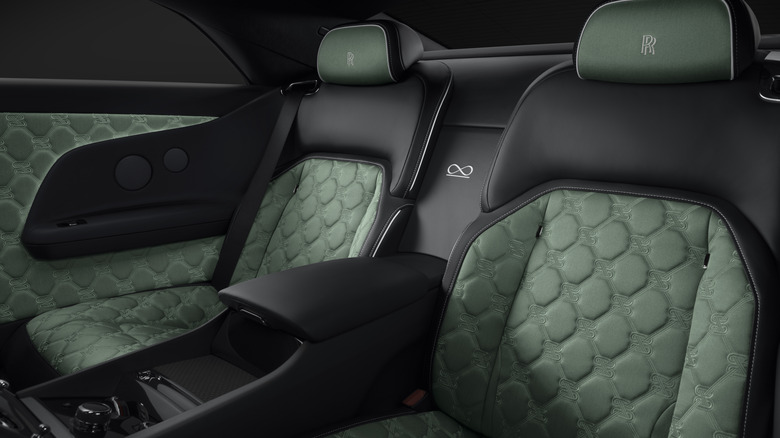
Inside, the Spectre is now available with two upholstery options first introduced on the Cullinan Series II: Duality Twill and Placed Perforation. The twill option is a rayon fabric made from bamboo, inspired by a bamboo grove near Sir Henry Royce’s winter home, with a design that’s like two interlinked R’s, also evoking the ropes on sailing yachts. It takes up to 25 hours to produce, using 10 miles of thread and 2.6 million stitches. More than 50 different colors are offered for the embroidery, though Black, Chocolate, Lilac and Sage are the only main colors to choose from. (I’m sure if you ask nicely enough and wave a checkbook around, you can get whatever you want.) For some real visual drama, the twill can be added to the door panels.
 Rolls-Royce
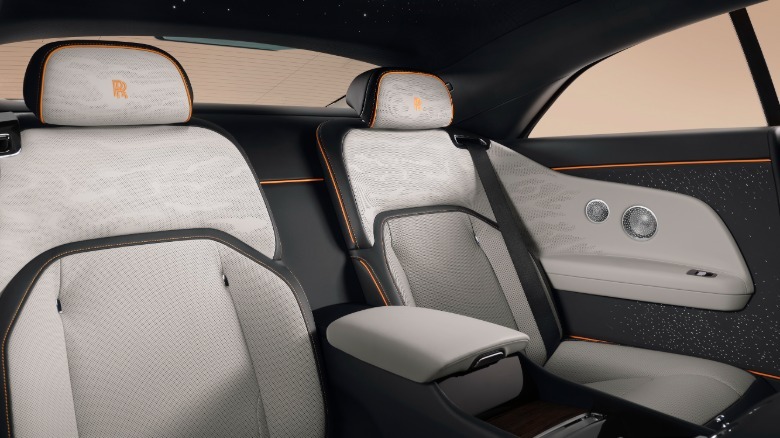
Then there’s the perforated leather, which is “inspired by the shifting silhouettes cast by clouds in moonlight.” It’s only used on the headrests and upper shoulder area of the seats, but that’s enough space for 78,138 individual perforations of three different sizes. If you get the Starlight door option, the perforation pattern “subtly disperses as it approaches each light source, creating a soft, atmospheric diffusion effect reminiscent of starlight emerging through shifting night skies.” It does look pretty spectacular.
Is it clocking to you that Rolls-Royce is standing on business?
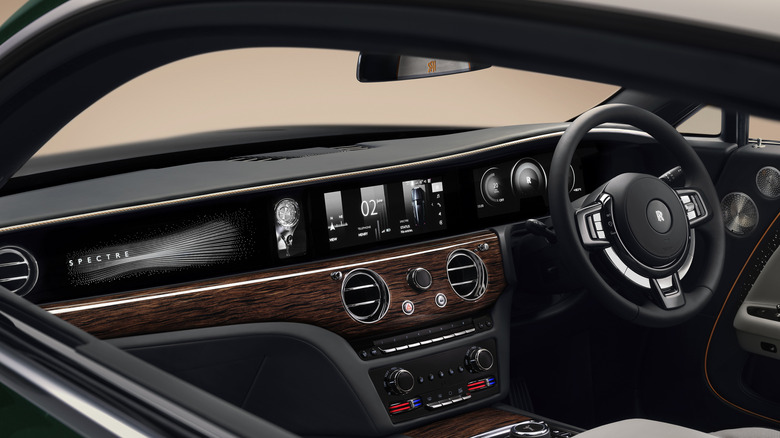
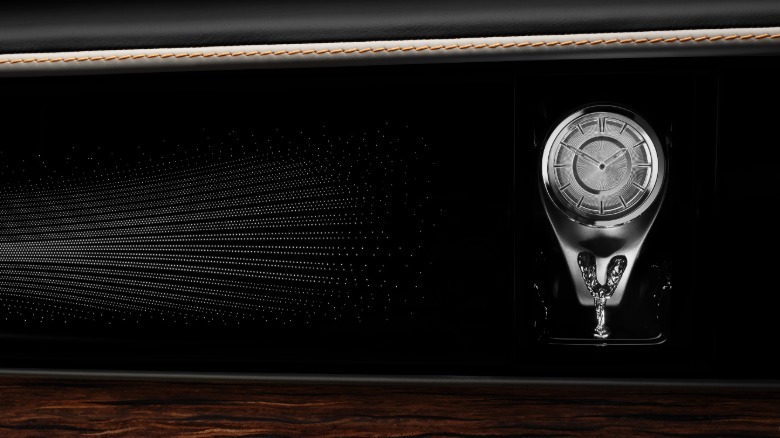
The dashboard’s illuminated fascia now has 8,108 individual points of light, a few thousand more than before, with a wave design that echoes the “shifting mist” in the woodlands of South Downs, near Rolls’ Goodwood home. Next to it is the Clock Gallery (described as an “inset vitrine,” if you need a new vocab word), which now features an up-lit miniature Spirit of Ecstasy sculpture made from solid stainless steel. The clock itself has been redesigned, with cast metal hands and a more contemporary look that’s inspired by aviation instruments that “prioritize absolute legibility.”
 Rolls-Royce
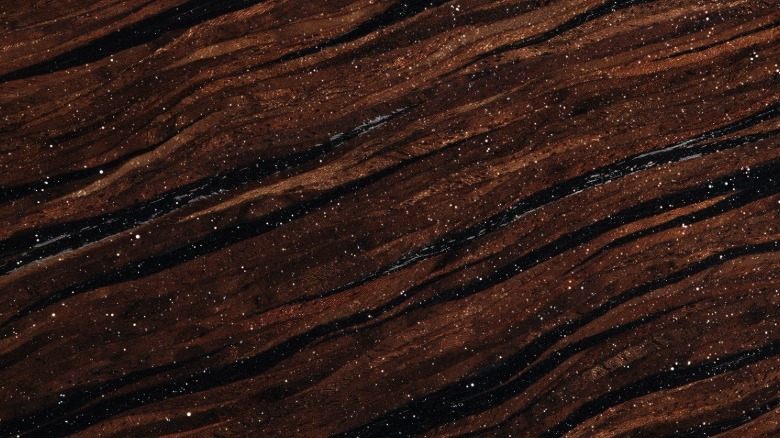
A new Brindled Walnut trim option has a tiger stripe pattern created by using two different woods: walnut sourced from non-fruiting trees that would normally be burned, and residual eucalyptus fibers from paper production. The pieces are compressed and cut into sheets, then sealed with a lacquer containing a powder of glass flake, and a clearcoat is added on top. This gives it the “impression that the shimmering particles are suspended beneath the surface.”
 Rolls-Royce
Of course, that’s just what’s in the regular options list. Rolls-Royce can basically create whatever you want, and Spectre customers do — the company says the Spectre is second only to the Phantom when it comes to the number of bespoke commissions and in how much bespoke stuff is added to each car.

