


You have full access to this article via your institution.
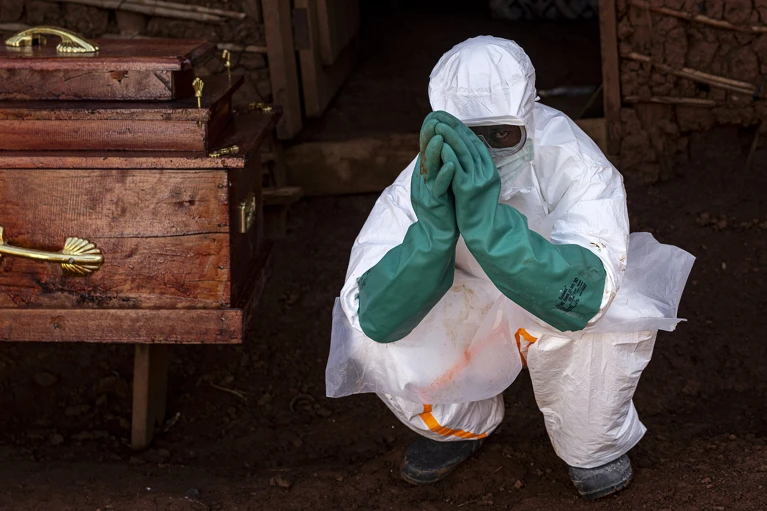
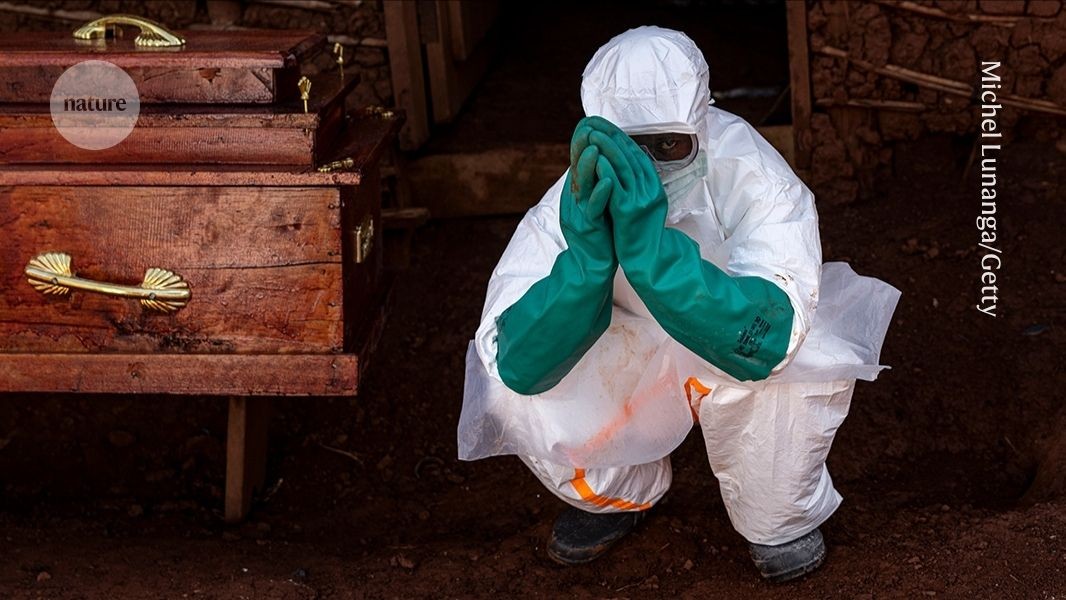
A community health worker next to a coffin of someone thought to have died from Ebola in Ituri province in the Democratic Republic of the Congo.Credit: Michel Lunanga/Getty
Half a century ago, researchers and policymakers joined together to identify an unknown disease and bring it under control. That first Ebola outbreak took 280 lives from 318 cases in what is now the Democratic Republic of the Congo (DRC). After it was reported in September 1976, rapid action — an organized campaign of surveillance, contact tracing, isolating cases and safe burials — meant that the outbreak was over within four months1.

Ebola outbreak: the data that show why researchers are so alarmed
Now, 50 years later, Central African countries are again in the middle of a serious outbreak, and one that was detected far too late. As Nature’s news team and others have reported (see Nature https://doi.org/q8r6; 2026), the virus responsible for the current outbreak, a rare species of Ebola virus called Bundibugyo, was probably circulating for months before any cases were reported. The very first case has still not been identified.
By the time World Health Organization (WHO) director-general Tedros Adhanom Ghebreyesus declared a public-health emergency of international concern (PHEIC) on 17 May, there had been 8 laboratory-confirmed cases, 246 suspected cases and 80 suspected deaths. When this editorial was published, 228 people were suspected to have died from the disease in the DRC, and one in Uganda. There were more than 900 suspected cases in total and around 120 had been confirmed.
Race begins to trial Ebola drugs amid current outbreak
In many ways, things have moved on since 1976. Then, virus samples needed to be sent to Europe and the United States for analysis, and rapid genome sequencing had not been invented. Now, countries affected by Ebola have much more home-grown scientific and medical infrastructure. And Africa has its own public-health agency, the Africa Centres for Disease Control and Prevention (CDC) in Addis Ababa, which is taking the lead in coordinating the response to the current outbreak. Moreover, countries including Nigeria, Rwanda and Uganda have better capacity for surveillance, testing, diagnosis and treatment. But the DRC does not. And of the 40 and counting Ebola outbreaks since 1976, this is where 17 have originated.
The WHO declaration of a PHEIC has unlocked a large international humanitarian effort — at an online meeting this week, US$500 million was pledged. And Springer Nature is among publishers making recent and relevant Ebola research freely available (see go.nature.com/4e5quov).
But the response must now also include a continent-wide effort to invest in public-health capacity, in the DRC, Uganda and another ten countries that Jean Kaseya, director-general of the Africa CDC, has said are at risk of an outbreak: Angola, Burundi, the Central African Republic, Ethiopia, Kenya, the Republic of Congo, Rwanda, South Sudan, Tanzania and Zambia. That investment must include research into and development of treatments and vaccines — there aren’t yet any for Bundibugyo. It must also include funding for public-health communication. At the time of writing, there is no single, easy-to- find dashboard providing updated figures for cases and deaths.
Conflict and depleted capacity
International health and humanitarian workers are reporting that the DRC’s disease surveillance and treatment capacity is severely depleted — a key reason why detecting this outbreak took so long. National and regional conflicts are impeding access to affected areas and a ceasefire is needed urgently. On 28 May, Tedros arrived in the DRC and called on the warring factions to declare a ceasefire — even if only briefly — so that health workers can access affected areas. “People are dying from Ebola who do not have to die. Children are sick. Families are suffering. No cause, no conflict, no grievance is worth condemning innocent people to death from a preventable disease. A ceasefire, even a temporary one, would save lives,” he wrote in a letter to the people of the DRC.
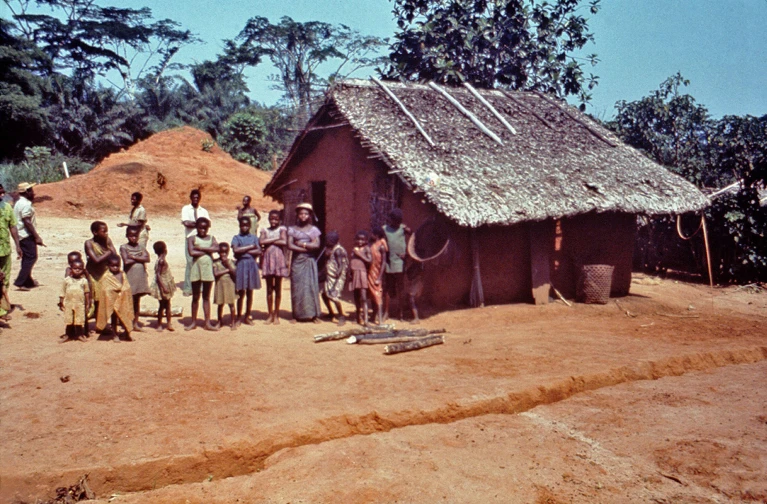
Residents of Yambuku in the Democratic Republic of the Congo during the 1976 Ebola outbreak.Credit: Science History Images/Alamy
Cuts to international aid funding — including the closing of the US Agency for International Development — has also had severe consequences. Before US President Donald Trump came into power, the United States funded some 70% of the DRC’s spending on humanitarian aid, according to Physicians for Human Rights, a non-profit organization in New York City. But these donations have now stopped, with devastating repercussions for the DRC.
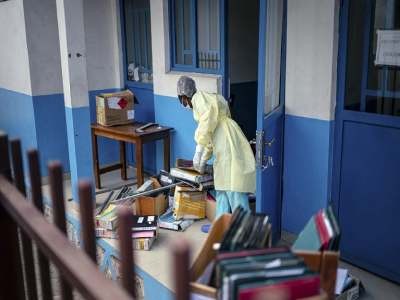
Ebola outbreak is a global health emergency: what happens next
By coincidence, this week, Africa’s leaders gathered near Brazzaville for the annual meeting of the African Development Bank, the continent’s main funding agency for infrastructure projects. Delegates discussed the latest African Economic Outlook, an annual report projecting the continent’s growth rates, as well as plans to unlock domestic finance for infrastructure, given the change in US policy. But spending on public health is not included in infrastructure spending, and neither public health nor science was on the main agenda at the meeting. This is baffling given that a major epidemic is growing in Central Africa — and the clear impact of the loss of external donors to protect the health of its people. The continent’s leading policymakers and their international partners must now prioritize public health.
Many studies remind us why protecting public health is not only a moral obligation and a human right, but also crucial for a country’s economic health. Nations that invest in public health are also investing in people’s ability to go out to work and support their families2,3. Earlier this year, the Africa CDC launched a report that urged member states to prioritize health-policy spending (see go.nature.com/3o9wxfc). Africa’s leaders need to regard public health as essential infrastructure: a sound investment with benefits that greatly outweigh the costs2.
Deadly infectious diseases left untreated and unchecked can devastate economies and societies. But they can be stopped when researchers, health practitioners and policymakers work together and act quickly. That key lesson from 1976 is just as valid today. African and global leaders responding to the latest outbreak must not forget it.

