


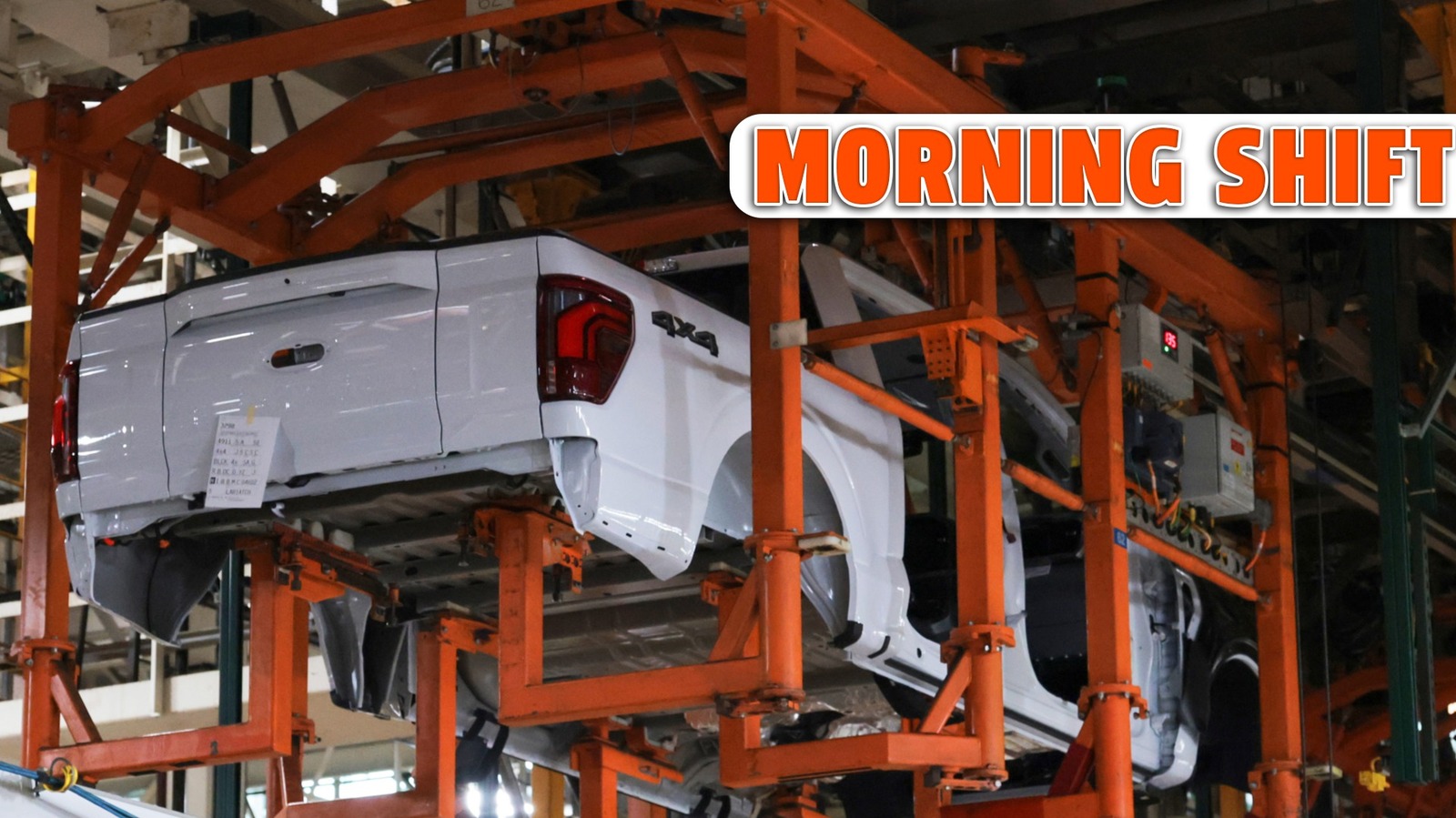
Ford is getting ever-so-close to hitting the 50-year anniversary of the F-Series being the best-selling truck in America, but it has a hell of a lot of work to do if it wants to get across that finish line — especially because of what seems to be a never-ending line of supply chain woes, which have caused its closest competition to push even harder. After a massive fire at an aluminum supplier in New York last year that snarled production, Ford factories have been working overtime to catch up, but so have General Motors and Ram.
GM announced it would increase heavy-duty Chevy Silverado and GMC Sierra production in Flint, Michigan, starting in June, citing demand. Additionally, Ram just launched its new lineup of “muscle trucks” aimed squarely at the Ford F-150 Lobo. Things are heating up, and Ford is almost certainly feeling the pressure.
Last month, Ford leadership said it had a 55-day supply of F-Series pickups at the end of Q1. A 60-day supply is considered the industry standard for a healthy inventory. Ford says it’s down by about 60,000 pickups overall from the same time a year ago, but a spokesperson for the brand says it has the trucks to meet demand. From the Detroit Free Press:
In the first quarter, Ford sold 159,901 F-Series, a 16% decline from the year-ago period, but still topping its closest two rivals. Chevrolet sold 127,545 Silverados, down 0.1% and Ram sold 98,425, a 24.8% increase over the year-ago quarter. GM’s other pickup, the GMC Sierra, came in fourth place having sold 75,607 in the quarter, a 3.7% decline from the year ago period. The sales figures combine sales of heavy-duty and light duty pickups.
Consistent strong demand for Silverado and Sierra pickups is the driving force for GM’s decision to increase truck production, GM spokesman David Caldwell told the Detroit Free Press. He said tight inventory levels in the first quarter are the result of strong sales last year following the best combined sales of Silverado and Sierra vehicles in 20 years.
[…]
At Stellantis, Ram CEO Tim Kuniskis knows that it may be a herculean task to win over customers from other truck brands, but that doesn’t stop him from trying.
In the first quarter, Ram posted a 20% gain in sales, bucking an industry-wide downturn and netting its highest sales gain in three years. Kuniskis said a good warranty package and the return of the HEMI V-8 engine is behind the growth.
[…]
“It’s really, really expensive (to poach buyers), so you try not to,” he said. “Because Ford in particular is over 80% loyalty. So, you can get somebody that wants a Ford to come and buy your vehicle. But you’re gonna have to give them a really compelling reason to give up that loyalty, because it may be generational loyalty.”
Ram is currently producing 1500 pickups — particularly those equipped with a 5.7-liter HEMI V-8 engine — at a slightly slower clip than what would be ideal, Kuniskis said. The truck brand’s manufacturing facilities are not equipped to produce the engines in the massive numbers consumers are demanding, after the HEMI was discontinued for the 1500 pickups after the 2024 model year and revived two model years later.
It’s not just the F-Series that Ram is aiming to supplant. Last week, Stellantis revealed North American plans for a Maverick-rivaling compact pickup, the Rampage, along with a midsize pickup named the Dakata, and for the launch of the range-extended Ram 1500.
When asked about the target on Ford’s back, Said Deep, Director of North America Communications at the automaker, was unfazed. He told Freep that, “at the end of the day, leaders lead,” and “for nearly 50 years, millions of truck owners have spoken, keeping Ford the No. 1 best-selling truck in America.”

