


JITF 401 signs $500 million contract with fast-growing startup
By DRONELIFE Features Editor Jim Magill
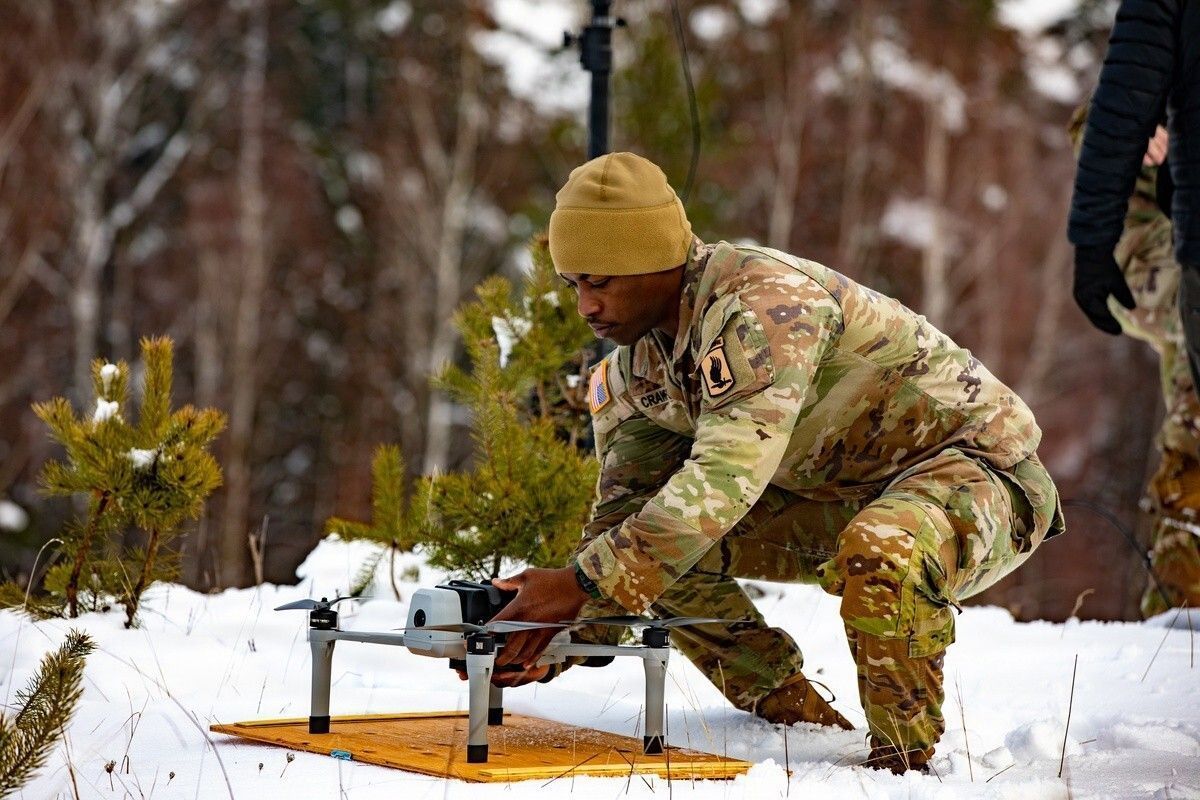
The Pentagon plans to acquire up to $500 million worth of drone and counter-UAS technology from a California defense technology startup, whose products have been tested in Ukraine’s battle to expel Russian invaders and deployed by U.S. forces in Operation Epic Fury.
Joint Interagency Task Force 401, the U.S. Defense Department’s arm dedicated to establishing counter-UAS systems for U.S. forces at home and abroad, announced that it has awarded a contract to Perennial Autonomy, a defense technology company, formed by former Google CEO Eric Schmidt.
The three-year Indefinite Delivery/Indefinite Quantity contract, with a $500 million ceiling, calls for the deployment of the company’s drone-to-drone counter-UAS technology across the Department’s widespread operations.
“The agreement accelerates the War Department’s capacity to deploy and scale low-cost, attritable air-to-air drone interceptors,” the statement says.
Under the contract Perennial Autonomy will provide a wide range of artificial intelligence (AI)-enabled counter-UAS systems, including Merops interceptors, Bumblebee quadcopters and Hornet midrange strike drones, which are currently being employed by forces operating in U.S. Central Command.
“[The task force] continues to advance our counter-drone capabilities by fielding systems that can operate across multiple domains and integrate with existing command and control architectures,” Army Brigadier General Matt Ross, JIATF 401 director, said in the statement.
“This partnership provides the joint force with state-of-the-art, counter-UAS capability to remain lethal on today’s modern battlefield,” he said.
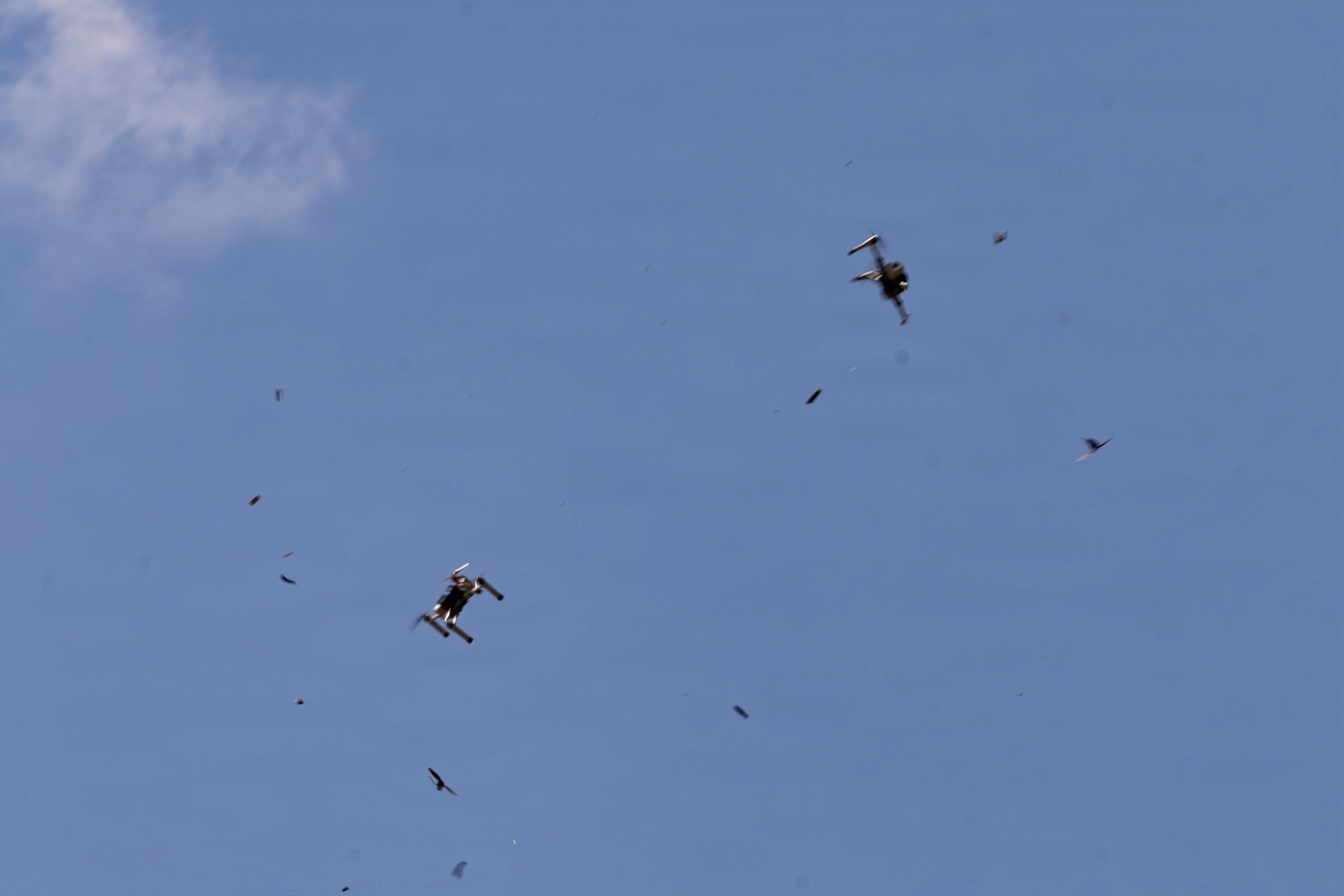
The wars in Ukraine and the Middle East, in which the use of low-cost Shahed-Series drones by both Russia and Iran has played a dominant role, have the spurred demand by U.S. and Western European defense force for Perennial’s counter-UAS systems. The company’s Merops AI-powered interceptor drone has been widely effective in successfully bringing down Shaheds, and doing so at a bargain-basement price.
A single fixed-wing autonomous Merops interceptor drone only costs about $15,000, less than half the price of the Shahed, which is estimated to cost between $30,000 and $50,000 per unit.
Merops system specifications
The highly mobile Merops system — consisting of radar and electro-optical sensors, controller gear and drone launcher — is small enough to fit in the bed of a pickup truck. It. The AI-enabled sensors can detect and locate incoming drones, then pass targeting data to the interceptor or to other friendly systems.
Merops launches a three-foot long, fixed-wing, propeller-driven interceptor drone, called Surveyor, that flies at speeds up to 175 mph (282 km/h). The projectile has an operational range of roughly 3 to 12 miles (5 to 20 km).
The Surveyor can be flown by a human operator or can be directed to fly autonomously using machine vision and thermal or radar sensors. These systems allow the drone it to lock onto and ram targets even when radio and GPS links are jammed.
Bumblebee potent weapon in Ukraine
Perennial’s Bumblebee drone, an autonomous combat and interceptor UAV, has proven to be a highly effective weapon in the Ukraine conflict. The company has delivered tens of thousands of the unmanned systems to the Armed Forces of Ukraine in the past several years of war.
Driven by an electric, multi-propeller system, the UAV flies at a maximum speed of up to about 220 mph (~350 km/h), at a maximum altitude of up to approximately 16,000 feet (5,000 m). The system features remote operation with AI-assisted targeting and visual-inertial navigation with jam-resistant communications.
The system’s AI-driven target- recognition capabilities makes it a potent weapon for use against vehicles, soldiers and other drones.
Hornet midrange strike drones
The Ukrainian military has found the Hornet midrange strike drone to be a highly effective weapon for striking enemy assets far removed from the front lines of the battlefield. The fixed-wing, AI-enabled loitering munitions vehicle has a range of more than 60 miles (100 kilometers).
A fixed-wing drone, the catapult-launched Hornet features a 6-foot (2-meter) wingspan, vertical stabilizer, rudder, and a tail-mounted pusher propeller.
Initially developed for and tested in battle by Ukrainian forces, the system has caught the attention of U.S. military planners and the U.S. Army recently deployed the system successfully during exercises in Lithuania and Poland.
Rapid success for young company
In the few short years since its founding, Perennial’s low-cost, highly attritable counter-UAS solutions have been embraced by the militaries of allied western nations in both Europe and the U.S.
The company is the successor to a series of defense technology startups Schmidt had first launched in 2023. Schmidt had secretly launched the defense startup, then known as White Stork, to focus on building low-cost, attritable and AI-enabled loitering munitions.
The following year, the company changed its name to Project Eagle and developed the Merops drone interceptor. Over the next several months, the system underwent rapid operational testing and was deployed on the battlefield in Ukraine, where it reportedly intercepted thousands of Iranian-designed Shahed one-way attack drones.
Earlier this year, the company again rebranded itself, changing its name to Perennial Autonomy. In February the company secured a $5.2 million contract with the JIATF-401 to evaluate the use of its Bumblebee V2 counter-drone system.
In April Army Secretary Dan Driscoll told Congress that the Army had purchased 13,000 Merops low-cost interceptor drones and begun deploying them in the Middle East theater to protect American assets from Iran’s Shahed one-way attack drones.
NATO member nations have also been eager to adopt the Perennial low-cost counter-drone technology. Earlier this month Lithuania, a NATO state bordering both Russia and Belarus, became the most recent Western European country to embrace the technology, when it bought 48 Merops interceptors from the company.
Read more:
 Jim Magill is a Houston-based writer with almost a quarter-century of experience covering technical and economic developments in the oil and gas industry. After retiring in December 2019 as a senior editor with S&P Global Platts, Jim began writing about emerging technologies, such as artificial intelligence, robots and drones, and the ways in which they’re contributing to our society. In addition to DroneLife, Jim is a contributor to Forbes.com and his work has appeared in the Houston Chronicle, U.S. News & World Report, and Unmanned Systems, a publication of the Association for Unmanned Vehicle Systems International.

