


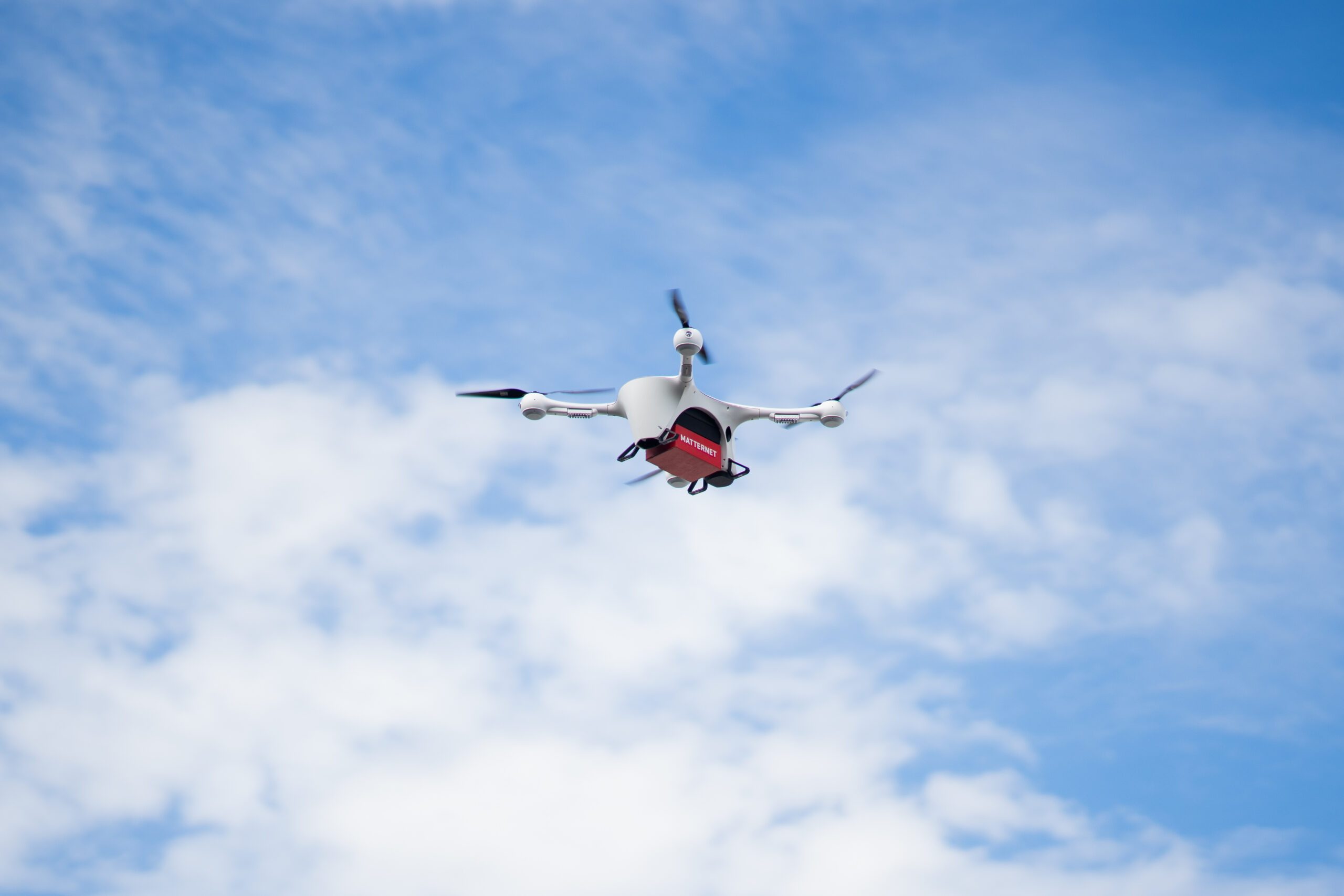
Silicon anode battery technology aims to improve range, charging time, and delivery economics for commercial drone operations
Battery manufacturer Amprius Technologies and drone delivery company Matternet have announced a strategic partnership focused on improving the performance of commercial drone delivery systems through advanced battery technology.
The companies said that Amprius silicon anode lithium-ion cells now power Matternet’s M2 drone aircraft. They are also working together on battery systems for Matternet’s next-generation drone platform.
The announcement highlights how battery performance has become a major factor in drone delivery operations. Longer range, faster charging, and lighter batteries can help operators expand coverage areas while lowering operational costs.
“As the world’s leading urban drone delivery player, we partner with the best technology companies in the world to push what’s possible,” said Andreas Raptopoulos, Founder and CEO of Matternet. “Amprius delivers best-in-class battery performance, and in drone delivery that translates directly into commercial advantage. Every additional mile of range expands our network coverage. Every minute saved in charging increases fleet utilization. And every gram saved can translate into greater payload capacity. With Amprius, we have the opportunity to engineer that technology around our aircraft, our network model, and our cost-per-delivery targets.”
Focus on Performance and Commercial Scale
According to the companies, Amprius silicon anode cells can deliver up to twice the energy density of traditional graphite-based lithium-ion batteries. In aviation applications, higher energy density can help reduce battery weight while increasing aircraft endurance and payload capability.
For drone delivery operators, those improvements can directly affect business performance. More efficient batteries may allow operators to complete more deliveries per aircraft each day while supporting larger service areas.
The partnership will focus on optimizing several battery characteristics for Matternet’s future aircraft, including:
- Cell selection
- Battery form factor
- Thermal performance
- Charge rates
- Cycle life
The companies said they plan to tailor the battery system around Matternet’s aircraft architecture and operational network. The goal is to improve aircraft availability and reduce cost per delivery as operations scale.
“At Amprius, we are focused on partnering with category leaders in applications where battery performance changes what is possible,” said Tom Stepien, CEO of Amprius Technologies. “Matternet is exactly that kind of partner, a company with a proven certified platform, real commercial operations, and a clear path to scale. By working closely with Matternet’s engineering team, we can optimize our silicon anode technology for their aircraft, operating models, and cost-per-delivery objectives. That kind of alignment is how battery innovation translates into real-world commercial advantage.”
Drone Delivery Growth Depends on Battery Advances
The announcement comes as the drone delivery sector continues to move from pilot projects toward larger commercial deployments. Companies across the industry are working to improve aircraft range, payload capacity, reliability, and operational efficiency.
Battery technology remains one of the most important factors in that effort. Electric drones must balance payload weight, flight time, charging schedules, and operating costs within strict aviation safety requirements.
Matternet has been one of the most established companies in the sector. The company became the first drone delivery operator to receive FAA Type Certification for a delivery drone platform in the United States. It has also conducted more than 60,000 commercial flights across the U.S. and Europe.
The companies said Amprius cells are already flying in Matternet’s current M2 fleet. They are now preparing for deeper integration into Matternet’s future aircraft platform. Amprius said it is targeting production readiness aligned with Matternet’s planned fleet expansion beginning in early 2027.
Read more:

Miriam McNabb is the Editor-in-Chief of DRONELIFE and CEO of JobForDrones, a professional drone services marketplace, and a fascinated observer of the emerging drone industry and the regulatory environment for drones. Miriam has penned over 3,000 articles focused on the commercial drone space and is an international speaker and recognized figure in the industry. Miriam has a degree from the University of Chicago and over 20 years of experience in high tech sales and marketing for new technologies.
For drone industry consulting or writing, Email Miriam.
TWITTER:@spaldingbarker
Subscribe to DroneLife here.

