



You have full access to this article via your institution.
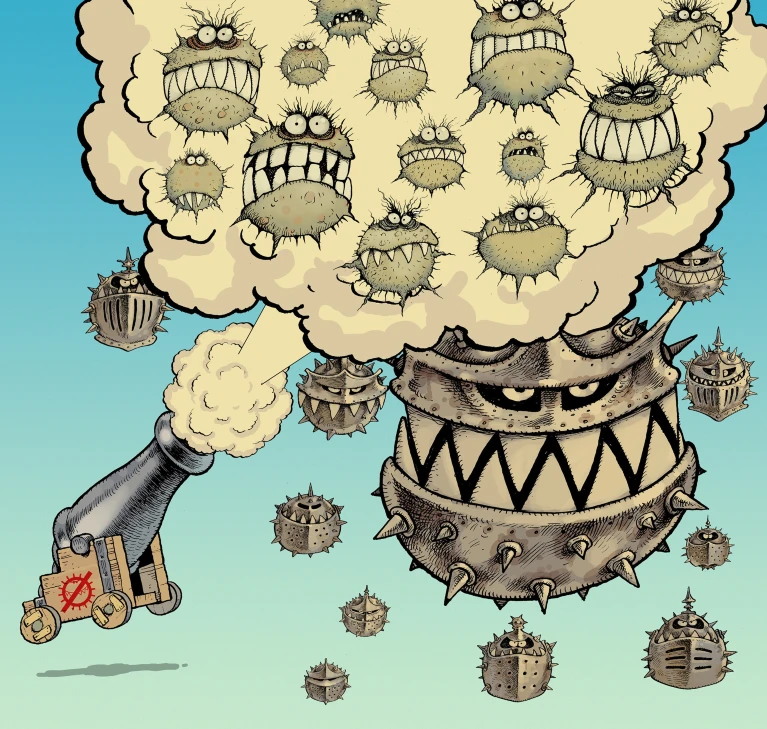
Credit: David Parkins.
Death by paper cut. The consequences of unfettered antimicrobial resistance are as absurd as they are sinister. Harmful bacteria and other pathogens are rapidly developing countermeasures to the world’s antibiotic arsenal, and eroding physician’s ability to treat infections. Unless resistance can be slowed, and drugs brought in to replace those that no longer work, microorganisms that are a minor inconvenience today could be killers tomorrow. And the world would re-enter an era of deaths from preventable causes. That’s not much fun to read. But lest you become overwhelmed by the existential dread of such backsliding, here’s a kernel of hope: antimicrobial resistance is a biomedical problem that individuals can do something about. It’s not even a big ask.
Nature Outlook: Antimicrobial resistance
To paraphrase the microbiologist Alexander Fleming, who discovered penicillin, in his 1945 Nobel prize lecture: when you take antibiotics, take enough. Fleming knew then that exposing bacteria to sub-lethal doses of penicillin could generate resistance. So, too, does taking antibiotics for viral infections. Another problem, especially in countries where antibiotics are sold on the street, is that people use the most powerful drugs available when a more commonplace one would suffice. Doing so degrades the efficacy of someone else’s life-saving medicine.
Some major drivers of antimicrobial resistance, such as widespread agricultural use of antimicrobial agents, are less amenable to individual action. The practice puts livestock handlers and fruit pickers at especially high risk of developing hard-to-treat infections. And resistant bacteria can spread readily from farms to homes on food products, and can even be carried on the breeze.
There is also a desperate need to address the economic headwinds that have almost halted the development of antibiotics. And when new antimicrobial products do arrive, they will need to be used more sensibly than have those that have already lost their power. But the first step towards addressing antimicrobial resistance starts at home: by completing the course of antibiotics prescribed.
We are pleased to acknowledge the financial support of Meiji Seika Pharma in producing this Outlook. As always, Nature retains sole responsibility for all editorial content.

