


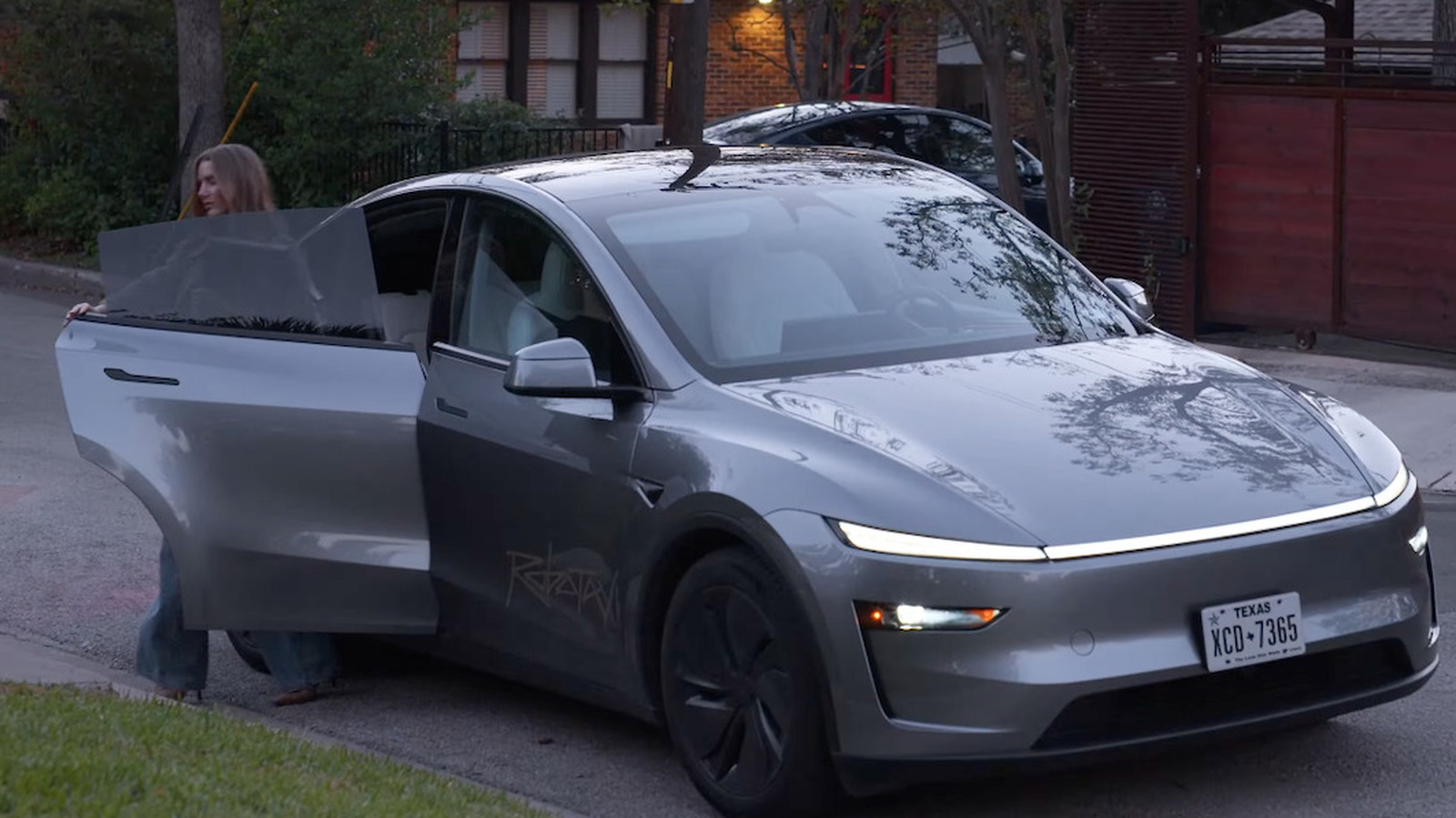
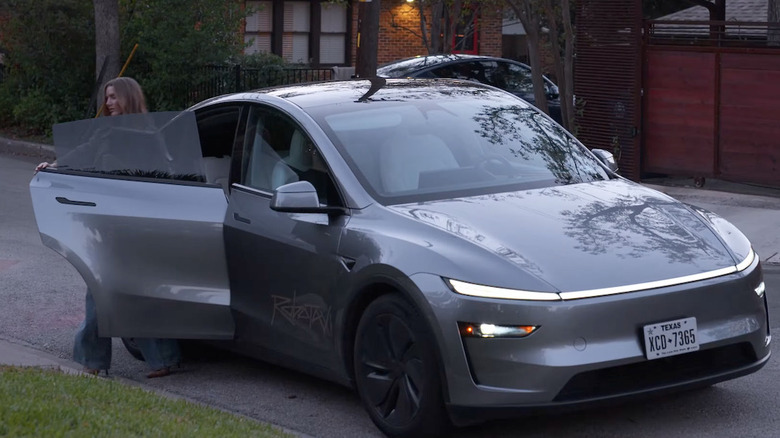
Sure, Tesla’s robotaxis are rolling out in greater numbers, but rather than the sleek, hassle-free experience CEO Elon Musk has promised, most customers are being saddled with never-ending wait times, a lack of availability and drop-off spots nowhere near where they wanted to actually go. Reuters reporters in Dallas and Houston, the company’s two newest service locations, found all sorts of frustrating boondoggles while trying to use Tesla’s system that, honestly, makes walking sound a hell of a lot more appealing. That’s really saying something if you know anything about the nightmare of walking around a Texas city.
Much of Tesla’s massive $1.6 trillion market value is tied up in the idea that its self-driving robotaxis will change the automotive industry. Thus far, it’s lagging behind companies like Waymo in that regard. Musk has said the automaker’s self-driving tech “works anywhere,” and he’s actually been critical of Waymo in the past, pointing to the company’s use of high-definition mapping and extensive testing before entering new markets. I’m sure the troubles Tesla is facing in regard to its robotaxis won’t do anything to change the stock price, but there’s something to be said for the real-world efficacy of Tesla’s system versus Waymo’s. Tesla’s robotaxis are — at best — still in the beta testing phase.
A real pain
One reporter on May 11 said they waited nearly two hours to take what amounted to a 20-minute drive from the campus of Southern Methodist University to Dallas City Hall. It’s a five-mile trip on a major freeway, but that’s somehow too much for the system to handle. The reporter says they requested a ride on the Tesla Robotaxi app, but they were notified of “high service demand.” At the same time, Uber showed an eight-minute wait for the same ride.
For the next half hour, the reporter says that they tried to book a ride, but they continued to see the high-demand message or another one showing “no rides available nearby.” Then, finally, after 36 minutes of searching, a car finally showed up, and the wait time was still 19 minutes. Things didn’t get better when it finally did come to pick the reporter up, either. Instead of taking the main highway, the Tesla — in its infinite wisdom — took some sort of convoluted surface street route that made the trip 35 minutes long… and then dropped him off in a parking lot that was a 15-minute walk away from his intended destination.
After they pressed the “support” button inside the Model Y, an agent told them the area was restricted, according to Reuters. That’s all well and good, but the area was inside the Dallas service map that Tesla had posted on social media last month. The agent added that it was still “in the beta version.”
This wasn’t the only time something like this happened, either, as Reuters reports:
The reporter booked rides to two other locations downtown. Each time, the app showed that the car would drop off the passenger in an area that would require a walk of about 15 minutes to reach the destination. On a ride to a downtown farmers’ market, the robotaxi dropped off the reporter on the opposite side of a freeway and suggested he walk under overpasses strewn with trash and smelling of urine.
[…]
In Houston, Tesla is operating robotaxis in a small suburban area on the northwest side. Another Reuters reporter who recently tested the service on a weeknight was able to obtain one ride. When she tried a second time, the same car showed up as being 13 minutes away, but the app later canceled the ride.
She tried to find another car for the next 30 minutes but none were available. She ordered an Uber to her destination.
Other issues
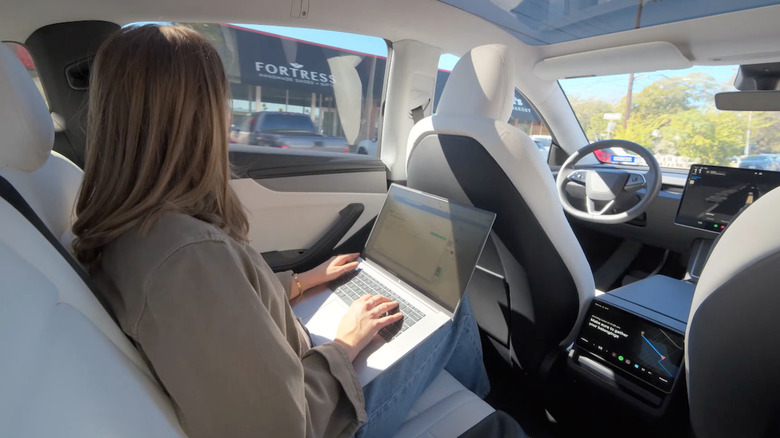
These reporters didn’t just face issues of long waits and weird drop-off locations. They also had to deal with their car not making a left turn four times. The turn was apparently in front of a freeway off-ramp with “do not enter” signs. It’s admittedly an unusual intersection, but it’s not something that a vehicle as advanced as Tesla’s robotaxi shouldn’t be able to handle. Nevertheless, the car was confused, so it continued straight, made a bunch of right turns to double back around the block and tried again… four times. Eventually, they called a remote attendant and the car was able to navigate the turn.
It’s not like things are much better in Austin, either, and that’s despite the fact that Tesla robotaxis have been roaming the streets there for nearly a year at this point. Customers are still routinely experiencing half-hour-plus wait times, according to Reuters, and it’s partially because the company only has about 50 vehicles operating in the city. Meanwhile, Waymo has over 250. Hell, some robotaxis still have human safety monitors.
A Reuters reporter in Austin spent three weeks in April tracking wait times for Tesla robotaxis eight times a day, from morning through evening. The wait times exceeded 15 minutes about half of the time, and were at least 25 minutes on more than one-quarter of checks. In 27% of cases, no cars were available at all.
At the very least, there haven’t been any major crashes involving Tesla robotaxis in Austin, but the company has reported 15 crashes to the National Highway Traffic Safety Administration. Most of those didn’t involve any injuries, but one did send a person to the hospital. Unlike other automakers, Tesla has asked regulators to redact all crash information, and that’s definitely not sketchy at all.
I suppose it’s a bit of a hard choice if you’re trying to decide how you want to get around one of these cities. You could either take a taxi or an Uber, which is relatively quick, cheap and clean. Or, you could spend a couple of hours looking for and maybe taking a Tesla robotaxi. At least there won’t be someone in there with you. Oh, wait, would you look at that. There’s a safety monitor in the passenger seat. Never mind.

