



You have full access to this article via your institution.

Harmful impacts of greenhouse-gas emissions, such as those from transport, are not accounted for in GDP.Credit: RJ Sangosti/The Denver Post/Getty
“Growth at any cost leaves us all poorer.” Those were the words of United Nations secretary-general António Guterres last week at the launch of a landmark report, Counting What Counts, which he commissioned from a team of researchers and policymakers (www.un.org/beyondgdp). It proposes how countries can move beyond gross domestic product (GDP), the world’s main indicator for the health of economies.

How to measure a good life — tips for moving beyond GDP
GDP has its roots in a concept proposed in the 1930s (see go.nature.com/4324jwf), and GDP growth has since become the main economic-policy objective for most governments. Drops in GDP are often seen by markets, the media and commentators as a sign of government incompetence. However, this kind of growth has coincided with persistent inequality and environmental degradation worldwide, as the report says. If economic development is to benefit as many people as possible and to be sustainable in the long term, a measure is needed that captures these factors — and GDP does not.
The authors have compiled 31 indicators, covering human rights, peace and respect for the planet, that they recommend governments measure (see Nature https://doi.org/q57n; 2026). Of these, 15 are already indicators for the UN Sustainable Development Goals. The report also recommends that a committee of scientists be appointed to work on one or more headline indicators that could aggregate variables into one quantity, much as GDP does. The governments of Spain and Guyana have been handed the baton to take the recommendations forwards.
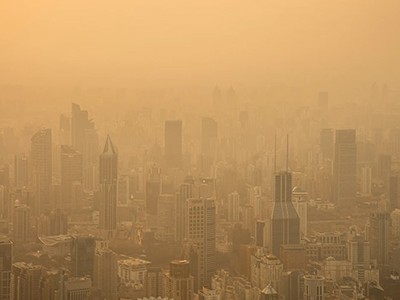
Goodbye GDP? 31 ways to replace the world’s favourite measure of economic health
The invitation of scientists to participate in the process is a welcome development, because until now the theory and application of GDP has mostly been the preserve of economists and economic statisticians. Any effort to distil the 31 indicators into a few headline statistics will need input from many disciplines. All who are involved in the next phase must study previous efforts to complement GDP and learn from past successes and failures. This is a once-in-a-generation opportunity to correct a long-standing flaw.
By a common method of calculation, GDP is the sum of the value of goods and services; what households and governments spend added to investment from businesses; and income. As the report acknowledges, one reason for the measure’s enduring attractiveness is that it is easy to understand and communicate, and enables comparisons to be made over time and between countries and regions. Simplicity was also a hallmark of the Human Development Index (HDI), which was created in a previous attempt to dethrone GDP more than three decades ago.
When the Pakistani economist Mahbub ul Haq began to plan the HDI with his friend, the Indian economist Amartya Sen, he said he wanted to create an index that would be like GDP “but would stand for better things”. The HDI architects chose three measures: income, education and life expectancy at birth. They assigned an equal weight to each and then converted countries’ performance into a single, comparable number (A. D. Sagar and A. Najam Ecol. Econ. 25, 249–264; 1998).
To move beyond GDP, don’t ignore ecological economics
The hard part for those involved in the latest attempt to move beyond GDP will be to choose which of the 31 indicators to focus on. They must also decide whether those should be given equal weighting or whether they should prioritize some variables over others, and whether (as with GDP) the indicator should have a monetary value. These obstacles can be overcome: existing headline indicators constructed from different variables include gross ecosystem product, which quantifies the value of nature to economies, and the multidimensional poverty index, an estimate of how many people face deprivation (measured by indicators such as housing, child mortality and availability of clean water).
But the use of these indicators hasn’t changed most governments’ focus on maximizing GDP. One reason is that GDP has its own rules, called the System of National Accounts, which are set by the UN Statistical Commission (UNSC), a decision-making body comprising the chiefs of national statistics offices. This group is extraordinarily influential, but historically it is not used to engaging with other organizations, even within the UN system. If a new indicator is to have at least the same importance as GDP, then the UNSC must put its weight behind it.
It is good to see that Guterres, UN member states and the report’s authors underscore the necessity of working with the UNSC and with many other stakeholders. In championing the search for alternatives to GDP, Guterres has chosen what can be called the hard problem of economic policy. Hard, but not impossible. The authors of Counting What Counts have laid strong foundations. Let’s get the world’s best brains on the case to design something with similarly lasting influence.

