




The Cutfoot Experimental Forest in Minnesota is near a research facility that could be closed as part of the US Forest Service’s reorganization.Credit: Salwan Georges/The Washington Post/Getty
“Overwhelmed.” “Saddened.” “Crushed.” “Demoralized.” That’s how some former and current scientists at the US Forest Service feel as the agency weighs closing dozens of its research sites. The list includes facilities that support research at woodlands designated as experimental forests, some of which have supported active, longitudinal research for more than a century.
These locations are “irreplaceable. You can’t say, ‘Okay, I lost that one. I’m going to go start another 70-year study,’” says a recently retired forest-service scientist. (They requested anonymity to protect ongoing research collaborations with agency staff.)
As it stands, the forest service’s Research and Development (R&D) branch is the world’s largest forestry-research organization, with roughly 1,000 employees at 77 sites. Its scientific track record includes identifying the exact species of fungus that causes white-nose syndrome in bats and creating a woodland-fire model used in multiple countries.
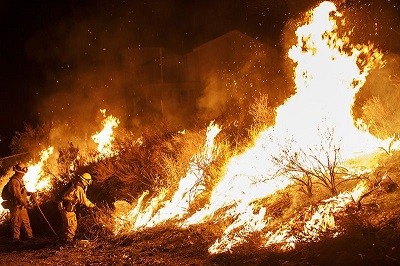
These scientists are setting a forest on fire — and studying it with drones
If a large number of sites are closed, many research projects would be more difficult, if not impossible, according to nearly two dozen former forest-service scientists and six of their collaborators who spoke to Nature. These researchers also say that uncertainty over job reassignments could drive scientists to leave the agency, and that the proposal is the latest blow to an organization that, over the past 18 months, has already lost hundreds of employees in the R&D branch and cut back its scientific work.
Forest-service officials justify the proposal by pointing to the agency’s vast stock of neglected infrastructure and the low occupancy of some sites, and say that its science won’t be affected. “The intent of the reorganization is to maintain the research,” US Forest Service chief Tom Schultz told Congress in April.
But others worry that closures will have far-reaching consequences.
The reorganization plan “is very short-sighted,” says Vicki Christiansen, who was forest-service chief during President Donald Trump’s first term, which ended in 2021. “If administrations need to scale back, they need to scale back. But do it in a thoughtful way that sustains some of the core pieces of what generations before us have collected.”
Research likely to ‘dry up’
The Trump administration’s 2026 budget proposed no funding at all for forest-service R&D, but Congress slightly increased its share from 2025 levels, to US$309 million. Last month, the administration released a proposal for 2027 that again gave no funding for the R&D branch. Congress, which has the final say over federal spending, has not yet responded.
On 31 March, the forest service announced it would close 57 of its 77 research sites, which range from a split-level house to sprawling complexes of laboratories and greenhouses (see ‘Research sites under threat’). After protests from members of Congress and others, the agency reversed course and now says it is evaluating the future of the 57 sites. It says it will make decisions “over the coming year”.

Source: US Forest Service
The agency maintains that closures would save money and increase efficiency.
“We have a $3-billion deferred maintenance backlog,” Schultz told Congress in April, referring to the price tag for projects across the entire agency. He added that many sites have only a few employees. A forest-service fact sheet says that it’s a “myth” that “research activities will stop if some facilities close”. It also says that the agency will relocate R&D staff and programmes from closed research sites and that “closure of facilities on experimental forests will not affect the ability to conduct research at these locations.”
At least one former forest-service scientist is supportive. “Decreasing overhead is generally thought to be a good thing,” says Sharon Friedman, a retired forest-service geneticist.
But many former workers are generally sceptical of the administration’s arguments, including its assertions about costs. “R&D deferred maintenance is a real drop in the bucket,” says Alexander Friend, who led the R&D branch as deputy chief for four years. The forest service did not immediately respond directly to Friend’s statement, but said, “These are proposed closures, nothing is final. We are taking a hard look at the cost of each facility, its utilization, and its deferred maintenance needs while supporting our people.”
Friend and others say that closing research sites will inevitably lead to a decline in science.
“Forest-service research is very place-based,” says Ann Bartuska, who led the R&D branch for seven years. “If you close the location, that research will likely dry up.”
‘Break and lose things’
The experimental forests are a prime example, say researchers. Facilities at or near these remote locations are crucial for tasks such as refrigerating animal specimens. Saying that closing facilities “isn’t going to impact research is really not true,” says Mariko Yamasaki, a wildlife biologist who worked at an experimental forest before retiring in 2023.

