


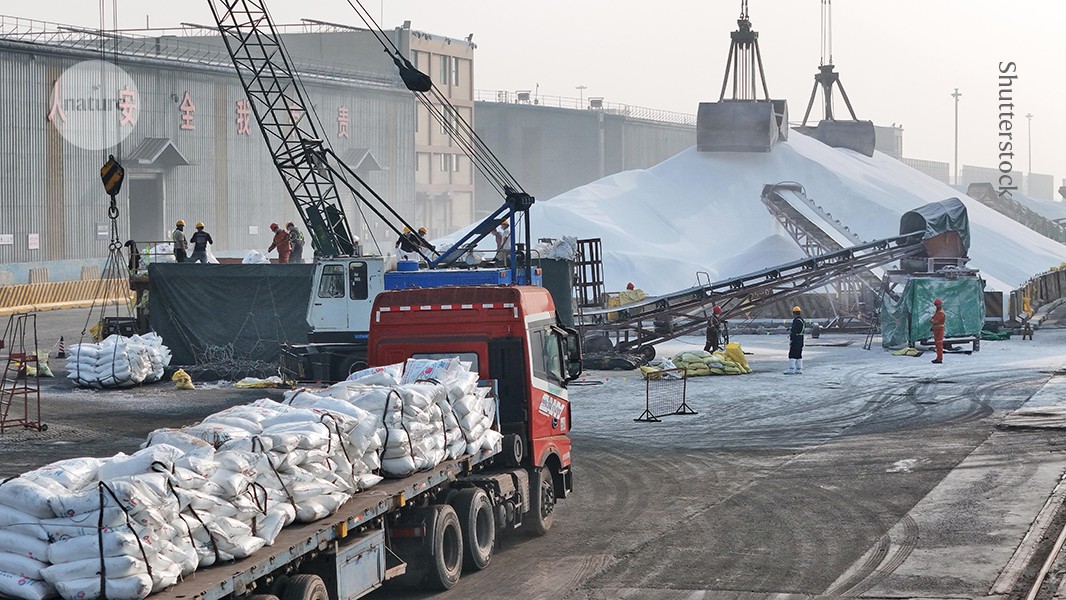
Since March, war in the Middle East has disrupted global fertilizer markets. Urea prices jumped by nearly 46% in a month, as geopolitical and energy shocks hit nitrogen supply chains1. The disruptions caused by blocked maritime bottlenecks, including the Strait of Hormuz, limiting tanker movements and flows of oil and liquefied natural gas, underscore the coupled nature of global energy and food systems.
As a result of the crisis, the World Food Programme has warned that global food systems are under severe strain, with more than 360 million people facing acute food insecurity in 2026 and tens of millions at risk of famine (see go.nature.com/48jygpd).
These dynamics echo the fertilizer crisis of 2022, when Russia’s invasion of Ukraine decreased ammonia production across Europe — at times by more than half — and drove nitrogen fertilizer prices to record highs (see ‘Fertilizer shortfalls’). The recurrence of this pattern of an energy shock causing fertilizer disruption and food insecurity exposes a systemic vulnerability that must urgently be addressed.

Source: go.nature.com/3gha59s
Fertilizer production needs to be recognized as crucial infrastructure for ensuring food security. Meanwhile, the agricultural sector must reduce its dependence on volatile energy markets through precise nutrient management and diversified production technologies.
Food and energy links
Half of all food consumed globally depends on synthetic nitrogen fertilizers made using an industrial ammonia-producing method called the Haber–Bosch process2. This process consumes 1–2% of global energy and contributes a comparable share of carbon dioxide emissions. Natural gas serves as both a feedstock and the primary energy source, accounting for 70–80% of ammonia-production costs. This coupling means that disruptions in energy markets push up fertilizer prices rapidly.
How the war in Iran is reshaping the energy landscape
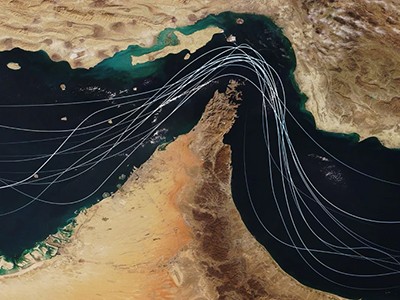
The current fertilizer crisis is worse than the one in 2022 because more countries are affected. The Strait of Hormuz is a crucial passage for world trade — about 38% of global crude oil, 29% of liquefied petroleum gas, 19% of liquefied natural gas and 13% of chemicals, including fertilizers, normally pass through it3.
Shipments have been all but halted by security threats and blockades. Exports from key suppliers, including Saudi Arabia, Qatar, Kuwait, Iran and the United Arab Emirates, to global nitrogen, sulfur and phosphate markets are constrained. This has raised nitrogen fertilizer prices by 30% and phosphates by 5–15% as buyers compete for limited supplies.
A cascading shock
The timing is particularly acute, because it coincides with the region’s spring planting season, when farmers are finalizing nutrient procurement and have limited capacity to adjust application strategies.
Energy price spikes generate immediate economic impacts and policy responses, whereas fertilizer shocks unfold on slower agricultural timescales. Farmers typically purchase fertilizer weeks to months before planting, and reduced applications translate into lower yields in subsequent growing seasons.
These production shocks then propagate through markets, reducing grain supplies and increasing food prices in subsequent seasons. Import-dependent regions, particularly in sub-Saharan Africa, South Asia and parts of Latin America, have limited capacity to absorb these delayed but persistent impacts4.
The 2022 crisis highlights this dynamic. Because global urea prices rose from roughly US$250 to more than $800 per tonne, higher prices and reduced affordability led to decreased fertilizer application in several regions. The greatest impacts were seen in low-income economies, especially those in sub-Saharan Africa4,5.

A plant in Jordan that processes potash for use as a fertilizer.Credit: Bill Lyons/Alamy
India’s fertilizer subsidies amounted to about $30 billion in 2022–23, because the government absorbed global price shocks to shield domestic farmers from the full impact of soaring input costs6. Emergency subsidies are expensive to fund. Countries without such fiscal capacity had lower yields of staple crops, including maize (corn), rice and wheat. Over the longer term, the consequences contributed to restricting global grain supplies and higher food prices in subsequent years7.
Crucially, the relationship between fertilizer and yield is not linear: even modest reductions in the quantities applied can produce disproportionately large decreases in output, particularly if minimal amounts are used already. The countries least able to afford fertilizer are therefore those where small reductions impose the greatest production losses.
Slow to react
Despite these lessons, responses remain reactive. When fertilizer prices surge, governments often impose export restrictions to protect domestic supplies, inadvertently exacerbating shortages for import-dependent nations. China, for instance, has periodically restricted exports of fertilizers such as phosphates and urea since 2021.

Food systems: seven priorities to end hunger and protect the planet
This reactive posture reflects a deeper gap: fertilizer is treated mainly as an industrial commodity rather than as a crucial part of the food system. Global food-security frameworks, including the Agricultural Market Information System, monitor grain stocks and trade flows but not fertilizer supply chains. There are no international fertilizer reserves analogous to strategic petroleum ones.
Few countries have policies that link energy resilience to agricultural production explicitly. Shipping networks that transport fertilizers remain vulnerable to geopolitical disruption, with rising war-risk insurance premiums increasing the cost and uncertainty of maritime trade. The result is a system that responds to fertilizer crises only after planting decisions have been made and yield losses are locked in.
Ending the cycle
Five areas of coordinated action could break this cycle.
First, governments and international institutions must treat fertilizer production and supply as strategic food-security infrastructure. This requires the development of nationally and internationally coordinated buffer mechanisms capable of mitigating short-term supply disruptions. These should be analogous to strategic petroleum reserves, even if they differ in design and governance.
Governments should incorporate ammonia-production capacity into energy-security planning, ensuring that fertilizer plants are prioritized to receive energy during crises. Multilateral platforms — including the G7 and G20 groups of the world’s biggest economies and the United Nations Food and Agriculture Organization — should integrate fertilizer supply chains into the mechanisms they use to coordinate responses to food and commodity crises.
Food will be more affordable — if we double funds for agriculture research now
The Agricultural Market Information System should be expanded to include real-time monitoring of fertilizer production, trade and inventories8. Industry and trade organizations, including the International Fertilizer Association and the World Trade Organization, can support this by promoting transparent reporting standards and strengthening norms that discourage unilateral export restrictions during periods of global market stress.
Second, the fertilizer industry must move away from using fossil-fuel feedstocks. Low-carbon ammonia production, using renewable electricity and electrolytic hydrogen, is no longer just theoretical. Small-scale and early commercial-scale projects are operating or under development in countries such as Norway, Australia, Chile and India.
Such green ammonia systems could reduce emissions, lower transport costs and decrease import dependency in low-income countries, particularly in those where renewable-energy resources are abundant. However, electrolytic ammonia production remains more expensive than conventional fossil-fuel-based methods, often by a factor of two or more depending on energy prices and system configuration. Closing this cost gap will require sustained policy support and long-term investment, similar to the coordinated public–private efforts that pushed prices of solar photovoltaic technologies and wind-energy systems down8.

A fertilizer storage warehouse in Iowa.Credit: Amir Hamja/New York Times/Redux/eyevine
A dedicated global financing mechanism for green ammonia — supported by institutions such as the Green Climate Fund, the International Finance Corporation and the International Renewable Energy Agency — could provide the demand signal and the capital required to scale up production. For food-security purposes, priority should be given to decentralized, modular production systems that can be located near renewable-energy sources and agricultural areas, thus reducing exposure to disruptions in long-distance supply chains and geopolitical bottlenecks.
Third, the agricultural sector must reduce its exposure to volatility in fertilizer supplies and prices by improving how nutrients are managed in the field. The efficiency of nitrogen and phosphorus use remains suboptimal in most large cropping systems, particularly in low-income countries9.
Precision agriculture technologies now enable fertilizers to be applied with much greater spatial and temporal accuracy than conventional uniform-rate methods. Variable-rate application systems, guided by soil sensing, remote imagery and data-driven decision tools, can reduce fertilizer inputs while maintaining or improving yields in many production systems, although outcomes remain site- and crop-specific.
Productivity benefits can be gained when nutrients are delivered in close alignment with crop demand in space and time. Enhanced-efficiency fertilizer formulations, including controlled-release products and nitrification inhibitors, increase nutrient retention and reduce losses. Affordable sensing technologies, including portable spectroscopic soil sensors and drone-based nutrient mapping, are becoming increasingly accessible.

