


Happy Wednesday! It’s April 29, 2026, and this is The Morning Shift — your daily roundup of the top automotive headlines from around the world, in one place. This is where you’ll find the most important stories that are shaping the way Americans drive and get around.
In this morning’s edition, we’re looking at China’s pause on self-driving, and the prevalence of Chinese cars around the Mexican border. We’ll also look at Volkswagen reconsidering its German production base, and Mercedes’ less-than-stellar first quarter results.
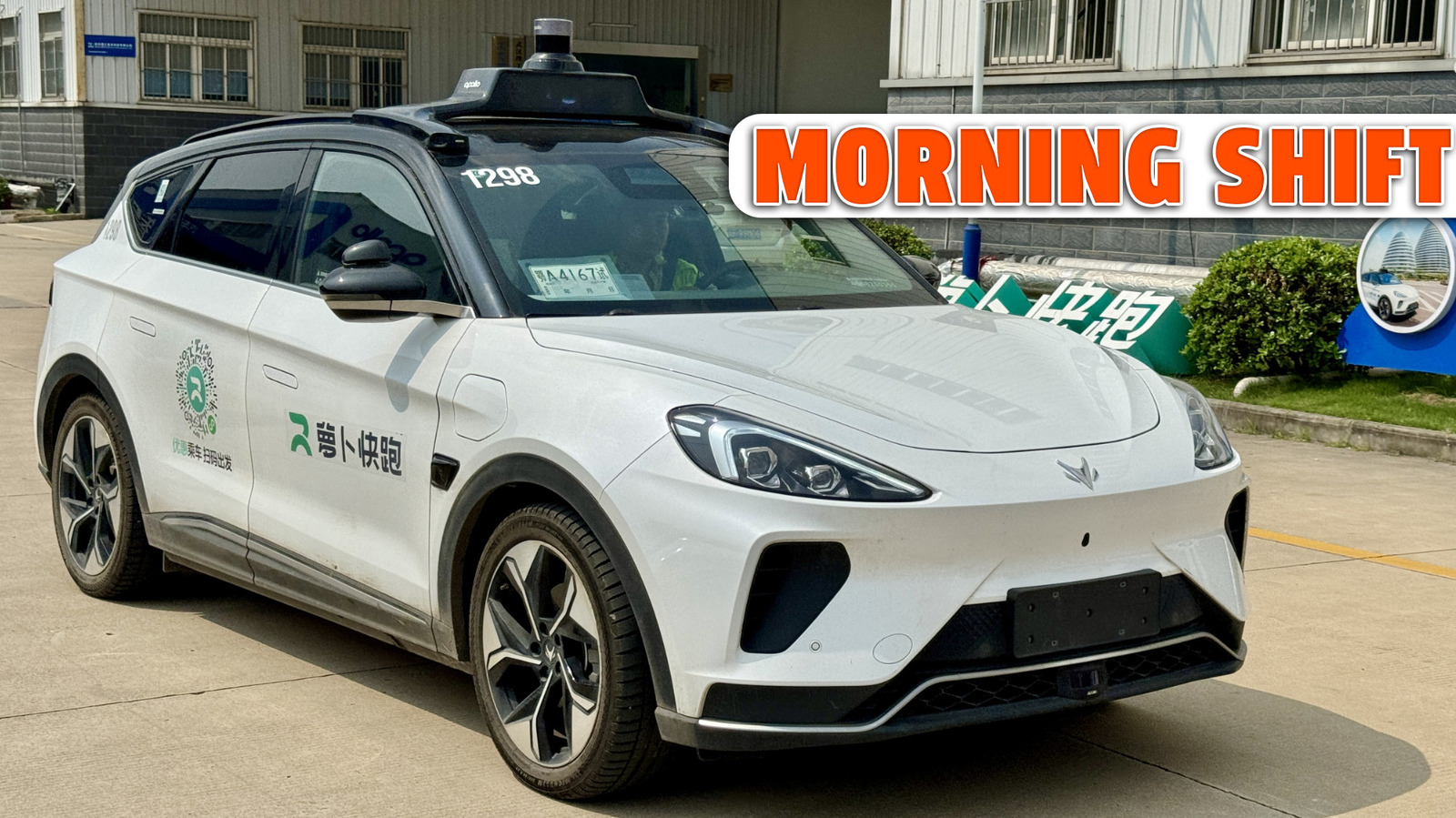
1st Gear: Robotaxis froze in Wuhan, and China is halting new self-driving permits
Back in March, Baidu’s fleet of Apollo Go robotaxis stopped dead across the city of Wuhan, China. This concerned regulators, who have now decided to take action: China has halted all new autonomous driving permits in the country. From Bloomberg:
China has suspended issuing new licenses for autonomous vehicles, according to people familiar with the matter, after dozens of Baidu Inc.’s Apollo Go robotaxis suddenly stopped in Wuhan last month, stranding passengers and disrupting traffic.
The incident alarmed authorities, and three agencies including the Ministry of Industry and Information Technology convened a meeting earlier this month with officials from cities that have robotaxis or autonomous-driving pilots, the people said. Regulators called for local governments to conduct a full self-review and enhance safety monitoring to prevent similar incidents, said the people, who declined to be identified because they aren’t authorized to speak publicly.
The suspension of new licenses prevents self-driving companies from adding new robotaxis to their fleets, starting a new test project or expanding to a new city, the people said. It’s not clear how long the suspension will last, the people said.
Can you imagine having regulators that actually get concerned when robotaxis malfunction? Pshh, China, that’s not how you compete on the world stage. Oh, wait, we’re already losing to you? Well then.
2nd Gear: Folks on the Mexican border love Chinese cars
All along the Mexican side of the U.S. border, streets are full of something you rarely see here: Chinese-made and branded cars, from companies like Geely or Great Wall Motor. On the other side of the border, people seem to love these inexpensive rides, as former Jalop Ryan Felton explains in the Wall Street Journal:
CIUDAD JUÁREZ, Mexico—Just 5 miles from the U.S. border, a bustling commercial strip here offers the buzzy Chinese car brands currently blocked from the American market.
A Geely dealership features the all-electric EX2, a sleek compact that starts at only around $20,000. A bulky hybrid pickup truck sits next to a charger outside a BYD dealership. Great Wall Motor boasts some beefy gas-powered sport-utility vehicles, one advertised with the slogan “Be More Tank.”
Luis Hernandez, a Geely salesman, said he has poached many longtime Ford and Chevrolet owners attracted to the affordable sticker prices and whiz-bang Chinese technology. He recently sold two Geely Emgrand sedans, which start at around $17,000, to a Mexican family for their two daughters to commute to college in El Paso, where the sleekest Chinese cars are now attracting attention.
“If they were allowed to be sold in the United States,” Hernandez boasted of the Chinese models, “they would destroy the American car market.”
U.S. automotive executives don’t entirely disagree. Without a clear plan to deal with Chinese competitors, some of them said in interviews, the arrival of affordable, high-tech Chinese cars could upend a U.S. industry that contributes $1.3 trillion to the economy each year.
China can make better cars for less money than we can. Will we ever reach a point in our current inflation where the American people simply have so much political will towards cheap cars that politicians can’t keep throwing bans around?
3rd Gear: Volkswagen may pivot away from German manufacturing
Volkswagen wants to make more money, as companies generally do. The problem is, it primarily makes its cars in Germany — not a cheap labor market. Now, the company is looking to move its labor base elsewhere. From Automotive News:
Volkswagen Group’s top leadership concluded that the automaker’s long-standing business model is no longer sustainable, setting the stage for deeper restructuring, capacity reductions and a sharper shift toward local production in key markets.
VW Group’s management and supervisory boards reached the conclusion during a meeting on April 27, according to people familiar with the matter. While no formal decisions were taken, the conclusion underscores mounting pressure on the group to adapt to a more fragmented global trade environment and faster technological change.
For decades, VW relied on developing vehicles in Germany and exporting them or producing localized versions abroad. That model is increasingly strained by U.S. tariffs, EU-China trade tensions and the capital-intensive shift to electric vehicles, which requires new platforms and battery production.
Executives are now working on measures to restore profitability, including expanding local production in major markets and implementing structural changes that go beyond traditional cost-saving programs. Initial steps are expected to be outlined after the summer, alongside a long-delayed plan for allocating production across the group’s factories.
The piece mentions local production, but how long until we start seeing Chinese-made Volkswagens on every street corner?
4th Gear: Mercedes had a rough first quarter
This has been a weird year for automakers so far. We’ve had tariffs, we’ve had massive sales drop-offs in China, and now there’s a war affecting the costs of metals and gas. Mercedes, it seems, isn’t immune to the weirdness. From Reuters:
BERLIN, April 29 (Reuters) – Mercedes-Benz reported a sharp drop in operating profit at the start of 2026, a year set to bring higher raw material costs and further tariff pressures, weighing on the German carmaker as it overhauls its model lineup to boost sales.
The Middle East conflict has driven up global industry costs, compounding pressure on European automakers already hit by high U.S. import tariffs.
Mercedes, like German peers Volkswagen and BMW, is also battling falling sales in China, as domestic brands like BYD and Nio encroach on the premium segment after conquering the mass market with cheap, tech-laden EVs.
Mercedes reported on Wednesday earnings before interest and tax (EBIT) of 1.9 billion euros ($2.22 billion) in the first quarter, down 17% on the year.
First-quarter margins slipped to 4.1%, down from 7.3% a year earlier, but within the expected full-year range of 3-5%.
This has been a tough year, so I don’t fault Mercedes for being down a little bit. I’m also not a shareholder, though.
Reverse: RIP to another real one
Gun to my head, I would’ve guessed this happened four years later.
The Fuel Up
This is over 11 cents per gallon higher than the last time I did this — which was just Monday. Prices are truly skyrocketing.
On The Radio: Japanese Breakfast – ‘Road Head’
We love Michelle Zauner, don’t we folks?

