


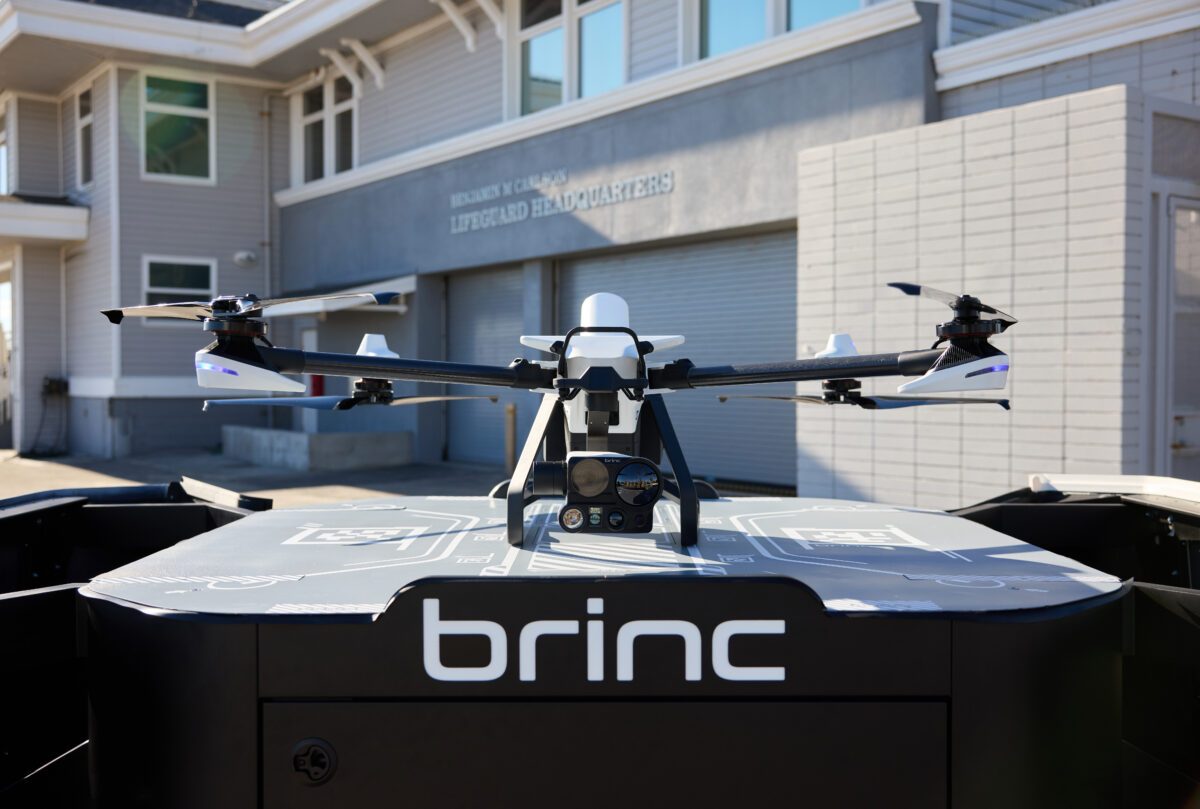
At Motorola Solutions Summit 2026, agencies describe a shift from standalone drone programs to fully integrated response ecosystems
The Motorola Solutions Summit 2026, held April 19–22 in Orlando, Florida, brought together public safety leaders and technology providers to discuss the future of emergency response. A keynote session featuring executives from BRINC drones and agency leaders from across the U.S. focused on one clear trend: drones are no longer standalone tools. They are becoming part of a fully connected, system-level approach to public safety.
From Dispatched Devices to Connected Systems
Early public safety drone programs often relied on a simple model. A drone was deployed by a trained officer, often from a patrol vehicle, to provide aerial visibility at a specific scene.
That model is now evolving.
Speakers at the Summit are describing a shift towards what has been called DFR 2.0: citywide networks of drones and docking stations, tied directly into dispatch systems. In this model, drones are no longer tied to a single operator. Instead, they function as part of a broader response infrastructure, deployed as incidents unfold.
This approach reflects the wider ecosystem developing of real time crime centers, where data from multiple sources feeds into a centralized command environment. Within that environment, BRINC’s systems are designed to operate as part of the same connected workflow.
As BRINC CEO Blake Resnick described, the company’s platform is highly interconnected with the Motorola Solutions ecosystem, positioning drones as a native component of the broader response system rather than a separate tool.
That distinction matters. When drone data flows alongside other inputs, it becomes immediately actionable within the same interface used for decision-making.
“Eyes Before Arrival” Changes the Equation
A consistent theme throughout the session was the value of immediate visibility.
“To be able to put eyes in places where we have previously not had them is so revolutionary…,” one speaker noted. By placing drones within the dispatch and command environment, agencies can gain real-time insight into a scene before officers arrive. This early visibility allows responders to assess risks, allocate resources more effectively, and adjust tactics in real time.
In practice, this means decisions are made with more context and less uncertainty. Officers can answer critical questions about who’s involved, if suspects are armed, who else is responding, and what the environment looks like – before they arrive on the scene. For many agencies, that shift is already producing measurable results in case resolution and operational efficiency.
Building Technology Around Real-World Needs
The session also highlighted how public safety requirements are shaping drone development.
BRINC’s early systems were designed for tactical use, with capabilities such as LiDAR-based indoor mapping, two-way communication, and the ability to interact with the environment. These features reflect the needs of law enforcement teams operating in SWAT and complex situations.
Newer platforms build on that foundation. The newly launched Guardian system offers extended flight times, rapid battery swaps, and modular payloads that support a range of missions. These include public safety, search and rescue, and emergency response.
Importantly, these capabilities are not presented in isolation. Their value increases when they are part of a connected system, where data from the drone can be immediately shared, analyzed, and acted upon.
A Focus on Outcomes and Risk Reduction
While the technology continues to advance, speakers emphasized that the goal remains consistent: improving outcomes.
“It’s about the outcomes,” one presenter said. “Getting visibility and eyes on the scene… we can change outcomes and help agencies deliver different outcomes.”
That focus is closely tied to risk reduction. By providing real-time information, drones allow agencies to better understand a situation before committing personnel.
Another speaker noted that access to timely information can “change the outcome before we get there,” highlighting the role of drones in proactive decision-making.
The Next Phase: Persistent, Integrated Response
Looking ahead, the direction is clear. Public safety agencies are moving toward systems where drones are continuously available, connected to dispatch, and coordinated alongside other technologies.
This shift represents more than an incremental improvement. It marks a transition from isolated tools to persistent, connected infrastructure.
Within that framework, drones are not just another piece of equipment. As described during the session, they are becoming an integral part of a larger system, one where information flows across platforms and helps shape decisions from the earliest moments of a response.
Read more:

Miriam McNabb is the Editor-in-Chief of DRONELIFE and CEO of JobForDrones, a professional drone services marketplace, and a fascinated observer of the emerging drone industry and the regulatory environment for drones. Miriam has penned over 3,000 articles focused on the commercial drone space and is an international speaker and recognized figure in the industry. Miriam has a degree from the University of Chicago and over 20 years of experience in high tech sales and marketing for new technologies.
For drone industry consulting or writing, Email Miriam.
TWITTER:@spaldingbarker
Subscribe to DroneLife here.

