


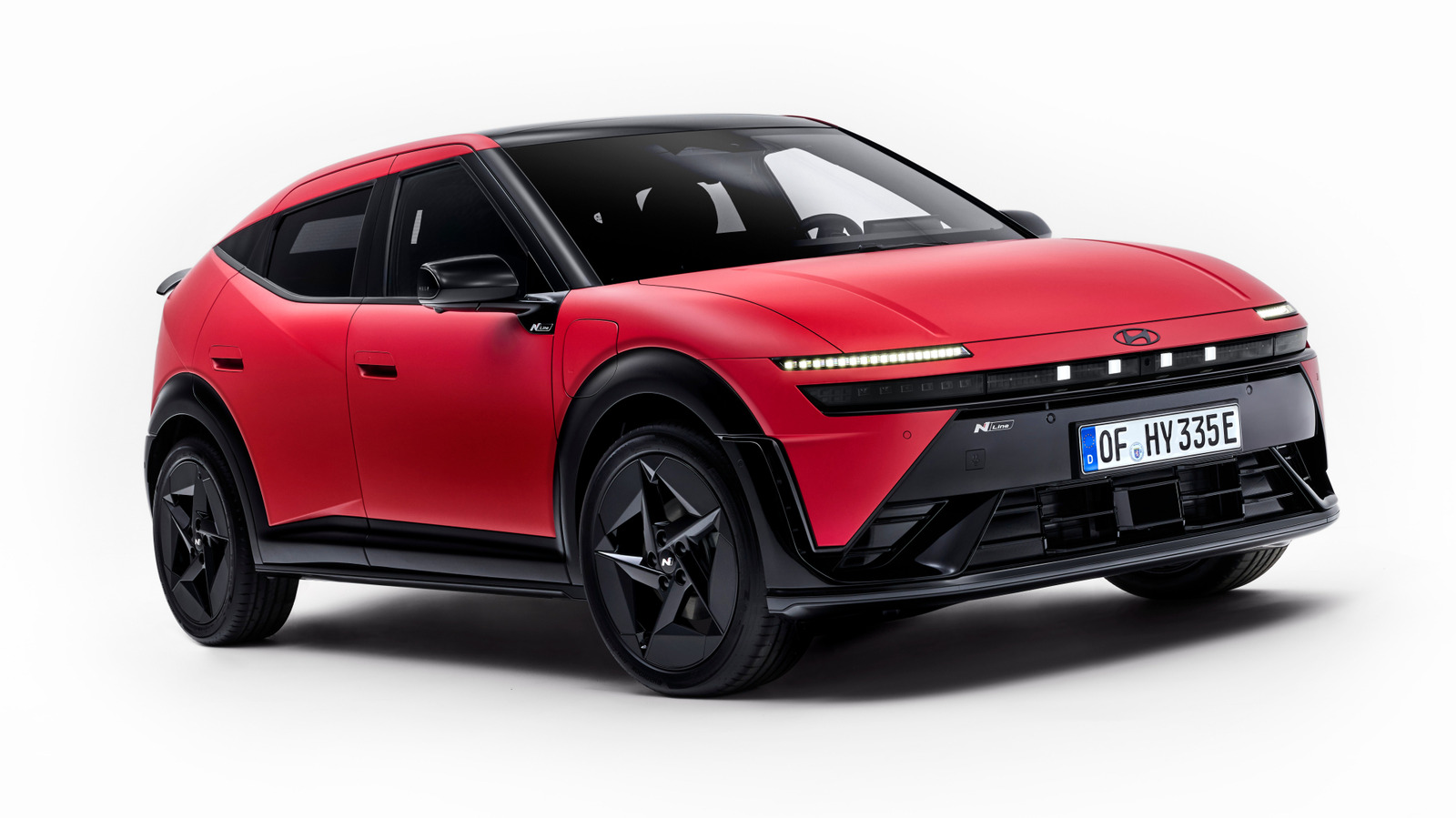
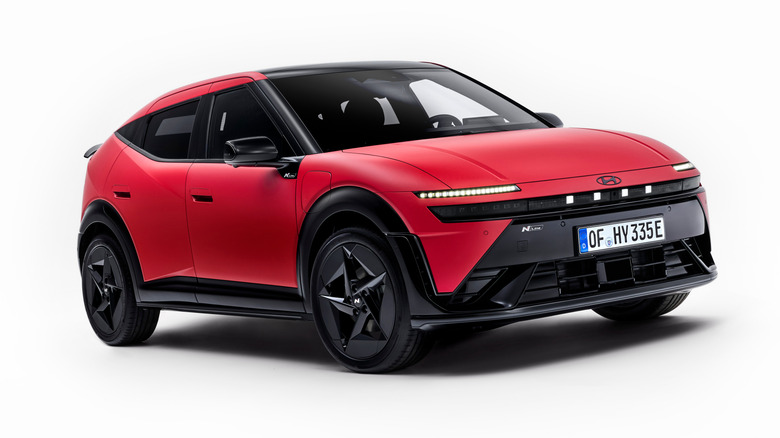
Every time I praise the design of a new Hyundai Motor Group product I’m accused of being a paid shill (the same goes for all of my industry colleagues), but I’m sorry, there are just no other companies doing it like the global teams of world-class designers that have been assembled by Hyundai, Kia and Genesis. On Monday at Milan Design Week, the world’s largest annual design event, Hyundai unveiled the new Ioniq 3, an electric “aero hatch” that is probably Hyundai’s funkiest production design yet.
The Ioniq 3 was previewed by last year’s radical Concept Three, and it sticks a lot closer to that concept’s look than you might expect. Smaller than a Kona EV, the Ioniq 3 is basically Hyundai’s version of the recently revealed Kia EV2, but beyond being an affordable entry into a competitive segment, the Ioniq 3 is really important because it’s the first Hyundai to use the new Android Automotive-based Pleos Connect infotainment system that will spread across the lineup. And before you start moaning that we’ll never see it here, the automaker is already considering bringing the Ioniq 3 to the U.S., according to an interview Wired did with Hyundai CEO José Muñoz.
More aerodynamic than an Ioniq 5
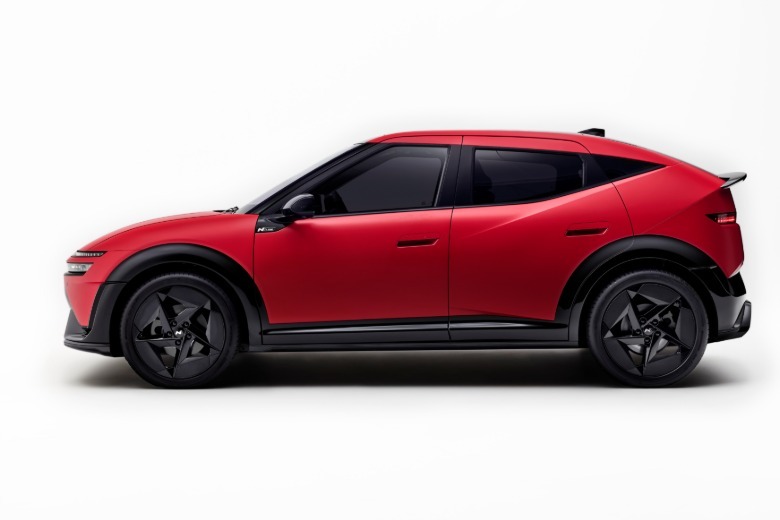
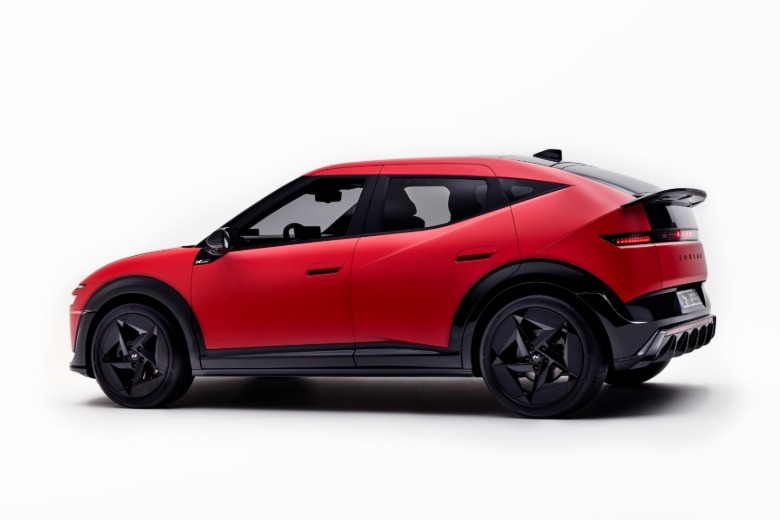
Hyundai says its latest Art of Steel design language is “inspired by the raw tension and purity found in steel production,” with a reduction of too many lines or complex surfacing so the car has “a strong and precise visual impact,” though there’s certainly still a lot to digest. The Ioniq 3 has a very unique shape that’s maybe most reminiscent of Hyundai’s discontinued Veloster, or other weird kammback cars like the Alfa Romeo RZ. At 163.6 inches long and 59.3 inches tall it’s 7.7 inches shorter in length and 2.7 inches shorter in height than a Kona, and it’s barely longer than the teeny Venue. Hyundai says it has a drag coefficient of 0.263, about 0.02 cD better than the Ioniq 5.
 Hyundai
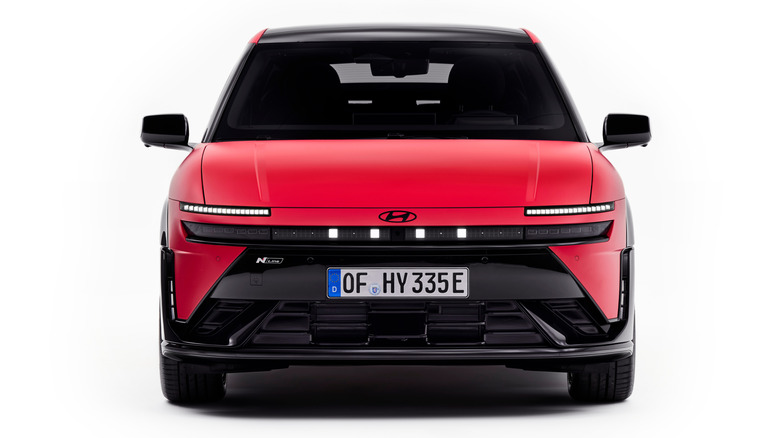
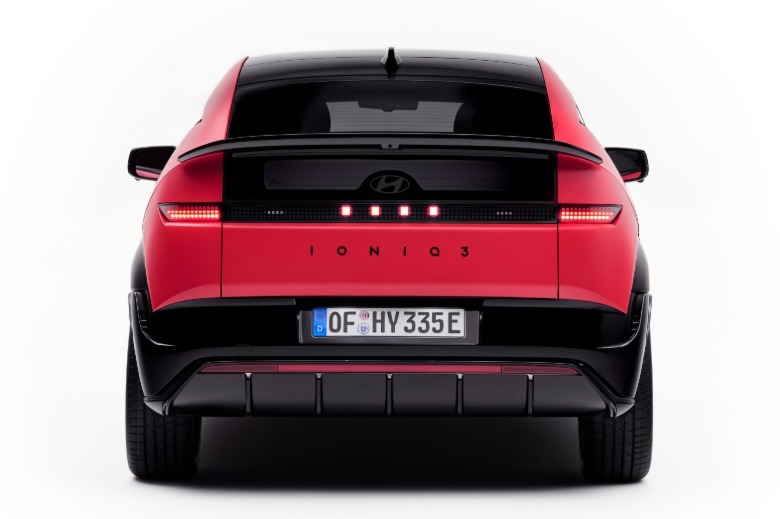
It has a similar light setup to the facelifted Ioniq 6, with two strips of pixel lights, but it also gets four lit-up pixels in the center of the nose like on the redesigned Nexo — four dots is Morse code for the letter H. The Ioniq 3 in these photos is the N Line model, which has sportier bumper designs, additional spoilers and other black elements, and I think it looks quite cool along with the satin Fierce Red paint. You can get wheels up to 19 inches in size, and the five-spoke blade-like aero style in these photos look awesome.
 Hyundai
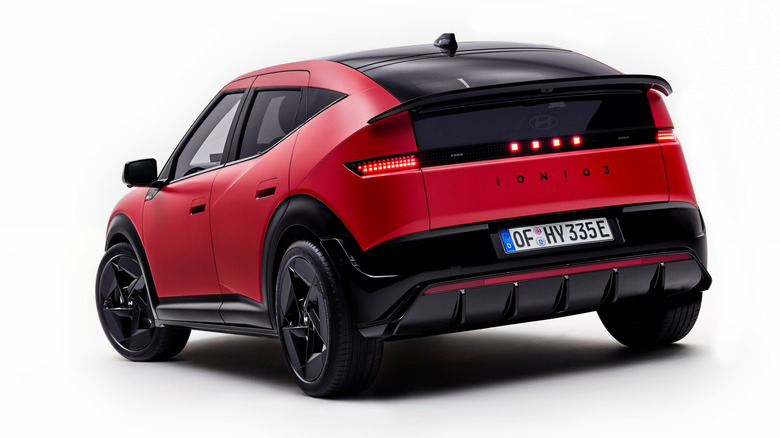
Behind the B-pillar is where the Ioniq 3 really starts to get interesting. Parallel slash lines create the shape of the side windows and D-pillar, also forming the point the rear end comes to. There’s an actual small triangular piece of glass just behind the rear doors, which feels like a premium touch for a car of this class; you’d expect that piece to just be made of black plastic. The tailgate has a split rear window like a Prius, with a spoiler along the ridge. There are small pixel taillights, and another four-dot setup in the center of the tailgate. Other cool details include the design of the side mirror mounts, and some easter egg placements like the Mr. Pix cartoon mascot seen on the concept.
Pleos, please!
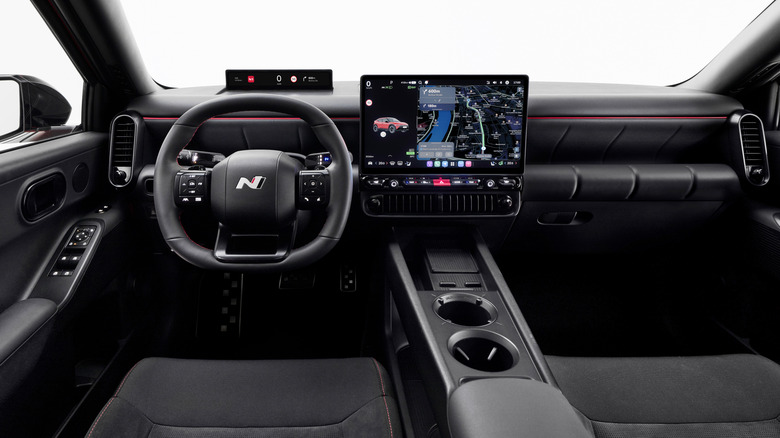
The interior’s literal centerpiece is that new Pleos Connect screen, which is either 12.9 inches or 14.6 inches in size (the latter seen here). It has a totally new layout compared to Hyundai’s past infotainment system, with a large navigation map paired with driver information displays and a row of always-there shortcuts. Unlike on a Tesla or Volvo EX30, Hyundai also gave the Ioniq 3 a slim display in front of the driver that gives all the information of a gauge cluster, which is an inclusion we’re definitely thankful for. This system and basic setup is going to spread to every new Hyundai model within the next few years, both in totally new models and facelifts of existing ones.
 Hyundai
As Hyundai has promised its new models would have, the Ioniq 3 also has a number of toggle switches just below the screen for climate controls, knobs for volume and tuning, and air vents adjusted by physical controls. There are real physical controls for the windows, mirrors and seat adjustment, plus regular buttons on the steering wheel. I like the tiered design of the dashboard, with vertical pill-shaped air vents on each side and lines in the padded panels for some visual flair. Hyundai says the interior was inspired by 1970s Italian furniture, and it used a bunch of recycled and bio-based materials. You’ll be able to get Hyundai’s Relaxation Seats up front, with heating and ventilation.
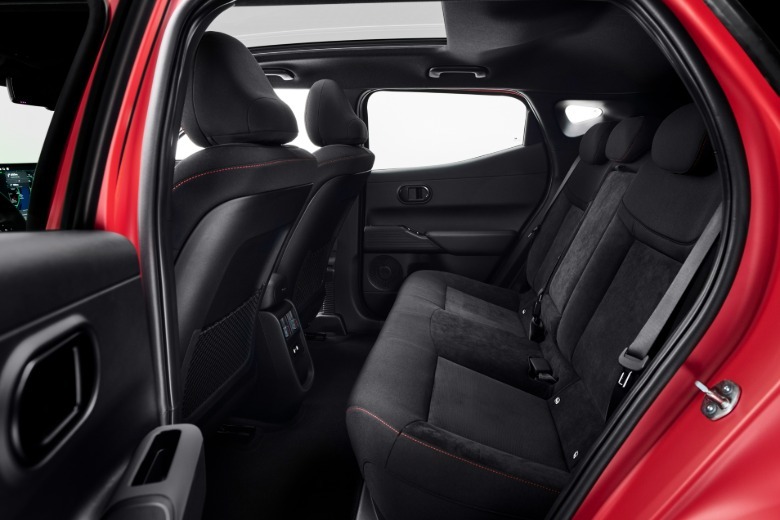
A flat floor helps make the interior feel spacious, and a panoramic sunroof stretches pretty far back. The floating center console has storage, a wireless charging pad and a pair of cupholders, with the leading cupholder saying “unlock—lock” on it; unlock it, and you can stack the cupholder on top of the rear one, leaving space for super-tall water bottles and thermoses to be put through the hole, sitting on the lower shelf of the console. (Skip to the 7:00 mark in the above video to see that.) There’s about 11 cubic feet of space in the cargo area, with a 4-cubic-foot integrated Megabox under the floor. The tailgate seems to open up super high, leaving more than enough headroom space if you want to sit on the sill of the opening.
Not hot, but there’s potential
Underpinning the Ioniq 3 is the 400-volt version of the E-GMP platform, and the specs pretty closely match the EV2. The standard-range model has a 42.2-kWh battery pack that offers a range of 214 miles on the European cycle, while the long-range version gets a 61-kWh battery pack and a 308-mile range, which isn’t too shabby. Both are front-wheel drive, with the standard model being the more powerful of the two — its single motor has 145 horsepower and a 9-second 0-to-62-mph time, versus 133 hp and 9.6 seconds for the more efficient long-range trim. You get 184 pound-feet of torque either way.
 Hyundai
The Ioniq 3 can’t charge as quickly as some of its siblings, though it’s not bad, with Hyundai saying it’ll take as little as 29 minutes to go from 10% to 80%. An 11-kW onboard AC charger is standard, but a stronger 22-kW charger is optional, and it’ll have vehicle-to-load capability. At its lightest, Hyundai says the Ioniq 3 weighs 3,417 pounds, which is about 400 pounds lighter than a Kona EV. Though the automaker hasn’t said anything about a potential Ioniq 3 N, given how Kia is working on GT versions of basically all of its EVs, we have to imagine Hyundai is doing the same. The Ioniq 3 would certainly look good in N guise, and we need more electric hot hatchbacks.
Hyundai says the Ioniq 3 was designed in Europe and “engineered to fit seamlessly into modern European lifestyles,” and it will go into production this year at Hyundai’s plant in İzmit, Turkey. Pricing has yet to be announced, but UK outlets are expecting a starting price of around £25,000, around seven grand cheaper than a Kona EV and only a couple grand more than a tiny Inster.

