


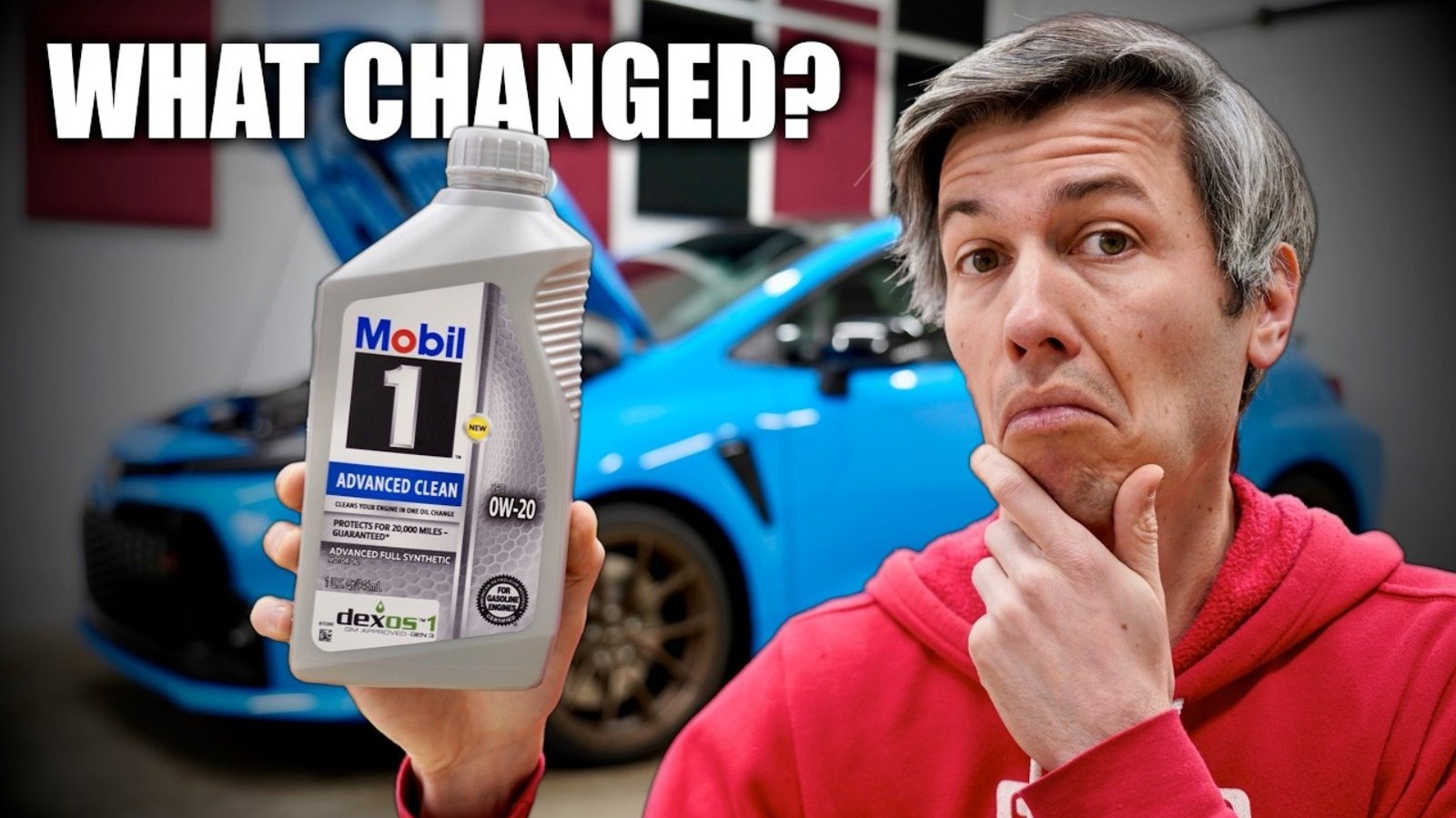
Odds are, you know about the difference between conventional and synthetic motor oil, or at least you know there is a difference. You had to change the old stuff every couple thousand miles, which meant getting four or five oil changes a year, but the new stuff lasts way longer and may not even need to be changed for a full year (depending on how and how much you drive, of course). But did you know we have new motor oil now? The change isn’t as significant as the switch from conventional to synthetic was, but there’s still a difference.
For the answer to what changed, exactly, we turn to our dear friend and explainer of all things sciency, Engineering Explained’s Jason Fenske. He actually graduated from college and has an engineering degree, so unlike your humble author, he actually knows what he’s talking about. Which is important, because things are about to get real nerdy, real fast. As Fenske explains, the International Lubricant Specification Advisory Committee has adopted a new industry standard for motor oil, known as GF-7.
But while synthetic oil could be considered an evolution, ILSAC’s GF-7 is more of an evolution, adding more difficult requirements to meet the standard compared to the old GF-6 standard. Maybe think of it like the European Union’s emissions standards, where Euro 7 is much harder for automakers to hit than Euro 6. Additionally, if a motor oil already met the new, tougher standard, it didn’t have to be reformulated. GF-7 is a floor, not a ceiling.
GF-6 vs GF-7
At least in theory, a stricter standard for top-tier motor oil should improve engine performance, but how? Will you get better gas mileage? Will your engine last longer? Could it perhaps be both? Time to break out the whiteboard and find out. Fenske explains it in more detail in the video above, but the way he puts it, this new GF-7 oil standard contributes to better fuel economy while reducing chain wear, piston deposits, and low-speed pre-ignition. In other words, it really is a “por qué no los dos” situation.
LSPI occurs at low engine speeds (thus the name) under high load when the fuel ignites before the spark plug fires, and to cut a long explanation short, that’s bad for your engine. Not only does GF-7 have higher standards, it also now requires testing used oil to ensure the additives don’t break down over a couple thousand miles and become less effective at preventing LSPI. As for piston deposits, some level is likely inevitable, but the more your pistons get gunked up, the worse your engine will run.
As for chain wear, incomplete fuel ignition creates soot that can get into your oil, which means those soot particles can end up in contact with your chains. That, in turn, wears out the chains faster and can negatively impact your cam timing. ILSAC also now expects better gas mileage compared to a baseline oil, moving from a 3.8% improvement to 4.3%. Is that going to save you thousands of dollars? Probably no. But any improvement helps, especially with skyrocketing gas prices making it even less affordable to drive.

