


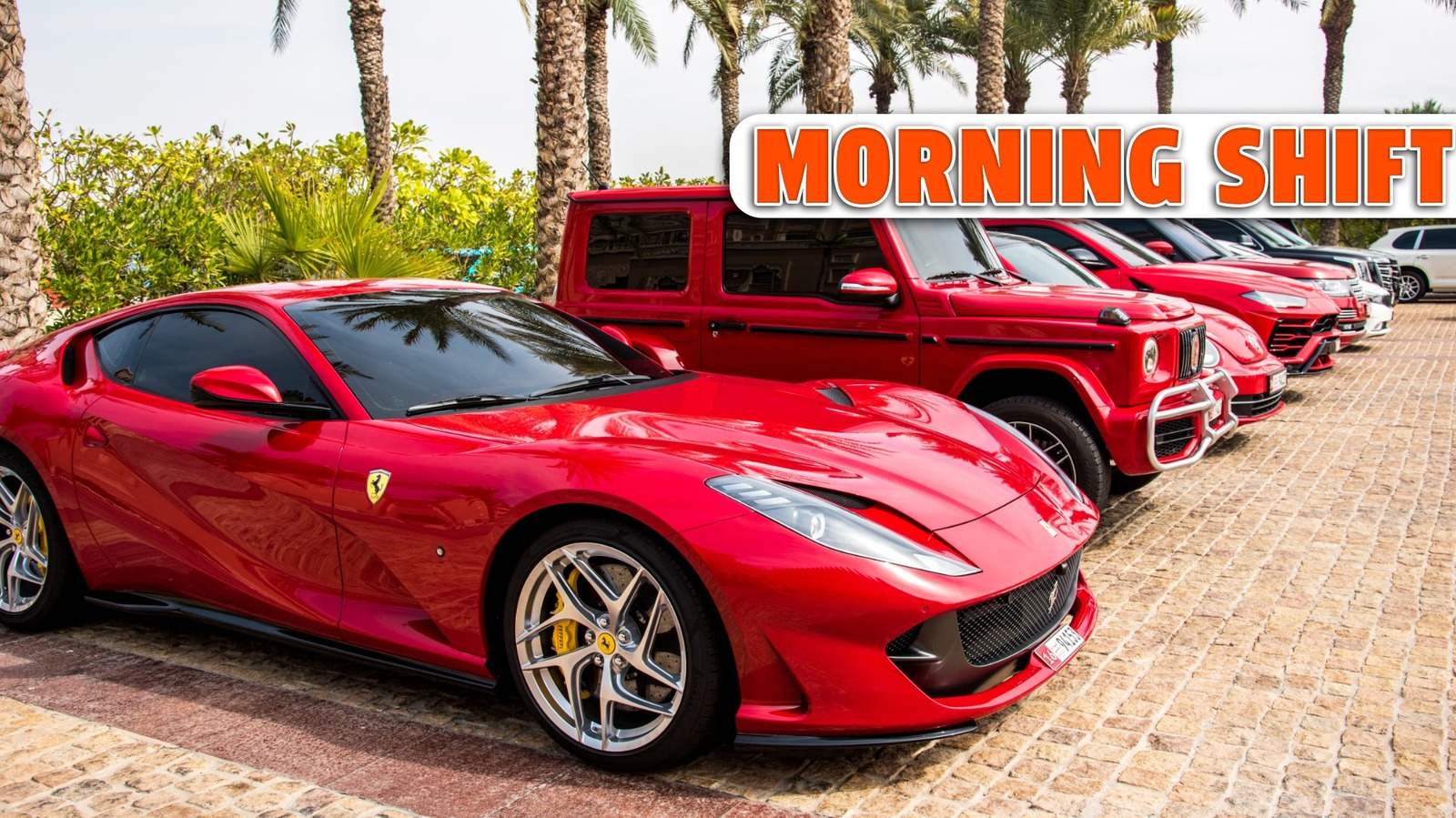
A lot has been said about the victims caught up in the middle of the U.S. and Israel’s war with Iran, but there’s one group that I’ve hardly heard anything about. It’s a group that, arguably, has suffered even more than the untold hundreds (if not thousands) who have lost their lives, home, friends and family in this conflict. Its ultra-luxury automakers that are going to take profit hits because their profitability and upselling cash cow — the Middle Eastern market — isn’t going to be spending like it once was.
While the region may only account for less than 10% of sales volume at most luxury automakers, profit share is far higher since customers in the region are willing to pay for high-dollar extras and customization. Alas, demand is now weakening because of that pesky war and all of the, you now, death and destruction of civilization. It’s a real shame. Perhaps we should start a GoFundMe. From Reuters:
A standard Rolls-Royce Phantom starts at about 430,000 pounds ($572,416), but the addition of bespoke features for wealthy Gulf buyers can push prices far above that – for some models bespoke additions can double or triple the price tag.
Rolls-Royce Motor Cars, owned by Germany’s BMW, revealed the Arabesque just a week after opening its second Dubai showroom, before U.S.-Israeli strikes on Iran followed by Iran’s strikes on the Gulf sent shockwaves across the region.
“It’s the best market in the world,” Bentley CEO Frank-Steffen Walliser said earlier this month of the Middle East.
But many luxury dealerships in the Gulf closed temporarily after war broke out on February 28. Ferrari and Stellantis unit Maserati paused deliveries this month, although both say showrooms have since reopened.
In an emailed response to questions, Rolls-Royce said it was “closely monitoring” the situation in the Middle East.
[…]
Meanwhile, F1rst Motors in Dubai, which sells all the top luxury car brands, shut its doors for the first few days after the war started, but has since reopened.
Director Chris Bull said the showroom is best known for its selection of Ferraris and Bugattis and sells vehicles ranging from about $250,000 all the way up to $14 million.
Bull said since F1rst Motors reopened, business is down about 30%, although sales of cars priced at more than $1.4 million have stabilised and its sales outside the United Arab Emirates remain robust.
“Obviously, there are fewer people walking in the front door … But we’re still managing to maintain a good level of business,” Bull said, adding some buyers will pay up to 30,000 euros ($34,512) to fly a $7 million car out of the country.
During a media briefing, Volkswagen Group CEO Oliver Blume said Middle East sales were “very high margin” and the company expects to see “an impact.”
It’s not just off-the-shelf supercars either! Bespoke models from these automakers are also seeing tough headwinds as missiles rain down on civilians below.
Rather unreasonably, an unnamed industry executive told Reuters that that aspect of the business has dried up, and Bentley’s CEO said that folks “in the Middle East have other thoughts than looking for a new Bentley at the moment.” Yeah, man. I’d say so.

