


You have full access to this article via your institution.

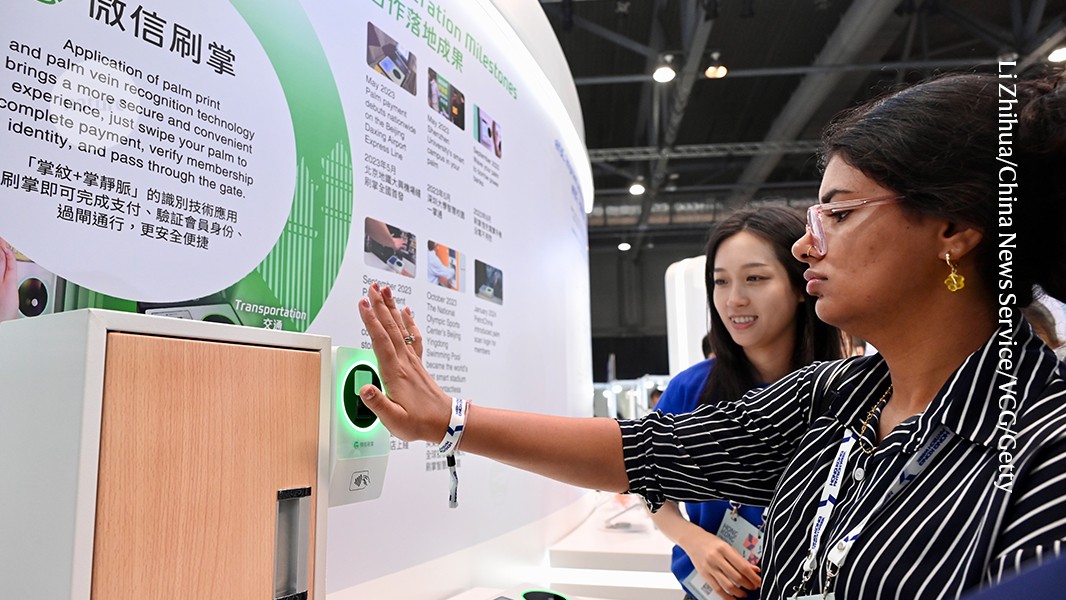
Chinese companies have conventionally invested heavily in the applied sciences, but less so in fundamental research.Credit: Li Zhihua/China News Service/VCG/Getty
China’s firms and entrepreneurs are increasingly important for the nation’s research system as it seeks to further align its scientific output to the needs of its economy. That’s according to an analysis in Nature Index’s latest China supplement, published this week. The findings come hot on the heels of the country’s 15th five-year plan, which covers the period from 2026 to 2030. It describes businesses as the ‘main entity’ of innovation.
China intensifies push to become world leader in tech and AI
It’s not difficult to see why. In 2023, the latest year for which data are available from the Organisation for Economic Co-operation and Development (OECD), China’s business sector contributed about 80% of the nation’s US$780 billion expenditure on research and development (R&D) when adjusted for currency and purchasing power — up from 75% in 2015 (see go.nature.com/4c2tuav). In the United States, just 70% of the country’s total expenditure of $820 billion came from businesses in 2023.
One challenge for China is that only a tiny fraction of its business investment goes to fundamental research, and its overall spending in this area still lags considerably behind that of the United States. According to the latest OECD data, less than 1% of the research done by China’s business sector in 2023 was in fundamental sciences, compared with 6% in the United States (see go.nature.com/3nwh2jj).
If the Chinese government is committed to expanding innovation, it should incentivize companies to funnel extra R&D funds into fundamental research. And more of this work should be published according to open-science standards and undergoing peer review. There are many benefits to doing open science, as we have set out before — not least because the outcomes and results can be tested and verified. Robust findings by commercial R&D teams are good not only for science, but also for consumers and society as a whole.
China could be the world’s biggest public funder of science within two years
There are signs of change. According to the OECD data, China’s businesses have been increasing the proportion of fundamental research that they do. Last September, China’s DeepSeek-R1 system became the first mainstream large language model to undergo full peer review in a leading academic journal (G. Guo et al. Nature 645, 633; 2025).
As China’s government works to improve links between research and economic needs, there are signs that it wants to delegate decision-making powers around innovation to businesses. According to the five-year plan summary published by the National People’s Congress — China’s state legislature — the country would “implement the principal role of enterprises in technological innovation decision-making”.
Such delegation is already under way to some extent. For example, the Private Enterprise Innovation and Development Joint Fund, launched last year by the National Natural Science Foundation of China, encourages researchers to link proposals to the innovation needs of participating firms.
China leads research in 90% of crucial technologies — a dramatic shift this century
Philanthropy is another increasing source of science capital in China. As in the United States, many of China’s tech entrepreneurs either have science and technology backgrounds, or have built R&D-intensive businesses. Ma Huateng, the co-founder of Tencent, the company behind the social-media app WeChat, and Colin Huang, founder of PDD Holdings, the firm behind shopping site Temu, and others have thrown their weight behind research prizes, awards, scholarships and grants. They follow in the footsteps of US science philanthropists such as Microsoft’s Bill Gates and Intel’s Gordon Moore. Tencent’s Xplorer Prize, for example, awards 50 winners every year 3 million yuan ($435,000) each to pursue curiosity-driven research projects. In 2021, Huang pledged US$100 million to his former university, Zhejiang University in Hangzhou, to support fundamental research.
China’s state-led research model has paid dividends, enabling the nation to funnel vast resources into key sectors, such as artificial intelligence, quantum technologies and integrated circuits. Globally, China now leads in nearly 90% of crucial technologies that markedly enhance, or pose risks to, a country’s national interests, suggests a 2025 analysis by the Australian Strategic Policy Institute, a think tank based in Canberra (see go.nature.com/4sreerm). By contrast, between 2003 and 2007, the United States led in more than 90% of areas and China in just 5% of them (see go.nature.com/4ued9my).
Some of the most valuable technologies and applied research have come from fundamental discoveries. As China continues its scientific and technological ascent, its businesses have an opportunity to lead on fundamental research, too. By opening their work up to scrutiny, they can also challenge Western companies, which are often hesitant to publish their research, to do the same — for the good of science and society.

