


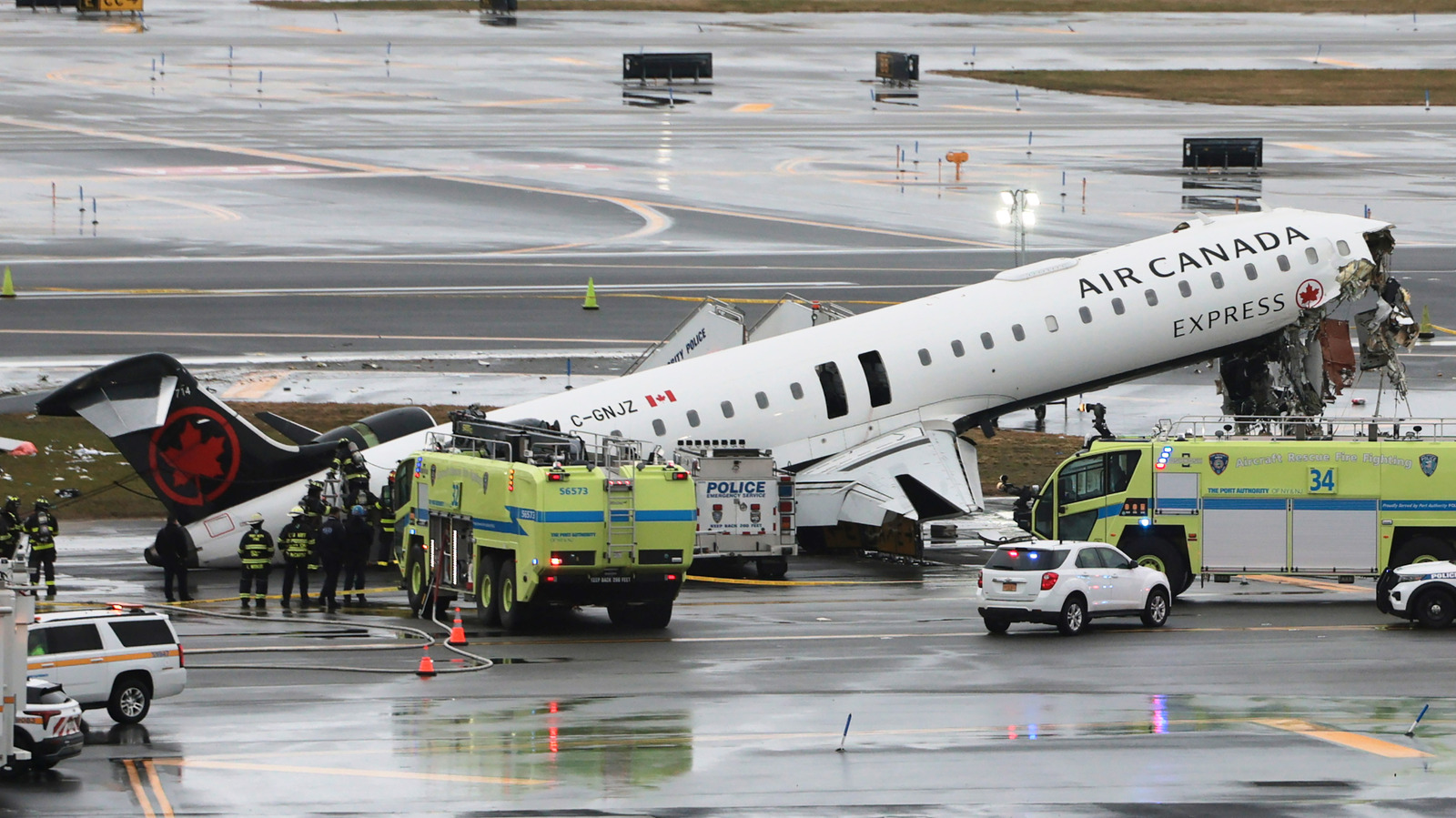
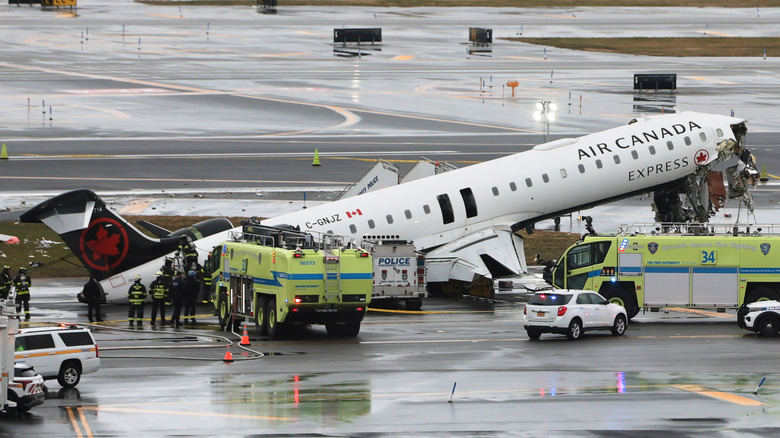
When there’s a plane crash, the topic of conversation almost always immediately goes to who was at fault. In the case of the deadly crash between Air Canada Express flight 8646 and a fire truck at New York’s LaGuardia Airport, early reports seem to indicate that fault lies with the air traffic controller in the tower. But, while it may look like the controller was at fault in this tragedy that took the lives of two Air Canada pilots, he certainly had the deck stacked against him.
The unidentified air traffic controller was in charge of both air and ground traffic at the time of the crash. While that’s not necessarily out of the ordinary — especially for late-night hours — it should be. It meant that he was in charge of telling both planes in the air, planes on the ground and vehicles on the ground where they needed to go. While ATC Specialists are undoubtedly highly trained, it can certainly become too much for anybody, particularly at really busy airports like LaGuardia.
Leading up to the crash, the controller was tasked with his normal duties, as well as dealing with a rejected takeoff from an United Airlines flight that smelled something strange and asked for a fire response and to return to the gate. Unfortunately, there were no gates available, so the controller had to navigate that mess, and things were made even worse when the plane made a left instead of a right on a taxiway.
A cascading effect
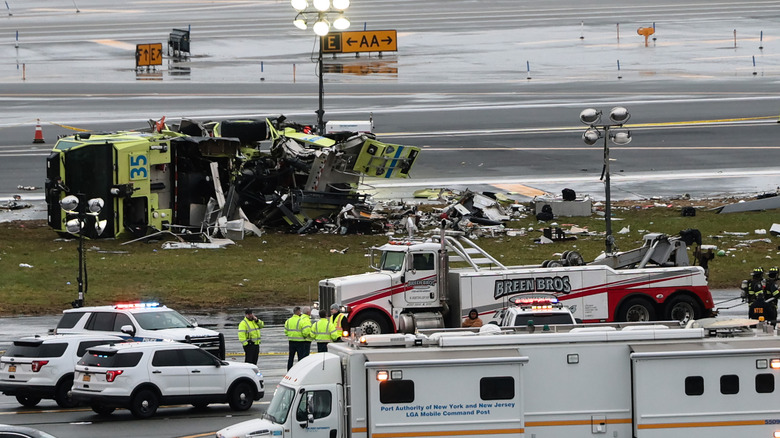
Oh, and just to add another layer, the pilot of that United flight declared an emergency when it became clear no gate was available. The firetruck that AC8646 eventually hit was the one that was responding to the United issue.
John Del Giorno, ABC7 New York‘s resident aviation expert, explained how this could have happened:
“LaGuardia operates with four main runways […] The fire truck was responding to a separate incident on the field at that time. There was a United airplane that was taking off on Runway 13. That airplane had an aborted takeoff with some sort of odor in the cabin. The pilot pulled over and requested emergency assistance. That’s where the fire truck was going at the time this accident happened … Those movements are completely governed by ATC … permission has to be granted for that emergency vehicle to move.”
Here’s a transcript of ATC radio during this exchange, from NBC4 New York:
-
1:35: 2384 is declaring an emergency. Flight Attendants in the back are feeling ill because of the odor. We will need to go into any available gates at this time.
-
1:55: Do you guys have any gate for United? Because now it’s declaring an emergency, they want to get out.
-
3:04: Hey, I’ll say it again, LaGuardia. Now that United says he needs a gate, but so now he’s declaring an emergency, but the ramp doesn’t have a gate for him.
-
3:19: We can get a sand truck if you need them to get off the plane.
-
3:22: Okay, yeah, yeah, do that just in case they want to come off.
-
3:35: The ramp doesn’t have a gate for you yet, but I’m trying to get in touch with the Port Authority to see if they have something.
-
3:43: And the fire trucks are over there. They’re gonna bring a stair up, just in case you guys do want to evacuate. Let me know if you do.
-
3:48: Yeah, we prefer to wait on a gate. But, I mean, again, we only got so much time here because there’s still a bit of an odor in the back of the airplane.
-
6:25: 2384, Do you have a gate available at this time? Otherwise we will be probably requesting gears here.
-
6:31: Give me one second.
-
6:45: Emergency vehicles calling on ground, or are you calling on tower?
I cannot imagine trying to deal with all of this, I’ll tell you what.
You did the best you could
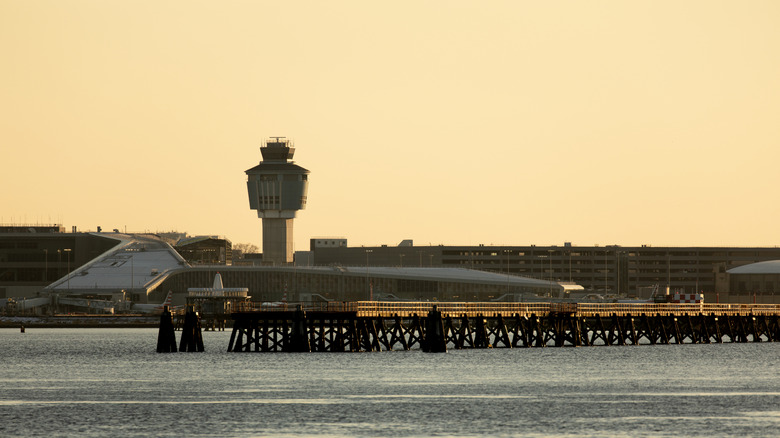
Again, I know it’s just a part of the job, but with all of this going on, it’s not a surprise that a deadly crash like this happened. As good as any human is at solving puzzles and coming up with permutations, there’s a limit to what the brain can handle, and it leads to cracks and mistakes. For the most part, those end up as near misses, but every once in a while, you get something horrendous like this. God forbid there was someone else up there in the ATC tower manning the ground while he was in charge of actual air traffic.
NBC’s radio transcript also shows the quieter moments after the incident, when the controller — clearly devastated — is talking to someone else about what happened and next steps:
-
10:17: Alright, there’s an incident on the field.
-
10:19: Yeah, we saw it, man.
-
11:42: Call us back at 10 minutes. There’s incident on the field. The airport’s closed right now.
-
18:08: We’re not moving aircraft right now, all right. when I have more for you, I will reach out. I don’t know, just call the tower and we’ll figure it out. This could have been a big incident.
-
25:22: I got the word that we’re gonna be close for a little while. If you want to prepare to return to the ramp, let me know.
-
25:26: Yeah, we got stuff in progress that’s for that, man. That was…that wasn’t good to watch.
-
25:31: Yeah, I know I was here. I tried to reach out to my stuff, and we were dealing with an emergency earlier. I messed up.
-
25:37: No, man, you did the best you could.
“I messed up” is such a brutal line, man.
It’s not like the partial government shutdown can be blamed for this crash, either. Unlike the last shutdown, ATC isn’t impacted. That means this incident is moreso just a symptom of a deeply broken system. Hopefully, it’ll be a wakeup call to folks in Washington that something needs to be done, but I doubt it.
In any case, I hope that the families of the two pilots, the injured onboard the plane and on the ground, and the controller can find some semblance of peace

