


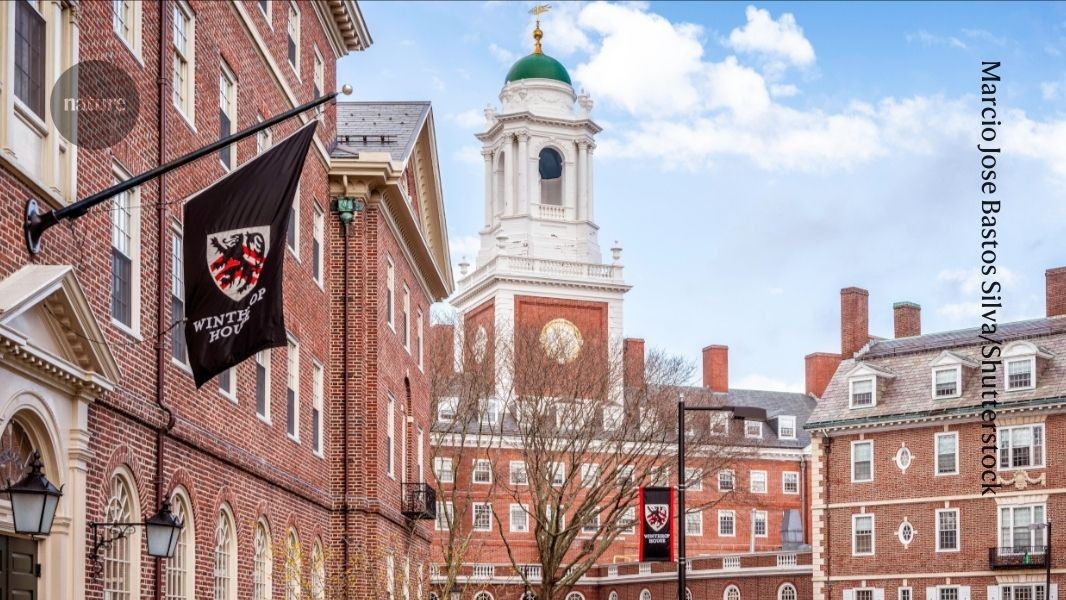

Harvard University’s campus in Cambridge, Massachusetts, stretches over 85 hectares, but the university has a property portfolio across much more of the state.Credit: Marcio Jose Bastos Silva/Shutterstock
In the 1980s, the National University of Singapore (NUS) bought 303 flats in an estate on the southern coast of the country, with 80 million Singapore dollars (around US$40 million at the time) in government funds. The plan was to use the property to house staff and visiting academics.
More than two decades later, as property prices surged, the NUS sold the flats together as a block. The sale was estimated to earn the NUS about 250 million Singapore dollars (around US$167 million at the time) and a 15% stake in the private redevelopment by CapitaLand, a state-linked developer. Critics have argued that the deal blurred the line between public mission and profit1.
Today the NUS’s endowment — among the largest in Asia at around US$11.6 billion — includes substantial income from property holdings, and in October 2025, the NUS began selling at least $500 million worth of its investments in private companies and property funds to raise cash. It’s a model that raises a familiar question for universities elsewhere. As urban geographers Do Young Oh at Pusan National University in Busan, South Korea, and Hyun Bang Shin at the London School of Economics, UK, show in a 2023 paper1, universities that become developers can undermine their public role as educational establishments.

UK university departments on the brink as higher-education funding crisis deepens
The modern university has become a competitive institution that seeks to attract the best staff and high numbers of students. To do that, they need buildings in which to teach, house their staff and students, conduct research and, increasingly, to make investments in, to collect rent from and to sell when times get tough. And times are hard for many institutions around the world. They therefore need to manage property and land portfolios — not just research budgets or staff salaries — with considerable care.
In many cases, the academic mission itself demands new buildings. As Judith Squires, deputy vice-chancellor at the University of Bristol, UK, puts it: “if you want to do cutting-edge artificial intelligence or cyber research, it’s really hard to do that in an old Victorian building”, which is the case for much of Bristol’s campus. Modern universities need estates that are equipped for twenty-first century research — but many of their buildings were designed in the nineteenth century, especially in Europe and North America.
As a result, university estates have grown far beyond classrooms and laboratories, evolving into complex investment portfolios in their own right. And it’s big business: as of 2023, Columbia University was the largest private landowner in New York City. Among Harvard University’s vast portfolio is a roughly 3,000-hectare vineyard in California. The University of Oxford’s Merton College owns almost 6,000 hectares of land in the United Kingdom, making it one of the nation’s biggest landowners. Not to be outdone, the University of Cambridge’s Trinity College, the institution’s richest college, owns the the lease for the O2 Arena in London — previously known as the Millennium Dome — which it bought for £24 million (around US$32 million) in 2009.
Keeping the lights on
Not every university has such grand, or varied, property holdings, but maintaining the portfolio is important, even if it’s focused on appearing more attractive in the academic world. “If you’ve got a hospital, you want to make it bigger. If you’ve got a medical school, you want to make it bigger. If you don’t have one, then you want one,” explains LaDale Winling, an urban historian at the Virginia Polytechnic Institute in Blacksburg.
Many universities have history to thank for their extensive portfolios. In the United States, the Morrill Land-Grant Acts of 1862 and 1890 transferred millions of hectares of federal land — much of it taken from Indigenous populations — to states to create higher-education institutions. These ‘land-grant’ universities, which include the University of California system, the University of Florida in Gainsville and Iowa State University in Ames, were intended to provide high-quality, affordable education to the public.

The vineyards that make up part of Harvard University’s land holdings in California.Credit: George Rose/Getty
In the United Kingdom, the universities of Oxford and Cambridge had amassed their estates over centuries, but the Universities Tests Act of 1871 removed religious barriers to admission and academic posts, opening the institutions to new donors, students and investment, and fuelling a wave of late-Victorian expansion. Newer civic universities, such as Manchester, Birmingham and Leeds, were founded in the late nineteenth and early twentieth centuries with funding — and often land — provided by city authorities and industrial benefactors, as part of wider urban expansion.
At the University of Bristol, which currently owns around 350 buildings across the city, the need to buy and build is clear. Its £500-million Temple Quarter Enterprise Campus, set to open this year, was built to create innovative labs for digital technology and engineering research, bring the university closer to industry partners and local businesses, benefit from proximity to Bristol’s transport links and make more space for staff and students.
Squires says that, fundamentally, the development is about enabling the institution’s “ambitious strategy” — particularly for research, because the university wants to move up in world rankings — so it is making sure it has “the best facilities for research”, as well as the ability to meet the demands of today’s students. “We wanted to design spaces that would facilitate collaborative work, across our engineering and business school for example, and we’re seeing a lot of interest in our programmes in cyber security and data science,” she adds.
Nick Hillman, director of the Higher Education Policy Institute in Oxford, UK, says that over the past decade, UK universities have built up extra infrastructure, and competition has driven that expansion. “A lot of those shiny new buildings were about keeping up with the spending of universities in other countries,” Hillman says. He recalls the University of Manchester’s £350-million engineering complex, completed in 2021: “That’s a phenomenal amount, but if you want to have a world-class engineering department, that’s the money you have to spend.”
Private landowners
In the United States, universities might still have to invest in construction, but they are often aided by their status as charitable institutions. The Ivy League universities — eight elite private institutions in the northeastern United States — have vast property portfolios, which are often tax-exempt. Yale University, for example, is the largest landlord in New Haven, Connecticut, according to a 2020 report from Reonomy, a commercial real-estate data provider. The university also receives a $157-million property tax break every year as a non-profit organization. Yale makes voluntary payments in lieu of property taxes, but these are likely to be less than the tax-break savings, say critics.
Such holdings can push university development up against local people. New York’s wealthiest private universities — particularly Columbia and New York University (NYU) — have drastically expanded their footprints while benefiting from vast property-tax exemptions that cost the city millions of dollars annually. A New York Times investigation found that Columbia owns more than 320 properties, which together are valued at nearly $4 billion, with tax breaks worth over $182 million a year.

Why universities need to radically rethink exams in the age of AI
NYU, meanwhile, receives $145 million in annual exemptions. The scale of these tax breaks has intensified debate about whether universities behave more like private developers than civic actors.
This, Winling explains, is “a fundamental tension that every [US] university community deals with. They draw on city services. They use city infrastructure, but they’re not always paying taxes.” Some cities negotiate “payment in lieu of taxes” agreements, he adds, but it won’t necessarily erase resentment. “All momentum is towards ever larger institutions, ever more diverse activities and ever more spatial and real-estate participation in local communities,” he says. In response, the universities argue that the students they draw in to the city enrich the local economies.
As US president, Donald Trump has proposed removing universities’ tax-exempt status — Harvard in particular, due to an ongoing disagreement with the institution — but doing so would probably require changes to federal taxation law, placing the move beyond direct presidential control.
Boom and bust
Aside from local issues, university leaders have to consider that property can also become a financial drain. In the United Kingdom, when tuition-fee income and cheap borrowing swelled university budgets through the 2010s, higher-education institutions embarked on the largest construction boom since the Second World War in an attempt to attract more students. One analysis found that between 2014 and 2019, UK institutions spent nearly as much on their estates as the entire cost of hosting the 2012 Olympic Games. The debt that funded that spree, along with rising interest rates, is now a weight that many struggle to carry.
The University of Nottingham’s purchase and conversion of a former government building complex into a city-centre campus drew fire from staff unions after job-cut announcements in 2025. “Castle Meadow Campus is a prime example of what’s gone wrong in UK higher education,” a spokesperson for University and College Union (UCU), which represents staff at higher-education institutes across the United Kingdom, told Nature. “University management has poured almost £100 million into a new campus in the city centre to chase more overseas students, and now, as those students stay away, costs are being recovered through job cuts. UCU has been clear: universities should invest in people, not property.”

PhD students face high risk of sexual harassment — can universities stop perpetrators?
The financial picture for English institutions has indeed reached a critical point: nearly half are facing deficits in the year ahead, according to the Office for Students’ latest financial sustainability report. With tuition fees not keeping up with inflation and fewer fee-paying international students to make up for it, university purchases such as Castle Meadow have become a problem.
A University of Nottingham spokesperson explained that the institution had “bought Castle Meadow Campus at a time when the university had plans to grow and expand”. Since then, “the financial landscape for Nottingham and the wider sector has changed”, they said. “Our strategic needs have changed. We no longer need to occupy as much space there. As a result, we are securing leases of surplus space to bring footfall to the campus and to generate rental income for the university.”
Of course, not every UK university has struggled to make ends meet: Magdalen College, part of the University of Oxford, was able to sell its stake in the Oxford Science Park to Singapore’s sovereign wealth fund for £160 million, which its president said was a “once-in-a-generation opportunity to safeguard the College’s future”.
Pandemic precautions
In Australia, too, the dual role of universities as education providers and property developers has shaped how institutions weather financial shocks. From the mid-1990s, reduced funding for domestic student places, research and infrastructure pushed universities to become “self-financing institutions operating in competitive markets, actively seeking new sources of revenue”, write urban geographer Kristian Ruming and housing researcher Sha Liu at Macquarie University in Sydney, Australia, in a 2024 paper2. Those lucrative enrolments surged in response: between 2010 and 2019, the number of overseas students at Australian universities grew by 56%. “In this context, universities have looked to leverage property and exploit market opportunities to both generate income and reduce costs.”
Then came the COVID-19 pandemic. Border closures triggered a 10% fall in fee income across Australian institutions in 2020, exposing how reliant many universities had become on international-student revenue to service debt. Meanwhile, the rapid shift to hybrid learning left newly built lecture theatres underused.
Analysts now warn that with enrolments flattening, universities might have to reassess the size and purpose of their estates — in 2021, the University of Sydney sold Aus$100 million (US$75 million) of property, while the University of Technology Sydney sold three accommodation buildings for an estimated Aus$95 million.

