


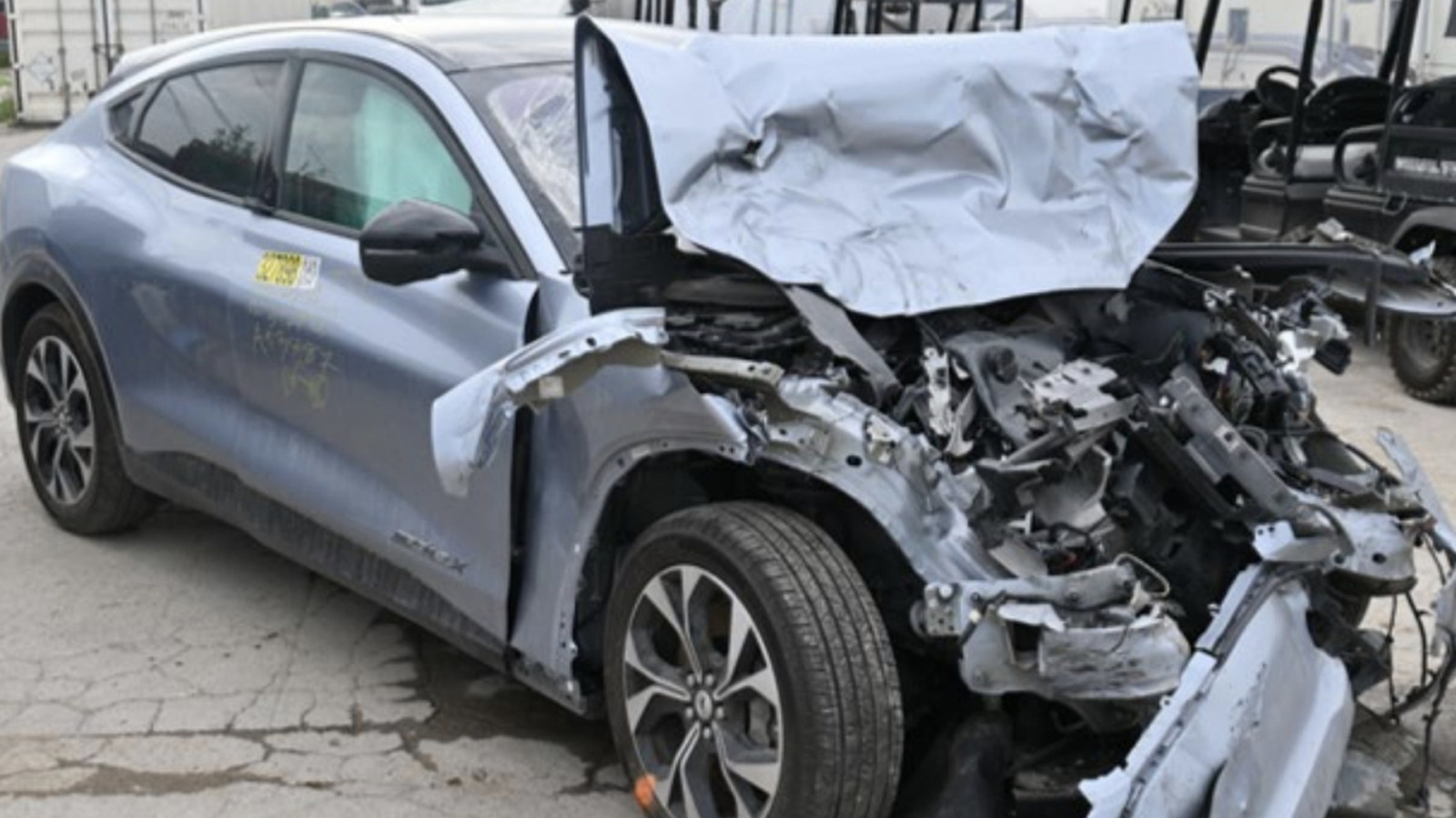
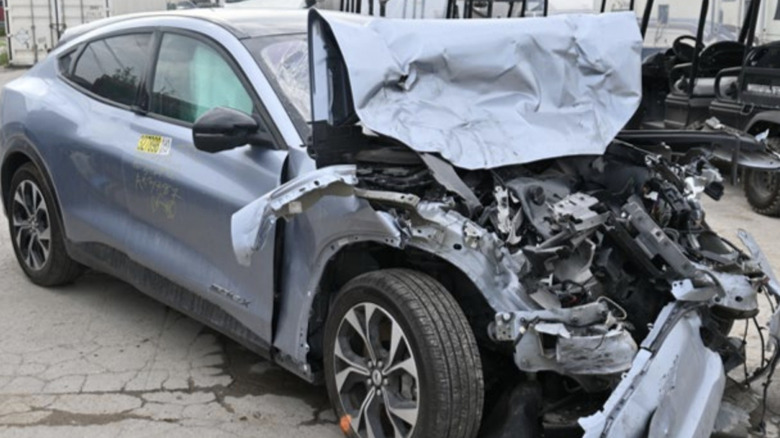
In 2024, two Mustang Mach-Es with Ford’s BlueCruise hands-off driver assist system engaged were involved in fatal crashes, and now new information from the National Transportation Safety Board suggests that in both instances, the people behind the wheel were distracted — not looking at the road ahead as their crossovers drove down the highway.
During the investigation into a March 2024 crash near Philadelphia, Pennsylvania, officials found that the driver, who was intoxicated at the time, may have been looking at her phone — which was out of view of the car’s driver monitor system — in the seconds leading up to the crash that killed two people on the side of I-95. In the other crash that happened in February of 2024 in San Antonio, Texas, new information from the NTSB shows the driver was looking at the Mach-E’s 15.15-inch infotainment screen just seconds before hitting a stationary vehicle at 74 mph — killing its driver.
Now, the NTSB says it will hold a public hearing on March 31 in Washington, D.C., where it will discuss key findings in both crashes. Board members will vote on the probable causes of both crashes as well as safety recommendations for Ford, it said in a statement. A final report is expected in the weeks following this meeting.
These fatal crashes not only triggered the NTSB investigation but also brought on one from the National Highway Traffic Safety Administration, according to TechCrunch. Last year, NHTSA said BlueCruise had limitations when it comes to detecting “stationary vehicles in certain conditions,” and sent Ford a list of questions as part of an upgraded probe. That investigation is still ongoing.
Of course, Ford says BlueCruise is meant to be a “convenience feature” more than anything, and drivers are supposed to be ready at a moment’s notice to take over if things go haywire. From the sound of it, there was some failure of communication of BlueCruise’s capabilities or willful ignorance on the parts of the drivers, because — as we’re about to discuss — both drivers ignored warning signs from their cars before getting into these crashes.
Possibly distracted by infotainment
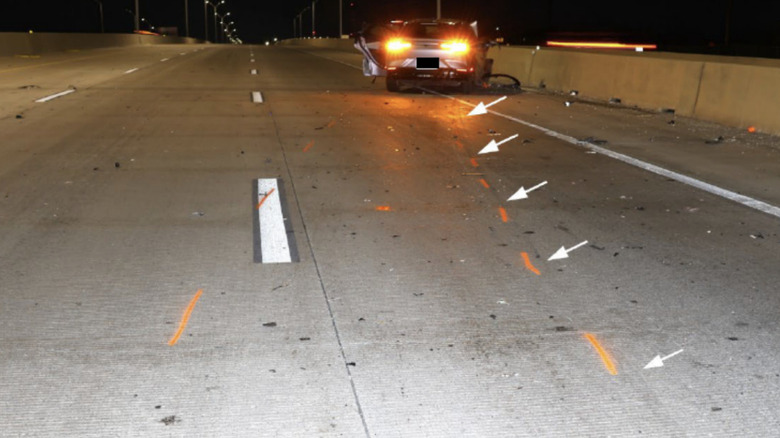
The more troubling (from a safety perspective, at least) of the two crashes is almost certainly the February 2024 crash in San Antonio. At around 9:48 p.m., the driver — who hasn’t been identified — was in the center lane of I-10 in his BlueCruise-enabled 2022 Mustang Mach-E when he slammed into the back of a stationary 1999 Honda CR-V at nearly 74 mph, according to the NTSB. The Mach-E driver suffered minor injuries, and the Honda driver was killed.
New information released by the Board, thanks to the Mach-E’s driver-monitoring system, showed that the driver was looking at the crossover’s infotainment screen in the five seconds leading up to the crash. It only detected him looking at the road for a few fractions of a second at about 3.6 seconds before the crash, and once again with just 1.6 seconds before impact. At 74 mph, you’re traveling nearly 109 feet every second.
In the 30 seconds leading up to the crash, he received two visual and auditory alerts to pay attention to the road, but they were clearly ignored. At no point did he ever brake.
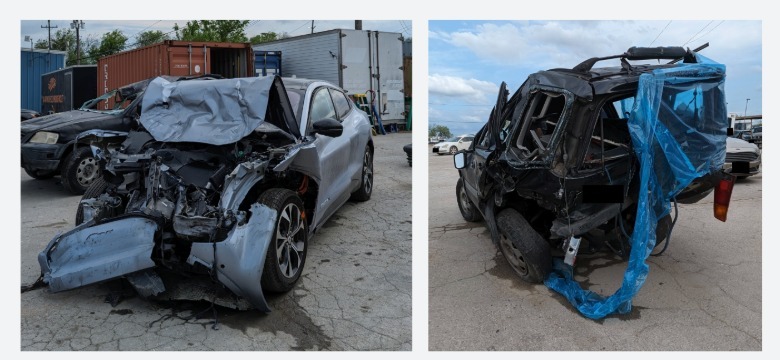 NTSB
NTSB
The driver told San Antonio Police that he was using the Mach-E’s navigation system to look for a charging station, with a report stating that “he may have looked at the center screen console because directions to the charging station were displayed there.”
There’s some speculation that he was falling asleep before the crash, according to TechCrunch, but it’s impossible to say for certain. A still image of the driver two seconds before the crash apparently shows him sitting upright and facing forward, with his head resting (or nearly resting) on the headrest and slightly rotated to the right.”
Drunk and possibly on her phone
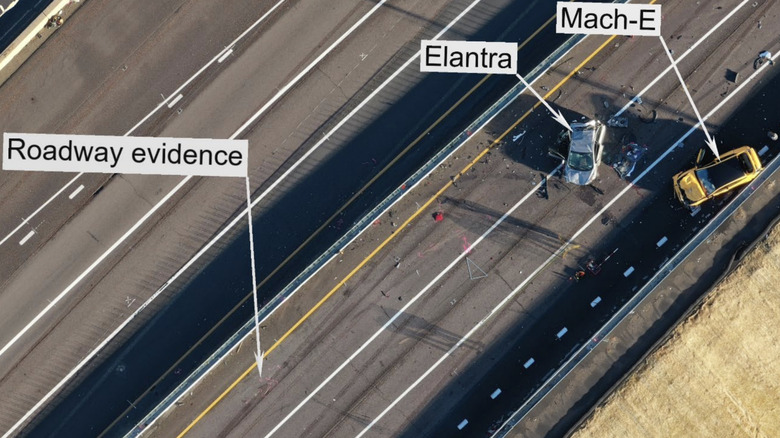
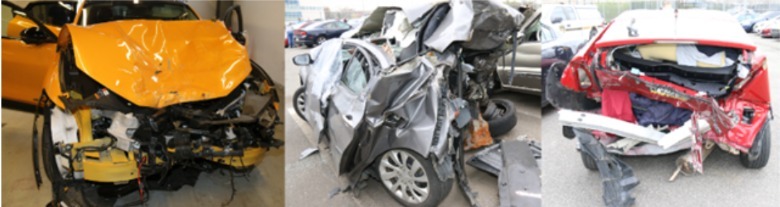
The second BlueCruise crash involved then-23-year-old Dimple Patel, who was intoxicated at the time of the crash. She was traveling along I-95 in Philadelphia in March of 2024 at about 3:16 a.m. when she crashed into a 2012 Hyundai Elantra that was stopped on the left side of the road. That Elantra then hit a 2006 Toyota Prius that was stopped in front of it, according to the NTSB. The drivers of those two cars were friends who had stopped for an unknown reason. The Prius driver had gotten out of his car and was standing on the left side of the Elantra. Both were killed in the crash, and Patel only suffered minor injuries. Patel was traveling at 72 mph before the impact, while being in a construction zone with a 45 mph speed limit.
 NHTB
NHTB
Similar documentation from the NTSB to the first crash shows that Patel’s eyes were “on-road” for the full five seconds before the crash. It might sound sort of strange that Patel would miss a stopped car like that if her eyes were on the road the whole time. Sure, she was drunk, but something else must have been happening.
Well, as it turns out, there may have been. A snapshot taken just two seconds before the actual impact shows her holding a phone above the steering wheel — out of view of the Mach-E’s driver monitor cameras. Basically, she may have made the car think she was paying attention when she actually wasn’t.
Following the accident, Patel — a pre-med student — was charged with driving under the influence, tampering with evidence, reckless driving and homicide by vehicle, among a slew of other charges, according to ABC6.
I’m not sure what exactly will come out of the NTSB’s meeting in D.C. at the end of the month. Obviously, it sounds a lot like the people behind the wheel of these cars were being reckless to some degree (to say the least). However, it’s hard to deny that they weren’t lulled into some sort of false sense of security because of how automakers market their Level 2 driver assist systems. These systems aren’t making us better drivers, and they certainly aren’t advanced enough to do the driving for us. The Insurance Institute for Highway Safety found in a 2022 report that drivers with Level 2 autonomy in their vehicles were much more likely to perform distracted driving actions like texting or eating in the car than their counterparts with a simpler car. Over half of GM’s Super Cruise users and 42 percent of Tesla’s Autopilot users treated their cars as fully self-driving vehicles, the IIHS found.

