


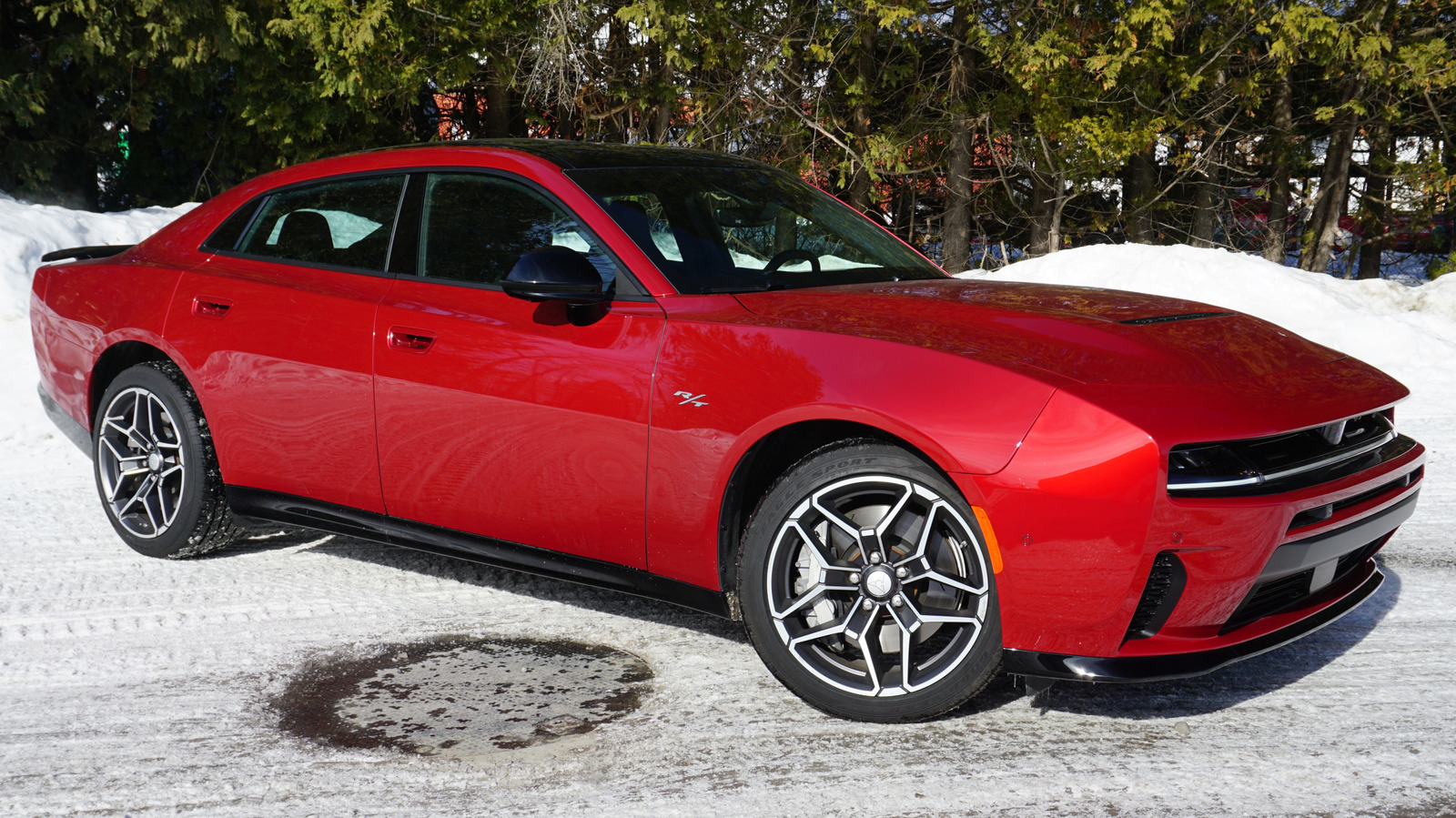
Looking inside the Sixpack R/T, it’s pretty much impossible to tell the difference between it and the Scat Pack and the Daytona EVs. It’s not anything close to a luxury car, but it’s a hell of a lot better than the old Charger and Challenger it replaces. In front of the driver and above the squared-off steering wheel is a massive 16-inch digital gauge cluster (a 10.25-inch unit is standard), which may actually be too big to be useful, as either side of it gets cut off by the steering wheel like the gauges on an old Porsche 911. Right above it is a fairly comprehensive head-up display.
 Andy Kalmowitz / Jalopnik
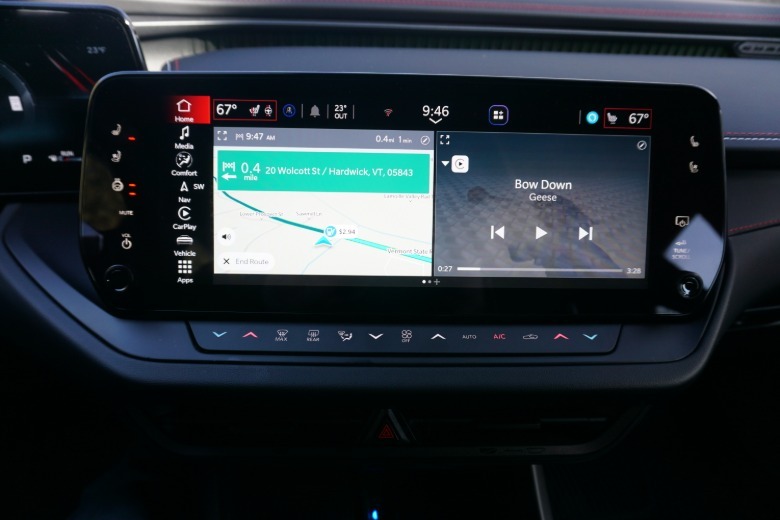
In the center, there’s a 12.3-inch infotainment display running Stellantis’ Uconnect 5. All in all, the screens are fairly simple to navigate and customize, but there’s a bit more lag in the systems than I’d really like, especially in the gauge cluster. Each side of the center screen is flanked by capacitive touch buttons for heated/cooled seat controls, and as was the case with every other new Charger I’ve driven, it took quite a few presses to get them to actually register my commands. At the very least, there are physical volume and tuning knobs and a handful of other HVAC buttons below the screen.
Even though the R/T is the base car, it can still be optioned with all of the safety features found in the more-expensive Scat Pack and Daytona, including things like a surround-view camera, adaptive cruise control, blind-spot intervention and lane-keeping assist. These systems work really well together, and the’ Level 2 driver-assistance system punches far above its weight class than you’d think for a piece of tech from Stellantis.
 Andy Kalmowitz / Jalopnik
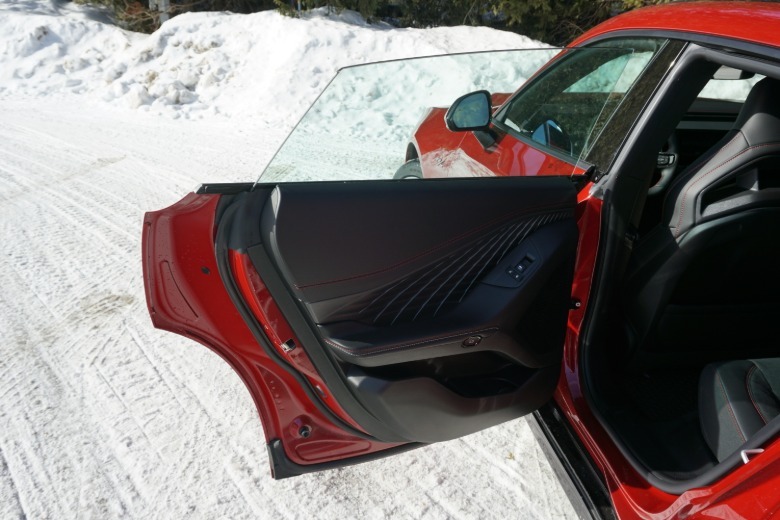
Also punching above its weight class are the extremely adjustable and supportive high-back bucket seats, which can be found up and down the Charger lineup. Of course, they’re optional, and I didn’t get a chance to check out the base seats, but they look so cool, I don’t think they’re an option you can skip. While the 121-inch wheelbase doesn’t seem to make that much of a difference on the road, it certainly pays off when it comes to interior space.
 Andy Kalmowitz / Jalopnik
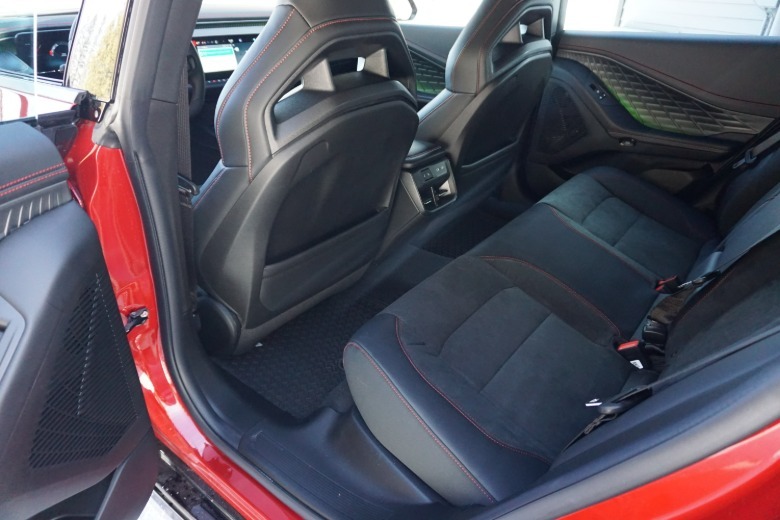
The rear seats don’t have much going on other than the fact that they’re heated and have some charging ports and air vents. At least there’s a metric shitton of room back there — 37.2 inches of legroom to be exact. That 4.1-inch improvement over the old car, combined with 36.9 inches of rear headroom, means I can fit very comfortably behind myself, and I’m 6-foot-1. If I turned myself and four passengers into goo, I’d be able to fit 103.1 cubic feet of us inside the Charger Sixpack, and that’s before we even talk about the car’s best feature: the liftback.
Dodge says you can put 22.8 cubic feet of whatever the hell you want back there. If that’s not quite enough, drop those rear seats and it expands to 38.0 cubic feet. You’ll be hard-pressed to find a sedan with more room than that.

