


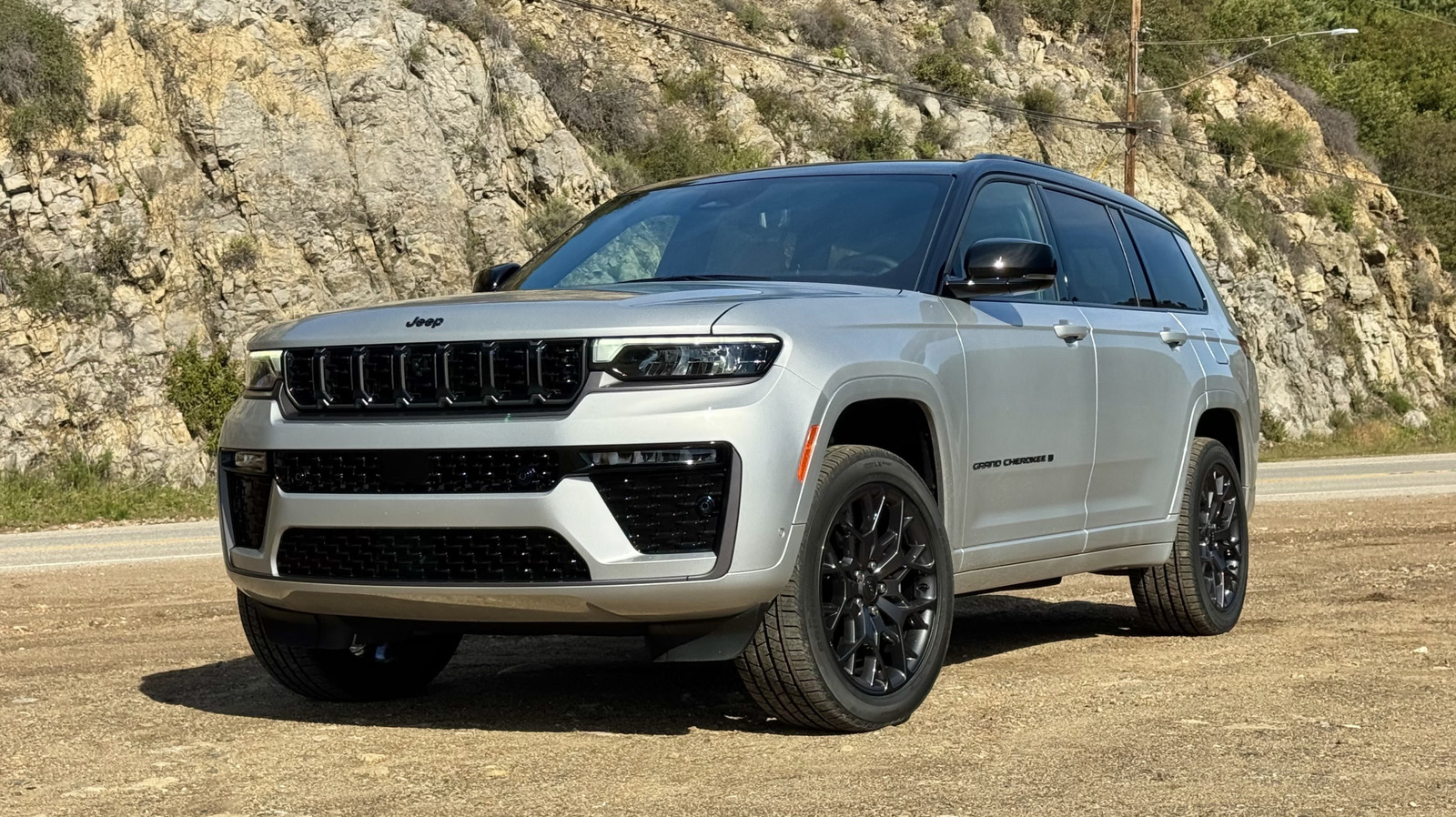
Prior to my extremely brief time with the 2026 Grand Cherokee, I doubted the little turbocharged four-cylinder’s ability to adequately power a vehicle as beefy as the Grand Cherokee, let alone the larger three-row Grand Cherokee L that can weigh as much as 5,068 pounds. I climbed behind the wheel of a top trim 2026 Grand Cherokee L Summit to see what the little four-popper had to say about lugging around all that weight.
The first thing I noticed was that it sounds and feels like a diesel at idle and low rpm, with lots of clatter and a slightly rough demeanor. I also noticed that despite Jeep’s claim that it produces 90% of peak torque from 2,600-5,600 rpm, it feels pretty gutless below 3,000 rpm. Once the digital tachometer needle climbs above 3,000 rpm, the variable geometry turbocharger clocks in and launches the Grand Cherokee’s nose into the air. When the Hurricane is in its power band, it does a great impression of a turbocharged six-cylinder, with more than enough oomph for duty under the long, tall hood of this 2.5-ton three-row hauler.
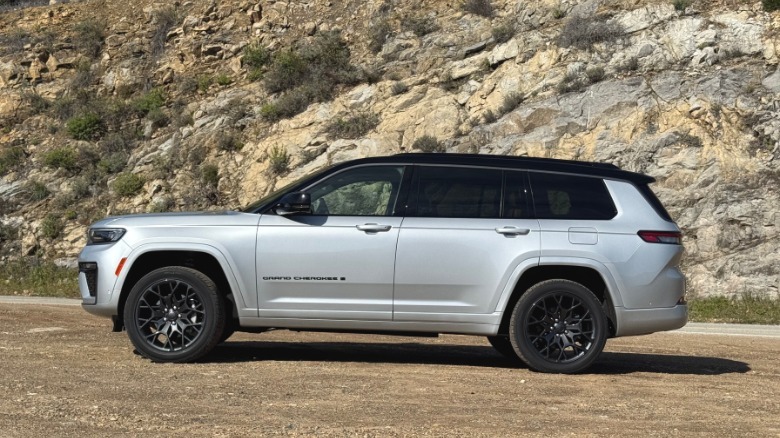 Logan K. Carter/ Jalopnik
The standard engine for the 2026 Grand Cherokee remains Stellantis’s venerable naturally aspirated 3.6-liter Pentastar V6 that produces 293 horsepower and 260 lb-ft of torque, but now it’s only under the hood of base Laredo and Laredo X models. All other trim levels — Laredo Altitude, Limited, Limited Reserve, and the top Summit — are powered by the Hurricane as the only choice. Though all 2026 Grand Cherokees have an eight-speed automatic transmission, Pentastar-equipped SUVs feature a Torqueflite 8HP70 eight-speed, and Hurricane-powered models receive a Torqueflite 880RE/8HP80 with revised gear ratios.
In the Hurricane-powered Grand Cherokee L Summit that I drove, the transmission felt too eager to upshift into higher gears in the Auto drive mode. This meant I had to push my right foot deep into the throttle to get it to downshift and access the swell of torque from the little turbocharged four. When it’s in the right gear, though, the new powertrain is a winner. Fuel economy gains aren’t all that impressive; it returns between 1 and 2 mpg better than the Pentastar does, for 21 mpg city, 27 mpg highway, and 23 mpg combined in rear-wheel-drive Grand Cherokees. (The highway number drops by 1 mpg when you go for four-wheel drive.) Regardless of drivetrain, the Pentastar gets 19 mpg city, 26 mpg highway, and 22 mpg combined.
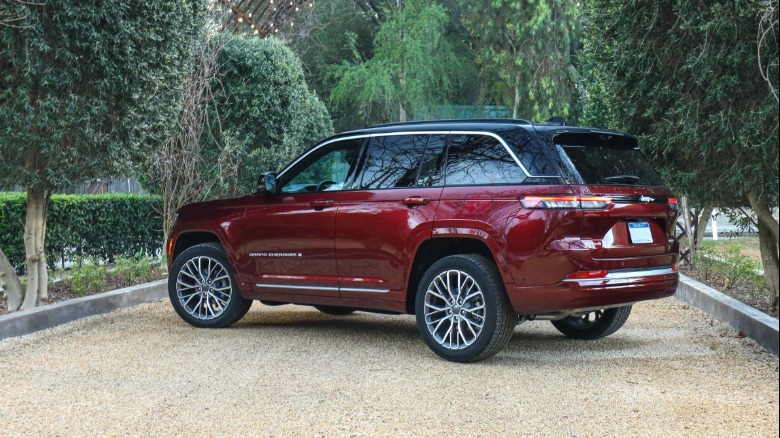 Jeep
Jeep
Smaller engine aside, the Grand Cherokee still feels heavy and purposeful to drive, which seemed befitting of a big SUV. The brake pedal was similarly firm, and required a bit more pressure than I expected, though they brought the thicc Grand Cherokee L to a halt just fine. The Hurricane makes its presence known at high engine speeds, but the interior is a serene leather-lined cabin when you’re just cruising.

