


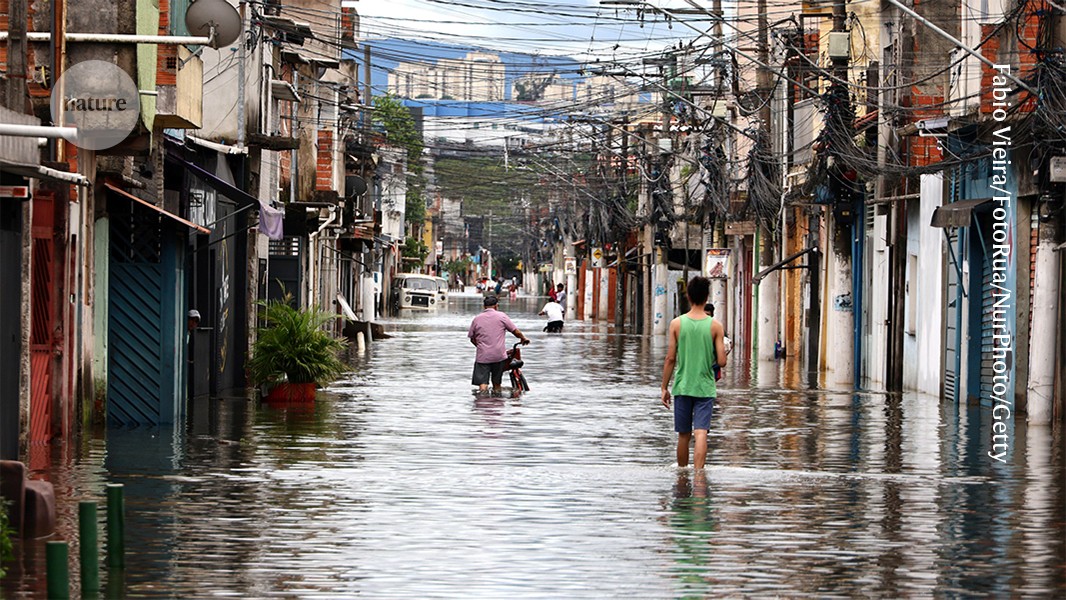
Climate change presents many threats to life on our planet: a worsening global food crisis, extreme heat that could lead to millions of deaths, intense droughts, floods and the collapse of crucial ecosystems. Some island countries and cities might disappear beneath rising seas. Conflict, state failure and mass migration could escalate.
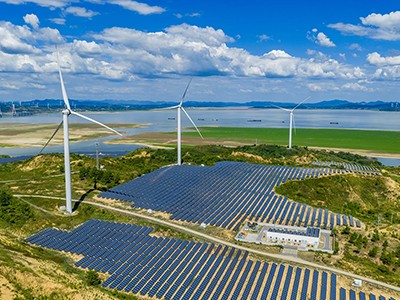
As we breach 1.5 °C, we must replace temperature limits with clean-energy targets
Policymakers and citizens are aware of some of these risks, but not necessarily how severe they will be, how rapidly they might emerge or which risks are avoidable. Government leaders need to know the severity and urgency of such risks to help them to make well-informed decisions and set priorities. So far, they have only a partial view.
For example, policymakers might realize that sea-level rise requires spending more money on flood defences, yet neglect the possibility that parts of large cities such as London, New York City or Mumbai might have to be abandoned (see ‘London flooded by rising seas’). They might be aware that more people will die in heatwaves in a hotter climate, yet be unprepared for mass casualties if tens of thousands in one region were to die in conditions exceeding the limits of human tolerance.
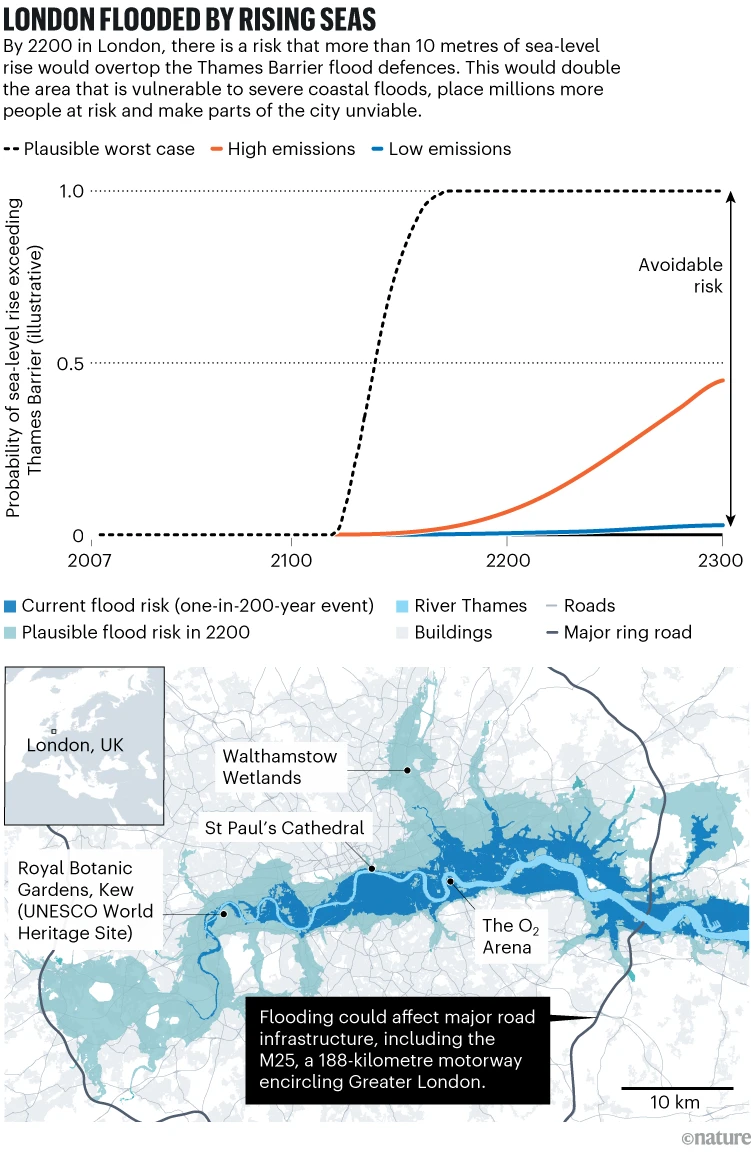
Source: Analysis by J. Savage, Fathom, Bristol, UK.
Without a clear view of what is at stake, it is difficult — or even impossible — to make a successful case for proportionate action on climate change. Yet, astonishingly, there has never been an internationally mandated global assessment of climate-change risks.
Global assessments made by the Intergovernmental Panel on Climate Change (IPCC) have played, and continue to play, a crucial part in assessing the evidence about climate change. But the IPCC produces science assessments rather than risk assessments. Its main focus has been to set out what is known with the greatest confidence. A climate risk assessment offers different information — it makes clear the scale and severity of risks, to inform judgements about the priority to be given to avoiding or mitigating them1.
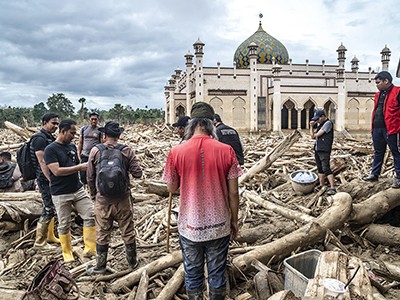
Exceeding 1.5 °C requires rethinking accountability in climate policy
Many countries have undertaken their own climate risk assessments, mainly to inform policies and planning for adaptation. Other studies have demonstrated a holistic risk-assessment approach2 or assessed specific categories of risk, such as economic threats3 or geopolitical instabilities arising from climate change4. But these have had limited reach.
Only a global risk assessment, led by an appropriate international institution and designed to make clear the full scale of the global threat, can explore the full range of outcomes that global emissions reductions could avoid. Here we call for such an assessment and outline how to go about it.
Identify worst-case scenarios
The principles for producing risk assessments are well established in fields such as public health, engineering, defence and intelligence. They include: identifying risks in relation to objectives; focusing on the largest risks, including plausible worst-case scenarios (in the long term as well as near term); using the best available information; considering the full range of possibilities (with probabilities if they can be quantified, and qualitative information if they cannot); taking a holistic view; and being explicit about value judgements and limitations in the evidence2.

London’s Thames Barrier at dusk.Credit: Giles Barnard/Construction Photography/Avalon/Getty
These principles lead to a practical difference between a prediction and a risk assessment. A prediction asks first ‘what is expected to happen?’ and then ‘how might that affect society’s interests?’ A risk assessment asks first ‘what could happen that would adversely affect society’s interests?’ and then ‘how likely are these outcomes?’ Because climate-change risks increase over time, this last question becomes ‘how does the likelihood of adverse outcomes change as a function of time and of human actions?’
Crucially, a risk assessment does not provide a counsel of despair. It gives a clear picture of the outcomes that societies can still choose to avoid. A global climate-change risk assessment would support the development of timely measures for climate-change mitigation and highlight the extent of human agency.
Overcome the challenges
Producing a global climate-change risk assessment is feasible, if the following scientific, societal and institutional challenges are addressed.
Assessing likelihoods. Considering the likelihood of rare events, particularly worst-case scenarios, is a major challenge for risk assessments. Extreme events that might never have been seen before, such as the collapse of an ice sheet, are hard to predict and depend on sensitive, yet poorly understood, processes, such as links between different causes of ice-sheet instability5.
How to get science back into policymaking
Risk assessments can handle such uncertainties by focusing only on the most important information. For climate change, this means identifying a threshold of impact severity — such as 5 metres of sea-level rise — and assessing the likelihood of crossing this threshold as a function of time6. Uncertainties remain, but by keeping the focus of the analysis on what matters most, the scale of the risk can be clearly communicated and understood.
Cascades of interrelated risks are also difficult to assess. For example, food systems will be affected by a combination of changes to soils, pollinators and diseases, as well as heat, drought and flooding. Economic growth and geopolitical stability will be affected by shortages of resources, loss of land, reduced productivity and the impacts of extreme weather on crucial infrastructure. All of these risks interact with and compound one another7–9. These can be handled successfully by harnessing new methodologies10,11 and different risk-assessment communities (in health care, security, finance and the environment, for example).
Reflecting wide perspectives. The broad nature of risk assessments means that they are hard to produce. First, they are interdisciplinary. For example, the expertise necessary to identify an impact threshold relevant to a society (such as mass casualties in a city from extreme heat; see ‘Intolerable heat stress’ and ‘Boiling in Belém’), which requires socio-economic and health data, differs from that needed to assess the likelihood of crossing that threshold, which requires climate-modelling information. Experts and practitioners from different fields must thus work together.

Source: Analyses by P. A. Stott et al.

