


February 23, 2026
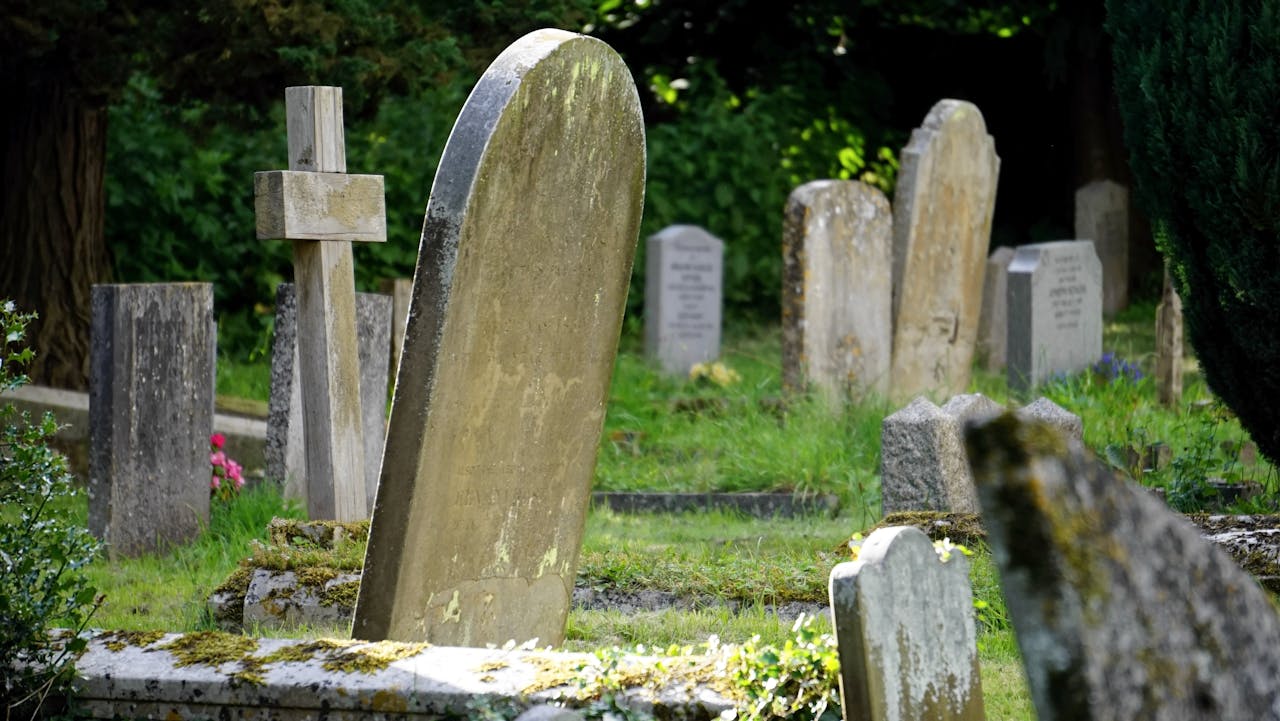
The Prince George’s County cemetery holds Black children who died at the post–Civil War House of Reformation and Instruction for Colored Children.
Nearly six months after state leaders toured an overgrown burial ground tied to a segregated juvenile detention center, Maryland lawmakers are advancing legislation aimed at uncovering how hundreds of Black boys died while in state custody.
The cemetery, located on state-owned property in Prince George’s County, holds the remains of Black children who were confined at the former House of Reformation and Instruction for Colored Children, which operated in the decades following the Civil War. Many of the graves, rediscovered in recent years, were marked only by cinder blocks.
“How did so many children die in state custody? What were the conditions that led to their deaths? Were signs ignored?” Del. Jeffrie E. Long Jr. (D-Calvert) asked during a recent hearing before the House Government, Labor and Elections Committee.
Long is sponsoring a bill that would establish a commission, led by the Maryland attorney general, to investigate the facility’s history and the circumstances surrounding the children’s deaths. The proposed panel would include descendants of those who were incarcerated at the school, as well as appointees selected by state and local officials, including the Maryland General Assembly and Prince George’s County Executive Aisha Braveboy.
According to Long, the commission would collaborate with specialists to conduct archaeological surveys, forensic testing, and historical research, while also engaging with families. The group would review state policies and institutional practices that may have contributed to the deaths.
“Let’s be very clear. These weren’t just any graves. They were neglected children by the state of Maryland,” Long told The Washington Post. He added that the legislation would allow for memorials, reburials, and educational initiatives so the story becomes “a part of shared understanding and accountability.”
A Washington Post investigation last year revealed that at least 230 children died at the facility between 1870 and 1939 — a figure significantly higher than earlier estimates. Research uncovered more than 100 death certificates, contemporary newspaper accounts, and archival records indicating that many boys may have endured abuse or neglect.
The Maryland Legislative Black Caucus visited the site in September and pledged action. While earlier drafts of the bill called for an independent investigation, Long said the structure was revised to place the attorney general’s office in charge, citing its experience with similar commissions and concerns about cost.
Although some lawmakers initially questioned whether the state could adequately investigate itself, no opposition testimony was presented at the recent hearing. A companion bill in the Senate also outlines the attorney general’s leadership role.
In the meantime, restoration efforts have begun. The Department of Juvenile Services secured $31,000 in grant funding, and Gov. Wes Moore has proposed allocating an additional $250,000 in the state budget.
Betsy Fox Tolentino, acting secretary of the Department of Juvenile Services, voiced support for the legislation. “The institution operated during a deeply segregationist period and investigating its conditions, practices and deaths is a moral and civic responsibility,” she said. “Proper memorialization, education and respectful treatment of the burial sites are essential steps toward accountability and community healing.”
RELATED CONTENT: Descendants Of Black Tenant Farmers In Virginia Speak Out As Ancestors’ Graves Displaced For Industrial Park

