



The UK science ecosystem is in limbo. On 1 February, the country’s national science-funding agency, UK Research and Innovation (UKRI), announced large changes to how research grants will be judged and awarded. Although the precise details are still emerging, the UKRI open letter states an aim to “focus and do fewer things better” (see go.nature.com/4rnhghn). Support for curiosity-driven research will be preserved, we are told. Investment in applied research will be aligned with the government’s industrial strategy.
This move to a top-down agenda for research funding is concerning, in my view. And a good dose of uncertainty about what, how and when the funding will be cut is leaving the UK research community anxious. Science — especially curiosity-driven research — is, at its heart, a creative act. It needs space to breathe and the capacity to fail. Often, government-mandated programmes lack that flexibility.
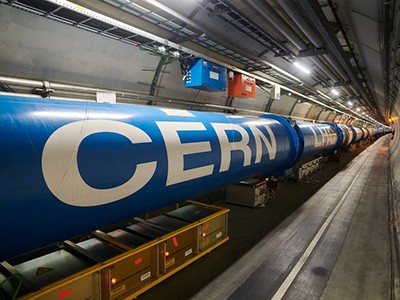
Is UK science in jeopardy? Huge funding reforms spark chaos and anxiety
The potential consolidation of money into bigger research groups threatens to stifle the development of original ideas and future leaders, too. The United Kingdom punches above its weight in research, relative to the size of its scientific community and the amount of money that it invests in science. Much of this success is to do with curiosity-driven research.
And the timing is terrible. Funding challenges in the United States were perceived by some countries as an opportunity to recruit prominent scientists. Now, the United Kingdom is less enticing.
Medical, biological and physical research will see pauses in major grant programmes. Since April 2025, UKRI has allocated about £9 billion (US$12 billion) of public money to projects. Funding opportunities from the Medical Research Council (MRC) are currently closed, with applications under review, for projects in infections and immunity, molecular and cellular medicine, neurosciences and mental health and population and systems medicine — that is, most of the MRC’s remit. The Science and Technology Facilities Council, which funds particle physics, astronomy and space research, is already closing some projects, in part because its budget has run into the red owing to high energy costs. The MRC is making reductions not only to future projects but also to applications currently being assessed. As an immunologist, I know just what went into planning, writing, budgeting and reviewing those applications. These cuts represent a huge waste of time and effort for all involved.
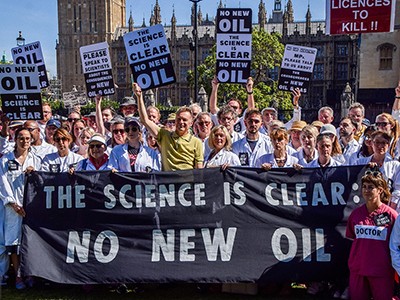
Give UK science the overhaul it urgently needs
The head of UKRI, Ian Chapman, assured the scientific community that this slowdown would be temporary and that the country will have “fully transitioned to the new model by the start of the 2027 and 2028 financial year” — that is, April 2027. This is not reassuring. On the contrary, an undetermined period of research down time, which could last for at least one year, is disruptive for all scientists. For freshly appointed faculty members, who might have a three-year probation period, it is a serious, potentially career-ending blow. For postdocs and technical staff members employed through grants, it could mean a pause in salary. This is untenable for many. The uncertainty alone will lead to a loss of highly skilled workers.

