


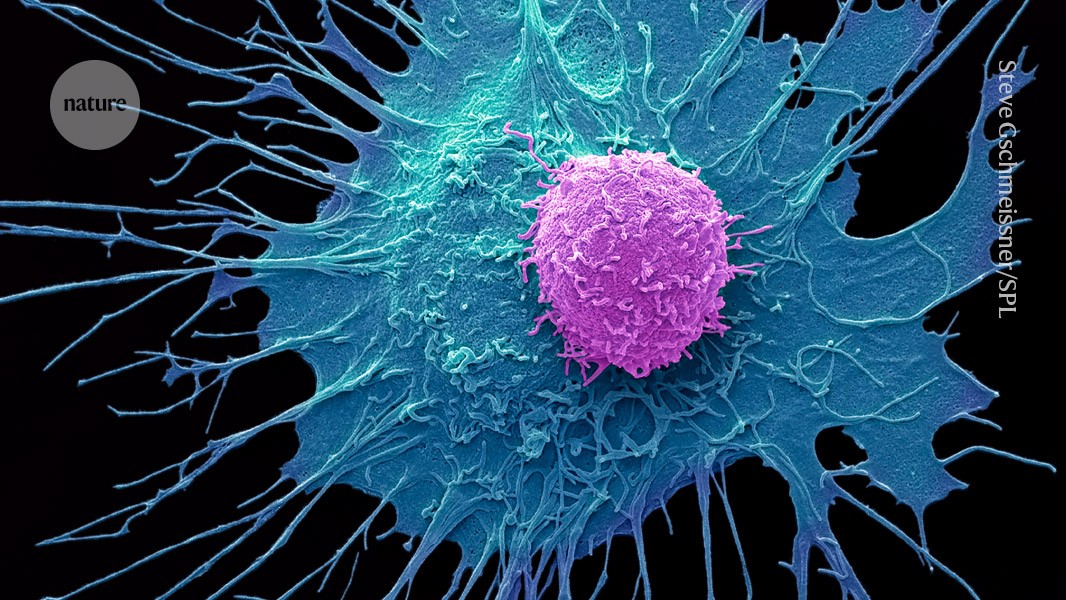

Engineered T cells (pink) produce proteins called chimeric antigen receptors that target antigens in cancer cells (blue).Credit: Steve Gschmeissner/Science Photo Library
A new generation of engineered immune cell destroys cancer cells in mice1 as effectively as conventional CAR-T-cell therapies without suppressing the immune system, a serious side effect. The engineered cells could also be used to treat some people with autoimmune conditions, such as lupus.
CAR-T-cell therapy involves tweaking a person’s immune cells known as T cells to produce proteins called chimeric antigen receptors (CARs). These receptors target antigens on B cells, another type of immune cell, in tumours. Conventionally, this antigen of choice has been the CD19 molecule.
Researchers have developed a CAR-T-cell therapy called CART4-34 that targets B cell receptors carrying the gene IGHV4-34 — thought to be involved in immune responses — which is found in high levels in cancer cells. The scientists found that CART4-34 therapy was as effective as CD19 CAR-T therapy at destroying cancer cells in genetically modified mice with a cancer called diffuse large B cell lymphoma. The CART4-34 therapy did not target healthy, non-cancerous B cells. The IGHV4-34 gene is rarely found in healthy cells.
CD19 CAR-T therapy, however, destroys any cells carrying the CD19 molecule, which leads to the suppression of the immune system, says Andrea Henden, a clinician–researcher at the QIMR Berghofer Medical Research Institute in Brisbane, Australia. “If you’re lucky enough to get a cure for your lymphoma, the most likely other threat to your health is through infection,” she adds. “It is quite a fundamental problem with our current use of CAR T cells.”
Autoimmune diseases
The engineered T cells could also treat some autoimmune conditions. Antibodies that target cells carrying IGHV4-34 are present in many people with lupus and are associated with more aggressive forms of the disease, says Marco Ruella, a clinician–researcher at the University of Pennsylvania in Philadelphia, whose team developed the CART4-34 therapy.

