


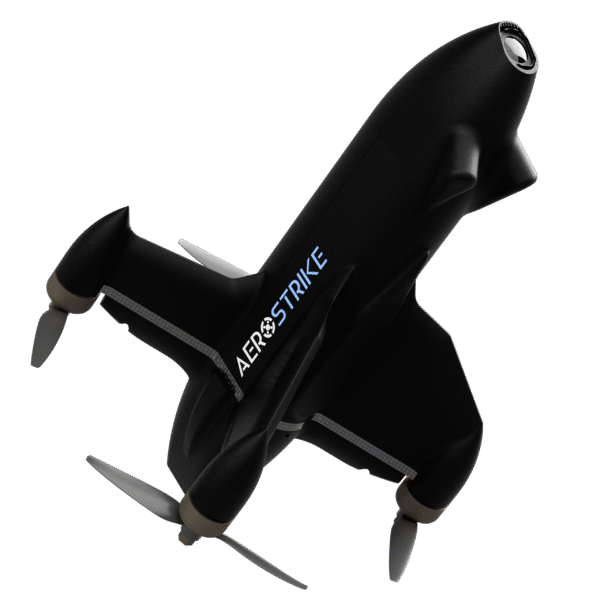
Drone Defence, a UK-based technology firm, has introduced AeroStrike, a high-speed drone interceptor designed to physically counter hostile or unauthorized unmanned aerial systems (UAS) in high-threat environments. The new system marks a shift toward kinetic interception solutions as small, fast-moving drones become increasingly common in security-sensitive and contested airspace.
High-speed drone interceptor engineered for certainty
AeroStrike is built around a rapid-response interceptor platform capable of reaching speeds of up to 270 km/h, with an intercept envelope between 100–200 km/h (up to 120 mph) for agile targets. The system emphasizes quick reaction time, precision control, and repeatable performance during engagements where jamming or GNSS interference may limit the effectiveness of electronic countermeasures.
According to Drone Defence, AeroStrike “provides a deterministic outcome through controlled physical engagement,” offering a reliable alternative to disruption-only solutions. The design allows the interceptor to physically engage a target drone, preventing it from completing its intended mission.
Designed for controlled, lawful defense operations
The AeroStrike platform employs a non-explosive, recoverable architecture that supports lawful defensive use and minimizes collateral risk. Its recoverable design allows post-operation assessment and repeat deployments, aligning with operational and regulatory safety standards.
Key features include operator-in-the-loop decision-making, rapid deployment, and automated or manual intercept control— including FPV flight capability. The system is compatible with Drone Defence’s AeroTracker platform for flight monitoring, tasking, and intercept management, and can integrate with radar, RF, and EO/IR detection systems. AeroStrike can be integrated into existing counter-UAS networks with minimal setup and is deployable for fast repositioning. Drone Defence states the system is intended exclusively for qualified defense, government, and security organizations and remains subject to UK export controls and regulatory approval.
Private technical briefings and controlled demonstrations are now being offered, with further technical data expected in upcoming months.
More information is available from Drone Defence’s website.
Read More

Ian McNabb is a journalist focusing on drone technology and lifestyle content at Dronelife. He is based between Boston and NH and, when not writing, enjoys hiking and Boston area sports.

