


Why Networks, Chips, and Trusted Infrastructure Will Decide Who Scales
(News and commentary.) Commercial drones are increasingly shaped by forces far beyond the airframe.
As governments tighten rules around “trusted” technology and assess the risks of “high-risk vendors,” it’s become clear that modern digital infrastructure is deeply interdependent. No single nation controls the full stack of advanced networks, chips, software, and cloud systems that power key technologies. That reality is starting to shape not just telecom and data centers, but also the future of commercial drone operations.
In a Reuters interview, Nokia’s CEO underscored this dynamic, saying Europe and the United States are co-dependent for technology leadership and secure alternatives to restricted suppliers. His comments were framed around telecom infrastructure, where only a few trusted vendors now operate at scale after bans on certain competitors
For the drone industry, this is significant. Unmanned aircraft today are not isolated machines. They increasingly sit atop layered technology stacks that include cellular connectivity, cloud fleet management, edge compute, and AI analytics. As policymakers treat those layers as critical infrastructure, drone manufacturers and operators are being pulled into the same supply-chain, security, and procurement conversations shaping a new tech ecosystem.
Networked Drones: Where Telecom Meets Flight
Commercial drone operations are steadily migrating toward networked architectures. Instead of relying solely on point-to-point radio links, many platforms now use cellular connectivity for command and control, telemetry, and data backhaul. Cloud platforms increasingly handle fleet orchestration, mission scheduling, and data storage, while enterprise analytics systems turn raw sensor outputs into operational insights.
In parallel, private LTE and private 5G networks are emerging as dedicated connectivity layers for industrial sites, ports, utilities, and public-safety agencies that require predictable coverage and low latency. These environments support automated and long-range drone missions that would be difficult to sustain on traditional radio links alone.
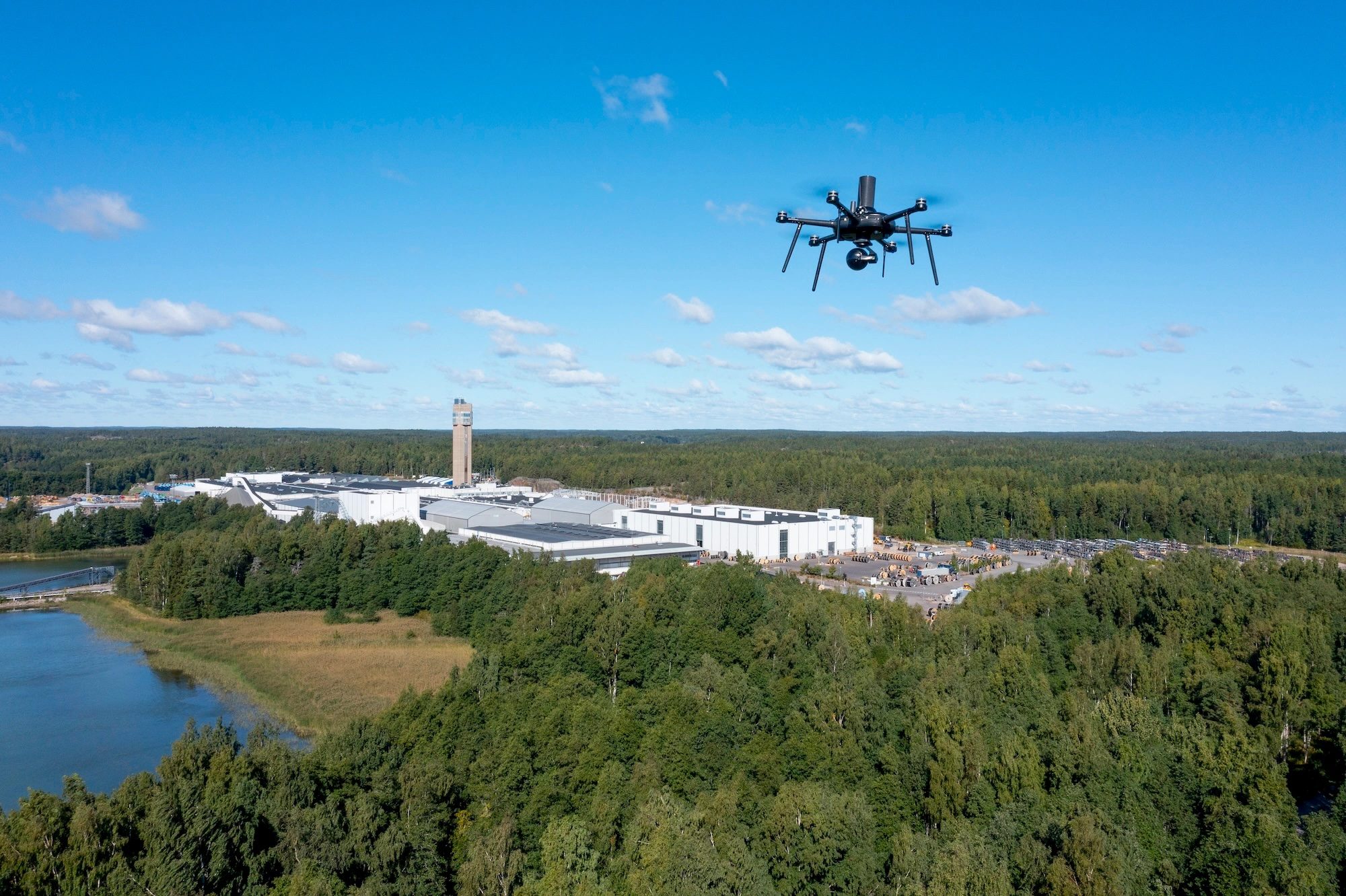
Industrial deployments already demonstrate this model. Nokia’s industrial 5G drone networks, for example, support connected drone operations for infrastructure inspection and emergency response, illustrating how unmanned aircraft are becoming nodes on broader digital networks rather than isolated platforms.
Semiconductors: The Invisible Backbone
Connectivity isn’t the only dependency. Semiconductors are the hidden backbone of modern drones: powering flight controllers, navigation systems, payload compute, AI inference, and secure communications.
Global semiconductor value chains are complex and concentrated, with only a few producers of advanced chips. These supply chains are difficult to replicate quickly and are a source of intense policy focus in both the U.S. and Europe. This means that even drones assembled domestically often rely on internationally sourced components.
For commercial UAV makers, this means trust and resilience are stack-wide properties, not just labels based on where an airframe is built.
From “Made Here” to “Trusted Everywhere”
For years, drone procurement debates largely centered on where an aircraft was manufactured. That question is not disappearing, but it is no longer sufficient on its own. As drones become more tightly integrated with networks, cloud platforms, and advanced computing hardware, evaluations are expanding to include the full technology stack.
This stack-level perspective looks beyond the airframe to connectivity and network security, compute hardware and chip provenance, cloud and data infrastructure, software integrity, and cybersecurity practices. Rather than asking only where a drone is assembled, buyers are increasingly asking whether the entire system meets expectations for security, resilience, and supply-chain transparency.
This mirrors the approach regulators now apply to telecom and IT systems, where risk is assessed holistically instead of component by component. For commercial drones, the shift marks a move away from simple country-of-origin labels toward a broader concept of system-level trust.
Transatlantic Coordination and Market Signals
Organizations like the EU-U.S. Trade and Technology Council have emphasized cooperation on resilient technology value chains, particularly semiconductors and critical infrastructure components. While not drone-specific, these efforts help shape industrial expectations across allied markets and strengthen alignment on security and supply-chain transparency.
This alignment matters because compliance in one major allied market increasingly supports access to others.
Military Demand: An Industrial Multiplier
Another force reshaping the commercial drone landscape is defense procurement.
The U.S. Army has announced plans to purchase at least one million drones over the next two to three years, a dramatic increase from the roughly ~50,000 drones it acquires annually today. This effort aims both to bolster battlefield capabilities and to stimulate a robust domestic supply chain capable of producing everything from motors and sensors to batteries and circuit boards.
These defense purchases, while military in intent, can have industrial side effects. Large contracts often fund factory expansions, tooling improvements, workforce growth, and supplier maturation, lowering per-unit costs and increasing overall production capacity. For UAV manufacturers with dual-use platforms or components that meet security requirements, this can create spillover benefits for commercial markets.
In some cases, defense needs are explicitly pushing public-private partnerships to reinvigorate domestic drone manufacturing, broadening opportunities for smaller companies outside traditional defense primes
A Flywheel of Connectivity, Policy, and Production
Together, secure networks, resilient supply chains, and defense-driven industrial demand form a kind of flywheel:
-
Cellular connectivity becomes essential to advanced commercial operations.
-
Trusted infrastructure frameworks influence procurement and compliance expectations.
-
Defense investment accelerates manufacturing scale and innovation.
-
Stack-level trust becomes a competitive differentiator in global markets.
Inside this loop, commercial drones are increasingly shaped by infrastructure choices, industrial policies, and allied standards, not just aerodynamic design and battery chemistry.
Looking Ahead: Infrastructure First, Aircraft Second
The next phase of commercial drone growth is likely to be less about incremental airframe tweaks and more about progress in the layers beneath: robust networks, resilient supply chains, harmonized standards, and trusted technology stacks.
For drone operators and builders alike, the message is clear: understanding the infrastructure beneath the aircraft may be just as important as understanding the aircraft itself.
Read more:

Miriam McNabb is the Editor-in-Chief of DRONELIFE and CEO of JobForDrones, a professional drone services marketplace, and a fascinated observer of the emerging drone industry and the regulatory environment for drones. Miriam has penned over 3,000 articles focused on the commercial drone space and is an international speaker and recognized figure in the industry. Miriam has a degree from the University of Chicago and over 20 years of experience in high tech sales and marketing for new technologies.
For drone industry consulting or writing, Email Miriam.
TWITTER:@spaldingbarker
Subscribe to DroneLife here.

