


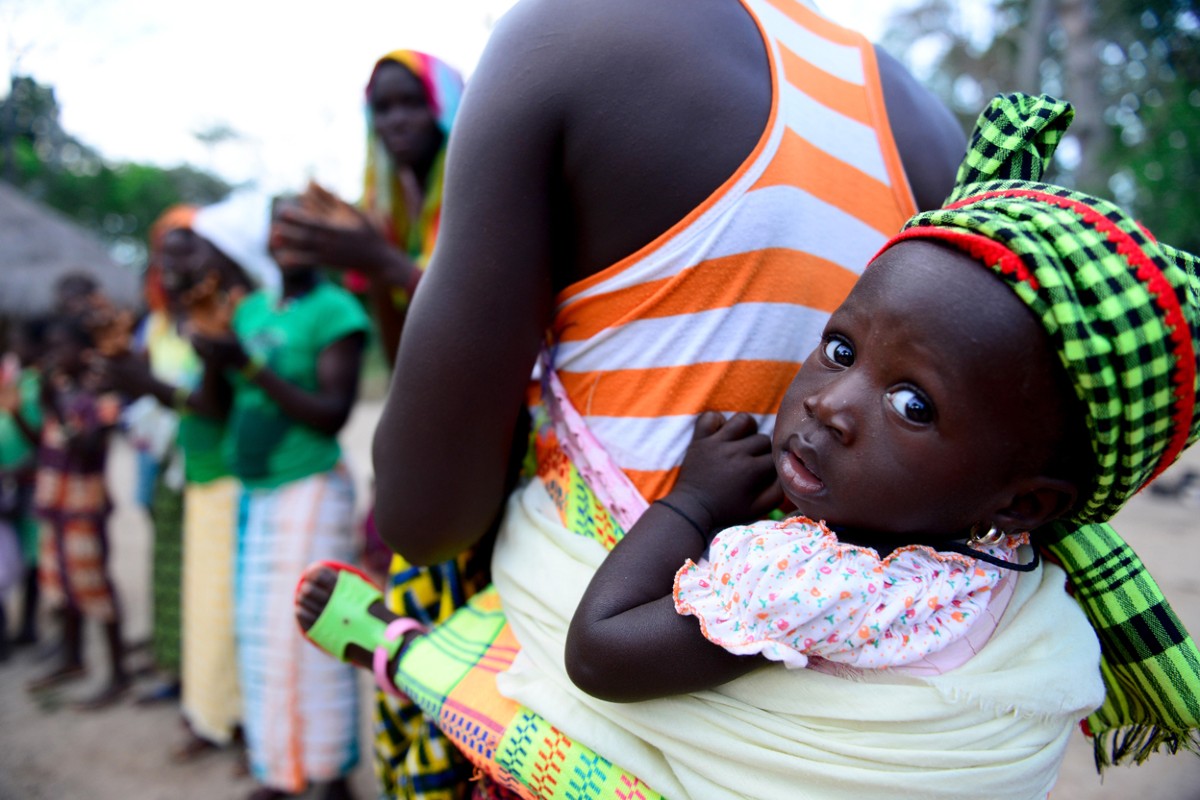

Guinea-Bissau will implement a universal birth-dose policy for the Hepatitis B vaccine in 2027.Credit: Enrique Lopez-Tapia/Nature Picture Library/Alamy
Public health authorities in Guinea-Bissau say that they have suspended a controversial US-funded hepatitis B vaccine study that has raised questions about who has authority over clinical research conducted in Africa. At a press conference held today, officials from Guinea-Bissau’s ministry of health said that the study was being suspended pending a technical and ethical review by its national public health institute. The announcement followed weeks of conflicting statements as to whether or not the trial would proceed.
“There has been no sufficient coordination in order to take a final decision regarding the study,” said Quinhin Nantote, the minister of public health for Guinea-Bissau. “Faced with this situation, we decided to suspend it.”
Mixed messages
The meeting, convened by the Africa Centres for Disease Control and Prevention (Africa CDC), comes after an official with the organization signalled last week that the trial would not proceed. In an email to Nature today, officials at the US Department of Health and Human Services (HHS), a prominent funder of the research, said that the study was still on track, leaving the trial’s status still uncertain.
Hotly anticipated US vaccine meeting ends with confusion — and a few decisions
“The study is proceeding as planned and we continue to work with our partners to finalize the study’s protocols,” wrote Emily Hilliard, a spokesperson for the HHS.
The continuing row shines a spotlight on long-standing tensions for clinical research trials in Africa. African scientists say that the Guinea-Bissau study shows how political pressure, funding interests and fragmented oversight can push local health priorities aside.
The hepatitis B vaccine trial was designed by researchers at the Bandim Health Project (Projecto de Saúde) out of the University of Southern Denmark, and funded in part through a US$1.6 million research grant from the US Centers for Disease Control and Prevention, part of the HHS. The study aims to randomize 14,000 newborns in Guinea-Bissau starting in early 2026 to either receive the hepatitis B vaccine at birth or not, before the country’s planned universal birth-dose vaccine policy begins in 2027.
The Bandim researchers have said that the study is a chance to investigate whether the vaccine has broader effects on infant health outcomes.
But several scientists have argued that by randomizing newborns to not receive the vaccine, the trial denies a safe and life-saving intervention to infants in Guinea-Bissau, which has a hepatitis B prevalence of about 19%. The immune systems of newborns are immature and about 90% of people infected at birth go on to develop chronic, lifelong infections which may lead to liver disease and early death.
Researchers who oppose the study argue that it is structured in a way that increases the likelihood of detecting harm from the birth dose, even if that harm is not real or clinically meaningful. “They’re trying to use African children to prove a case for reducing vaccines in the US,” says Seye Abimbola, a professor of health systems at the University of Sydney in Australia, who researches decolonizing global health. “That’s problematic.” The United States removed its own recommendations for a birth dose of the hepatitis B vaccine earlier this year.

