


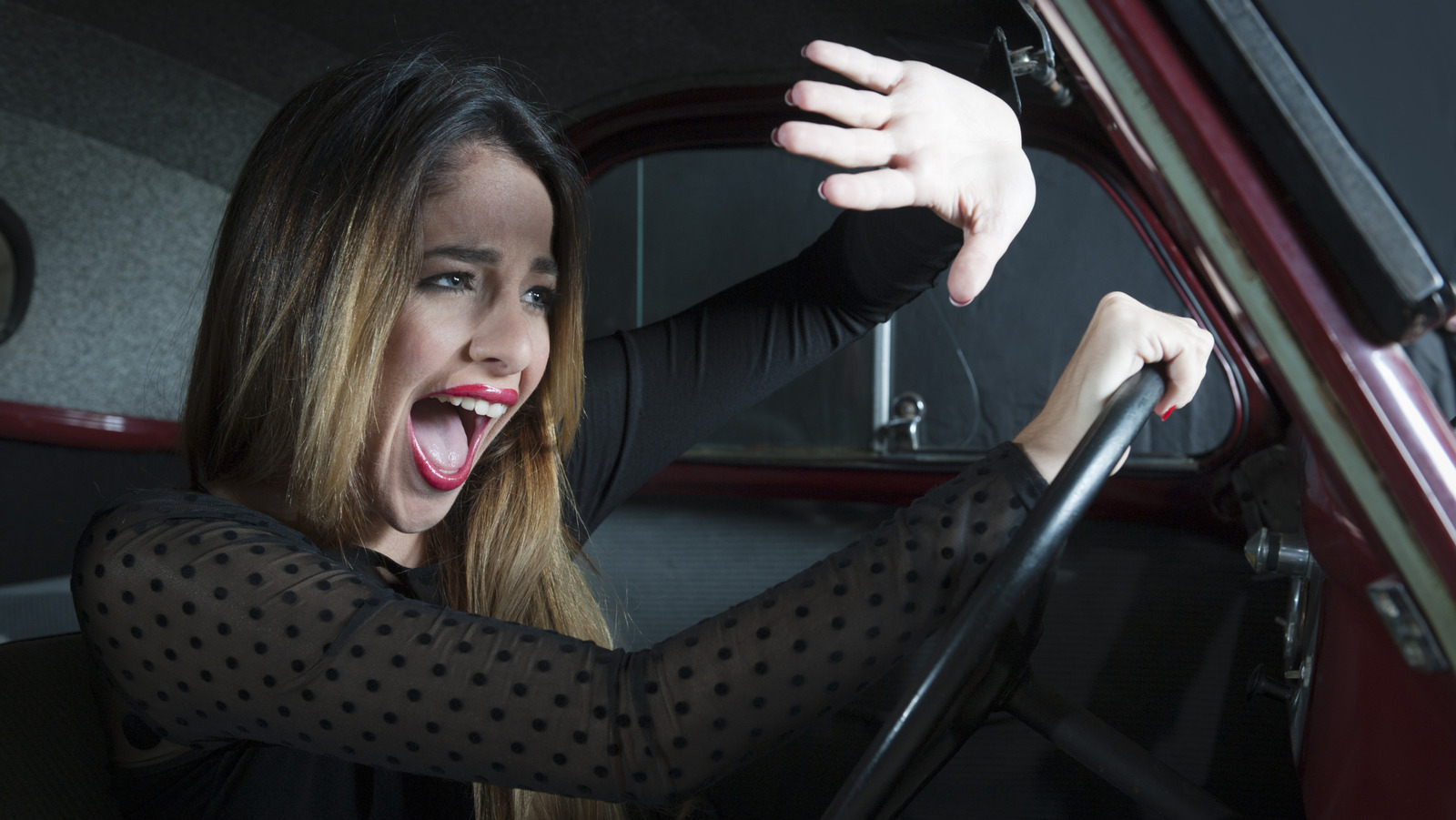
Now that Apple CarPlay (and to a lesser extent, at least in the U.S., Android Auto) are pretty ubiquitous, if there’s one car thing normal people love talking about, it’s headlight glare. And for good reason. Headlight glare is annoying as hell, and if, as I do, you have an astigmatism, it’s often even worse. Updating your prescription and keeping your glasses clean can certainly help, but, as I also found out recently, even new glasses can’t fix the headlight glare problem entirely. Which is a big problem, since not being able to see while driving obviously causes more crashes, right?
Not necessarily. In the video below, Insurance Institute for Highway Safety Media Relations Director Joe Young sits down with IIHS principal research engineer Matt Brumbelow to talk about headlight glare. And according to Brumbelow, when his team looked into the issue, they weren’t actually able to find evidence that headlight glare contributes to more crashes. That doesn’t mean it isn’t still a problem, just that the evidence that’s currently available doesn’t show an increase in glare-related crashes. Instead, the biggest contributing factor in nighttime crashes continues to be insufficient visibility.
That said, the available evidence is also somewhat limited, since only 11 states track glare as a contributing factor in their crash reports. Additionally, even in the states that do keep track of it, drivers have to report that glare was an issue before an officer can put it in their report, which means we don’t know exactly how many glare-related crashes go unreported. But while the data may be incomplete, from 2015 to 2023, IIHS researchers still looked at more than six million crashes and found that crashes that cited headlight glare as a factor stayed pretty consistent at a rate of about one or two per 1,000. Additionally, crashes caused by insufficient visibility dropped significantly.
Headlights are also getting better
When it feels like you’re constantly being blinded by oncoming headlights, news that headlights have gotten significantly better in the last decade probably isn’t much consolation. And yet, that’s also what IIHS data shows. When it began rating headlights for both glare and visibility back in 2016, only one of the 80 headlight systems tested earned a “Good” rating. Fast forward to today, and 51% of the 2025 model year headlight systems it tested earned a “Good” rating. And while 82% of the headlights they tested earned a “Poor” rating back in 2016, by 2025, that figure had dropped to 16%.
Of course, that’s still not great news. If 51% of new vehicles have good headlights, that still leaves 49% of new vehicles that don’t. On top of that, the vast majority of Americans don’t drive brand-new cars, and all those cars with bad headlights will probably stay on the road for years. Still, it’s at least nice to see things trending in a positive direction, especially at a time when it feels like most of what you see in the news is negative.
And while the IIHS is obviously going to be biased in its own favor, it does deserve credit for implementing a headlight test that appears to have directly contributed to automakers offering better headlights. As they mention in the video, federal standards are still stuck in the 1990s and don’t account for how high the lights are mounted on various vehicles, but now that IIHS won’t give an “Acceptable” safety rating to any vehicle with what it considers to be excessive headlight glare, it’s effectively forced automakers to offer better headlights. Especially since its coveted Top Safety Pick award requires standard headlights earn either a rating of “Good” or “Acceptable.”
Does any of this information change how frustrating it can be to drive at night? Not really. The next time you get blinded by an oncoming truck, “Just give it a couple of decades, and this will be much less of an issue,” probably won’t be very comforting. Still, it’s notable that the data doesn’t show a marked increase in glare-related crashes, even if we all know headlight glare is a big problem.

