


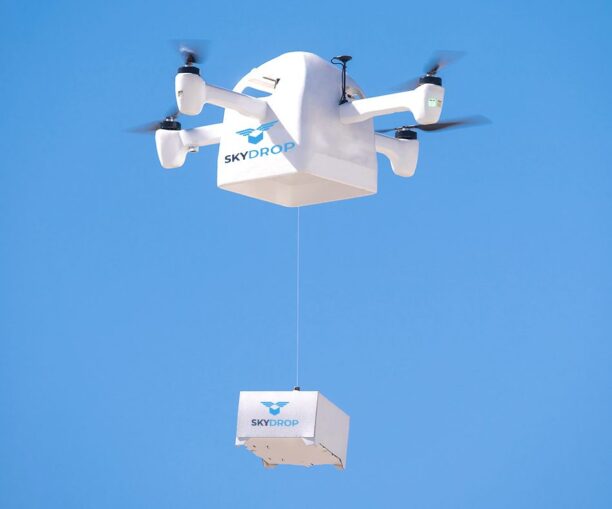
A Nationwide Environmental Framework With Long-Term Implications
Comments are due January 8, 2026 on the FAA’s Draft Programmatic Environmental Assessment (PEA) evaluating the potential environmental impacts of commercial drone package delivery operations conducted under Part 135 across the United States. Under the National Environmental Policy Act (NEPA), the FAA must assess environmental effects before approving or amending operating authorities. Until now, most drone delivery approvals have gone through project-by-project Environmental Assessments, each of which has resulted in a Finding of No Significant Impact.
With this draft PEA, the FAA proposes a nationwide, program-level environmental framework rather than reviewing each operation independently. The agency explains that a programmatic document allows FAA to analyze “the combined impacts of a group of related actions,” and to streamline future reviews through “tiering,” where later project-specific assessments would rely on this PEA except where additional local analysis is required.
If finalized in its current form, this PEA would help shape:
• which environmental effects FAA considers already addressed at the national level
• what operational assumptions future applicants must meet
• where additional site-specific analysis is still required
• what types of mitigation and siting practices operators are expected to follow
For drone delivery companies, communities, and public agencies, the result is a document that may influence how new operating areas are evaluated and how quickly future approvals can move forward.
What This PEA Covers
The proposed action analyzed in the draft PEA is the operation of commercial drone package delivery from local hubs to customers under Part 135 across the United States. Because specific hub locations and delivery corridors are not yet identified, the PEA does not analyze individual neighborhoods or flight paths. Instead, it evaluates impacts at a national level and defines boundaries for how future proposals will be reviewed.
The FAA identifies noise as the environmental category most likely to result in potential significant impacts and uses previously collected UAS noise data to establish a “unit capacity threshold.” The document evaluates operations up to a threshold of 1,150 Average Annual Day deliveries per hub and assumes hubs would be sited and operated to avoid significant noise exposure to sensitive land uses. Operators relying on the PEA would be expected to submit aircraft noise data and demonstrate that their proposed operations fall within the levels evaluated in the document.
Other environmental categories, including air quality, land use, and socioeconomic impacts, are screened out from detailed review on the basis that the operations described in the PEA are electric, decentralized, and located at previously developed sites, and therefore are not expected to generate measurable effects under the conditions defined.
The FAA notes that the PEA is intended both to streamline repetitive environmental reviews and to allow additional, tiered review in cases where specific proposals fall outside its scope.
Few Comments Submitted So Far, But High Regulatory Impact
Despite the potential scale and long-term impact of the document, relatively few comments have been submitted to the docket to date.
That limited participation stands in contrast to the significance of the framework under review. Once finalized, this PEA may influence:
• how future delivery hubs and service areas are evaluated
• what kinds of environmental data operators must provide
• how noise and community compatibility are characterized
• where additional site-specific environmental analysis is required
For operators, local governments, and nearby communities, this makes the current comment window a critical opportunity to shape how drone delivery growth is reviewed at the national level.
What Stakeholders Are Saying: Support With Constructive Concerns
Several early comments on the draft PEA have come from organizations deeply involved in UAS operations and community outreach, and many reflect both support for the concept of programmatic environmental review and specific issues where further FAA refinement is needed.
As Adrian Doko, President of the AUVSI Lone Star Chapter, explains: “A proactive approach to commenting on the benefits of drone delivery is indeed crucial for advancing the industry.” As an active participant with the ground-breaking DFW Test Site, Doko says that the benefits of drone delivery are clear. “Over the years, I’ve seen firsthand how these services contribute to both community well-being and environmental sustainability. By reducing traffic congestion, lowering emissions, and enabling faster access to essential goods, drone delivery represents an innovative and responsible solution.”
At the same time, Doko highlights two recurring areas where the draft PEA could benefit from stakeholder input:
• Setbacks. Current draft language implies setbacks — potentially as large as 600 feet — that are not supported by operational experience or community feedback. Several commenters, including Doko, note that such distances could move operations away from customers, undermining service utility while unintentionally suggesting that drone delivery operations are inherently disruptive.
• Sound measurement methodology. “We urge the FAA to avoid using “worst-case scenario” sound level exposure (SEL) data to set baseline requirements, as these do not represent the vast majority of UAS aircraft,” said Doko. “Instead, the FAA should recognize the diversity of drone technology by providing multiple groupings of different maximum takeoff weights (MTOW) with proportionate requirements.”
Collectively, these themes reflect broad support for drone delivery’s potential benefits, coupled with constructive feedback on how the environmental framework should better account for operational realities and technology diversity.
Why It’s Important to Comment Before January 8
Because this is a programmatic document, comments submitted now do more than respond to a single project or location. They help shape:
• the baseline environmental assumptions used nationwide
• how noise, risk, and community compatibility are characterized
• what data operators must supply in future approvals
• which issues are addressed at the national level versus local tiered review
For drone delivery operators, community leaders, public agencies, environmental advocates, and residents in current or future service areas, this is one of the clearest opportunities to influence how the FAA evaluates the environmental effects of drone delivery as the industry grows.
The public comment period closes January 8. Stakeholders who wish to weigh in on the methodology, assumptions, or thresholds in the draft PEA should submit comments before the deadline so their perspectives are included in the final framework.
Read more:

Miriam McNabb is the Editor-in-Chief of DRONELIFE and CEO of JobForDrones, a professional drone services marketplace, and a fascinated observer of the emerging drone industry and the regulatory environment for drones. Miriam has penned over 3,000 articles focused on the commercial drone space and is an international speaker and recognized figure in the industry. Miriam has a degree from the University of Chicago and over 20 years of experience in high tech sales and marketing for new technologies.
For drone industry consulting or writing, Email Miriam.
TWITTER:@spaldingbarker
Subscribe to DroneLife here.

