


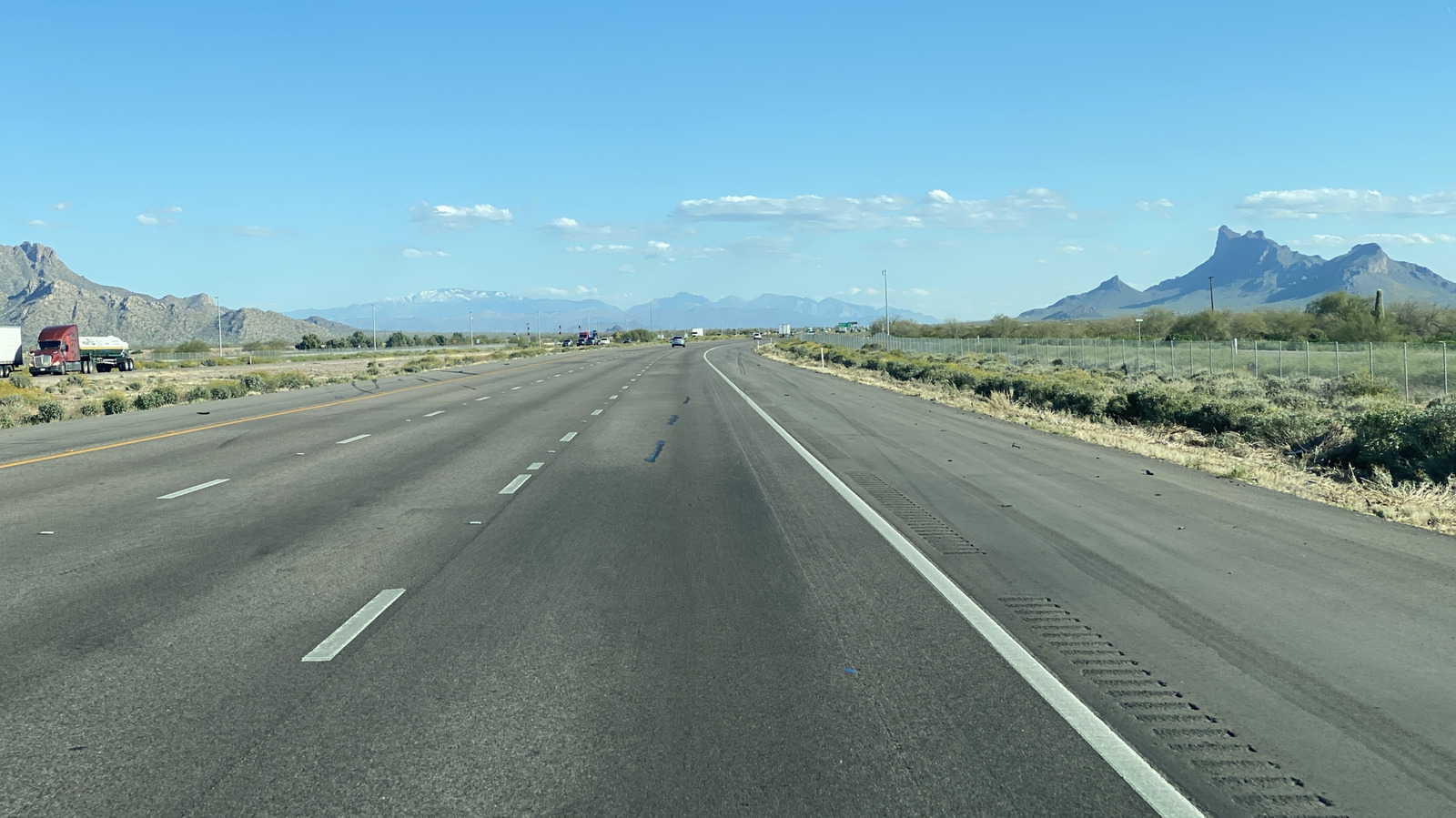
Many drivers with the need for speed lamented the demise of the “Montanabahn,” the period between 1995 and 1999 when the daytime speed limit on many of Montana’s highways was simply “reasonable and prudent.” You could blow by a cop at triple digits, as long as you did it safely. Arizona State Representative Nick Kupper has introduced legislation that, if passed, would bring a similar law to the Grand Canyon State, reports Arizona Daily Independent, creating what I will call the Zonabahn on rural highways across the state.
House Bill 2059, the Reasonable and Prudent Interstate Driving (RAPID) Act, would permit the Arizona Department of Transportation to designate derestricted speed zones for non-commercial vehicles during daylight hours. You couldn’t blast through Phoenix or Tucson, but most of Arizona’s highways are outside densely populated areas and could qualify. A speed limit of 80 mph would apply overnight, which is still higher than the current 75 mph limit, boosting Arizona to the top of our list of states where drivers can hit the highest speeds. If passed, another proposal to allow speed limiters rather than license suspension for speeding offenses may no longer be relevant on these highways.
There are some conditions to go along with this deregulation. Highways eligible for derestriction must undergo annual safety audits to ensure they haven’t become less safe. Drivers must remain in the right lane except to pass, which is already the law anyway. It is still possible to receive a speeding ticket in derestricted zones if the officer believes the speed is not reasonable or prudent under the current weather or traffic conditions, a driver’s reaction time, and the vehicle’s condition.
While Kupper isn’t hoping for an increase in road casualties, he does believes in a style of legislation that can best be described as letting Jesus take the wheel, saying “God gave us free will to make smart or stupid decisions,” according to AZ Central.
Speed differentials and road conditions

I spent three winters in Arizona, avoiding real winters, and have traveled extensively throughout the state. My camper van kept me slow in the right lane, but on my motorcycle, I had to make a real effort to keep my speed down to something resembling the speed limit on these rural highways. The flat terrain and excellent visibility (when there isn’t a storm) make it all too easy for the speed to creep up on you without noticing. However, even my inner speed demon realizes that there are some problems with this proposal.
Arizona doesn’t have safety inspections. What could possibly go wrong with uninspected vehicles in who-knows-what condition blasting across the desert at high speed? But not everyone would be driving fast. The RAPID Act would only remove speed limits for non-commercial vehicles, meaning that trucks and other commercial vehicles would still be required to obey them. People already come flying up behind trucks going 65 or 70 at speeds significantly faster than the existing 75 mph limit. Removing that upper limit would further increase that speed differential, and the Owner-Operator Independent Drivers Association cites studies showing that a higher difference in speeds increases the potential of a whopper of a truck crash.
Many Arizona highways are simply not in good enough condition for higher speeds. Truckers have called Interstate 40 in Arizona one of the worst highways in the U.S. I would rate parts of Interstate 10 not far behind it due to the badly rutted pavement in many areas, typically in the right lane where trucks usually drive. I can’t imagine hitting these ruts and bumps at 90 or 100 mph or more.
Finally, there’s the issue that eventually led to the downfall of Montana’s “reasonable and prudent” speed law, which Rep. Kupper may have overlooked when modeling his law after it. According to Car And Driver, Rudy Stanko fought a 1996 speeding ticket for 85 mph all the way to the Montana Supreme Court. It ruled in Stanko’s favor, saying that the “reasonable and prudent” speed limit was too vague, and that it “impermissibly delegates basic policy matters to policemen, judges, and juries for resolution on an ad hoc and subjective basis.” There is nothing in the RAPID Act that would stop a similar legal challenge if it passes. If it does, enjoy the Zonabahn while you can, but don’t expect it to last forever.

