


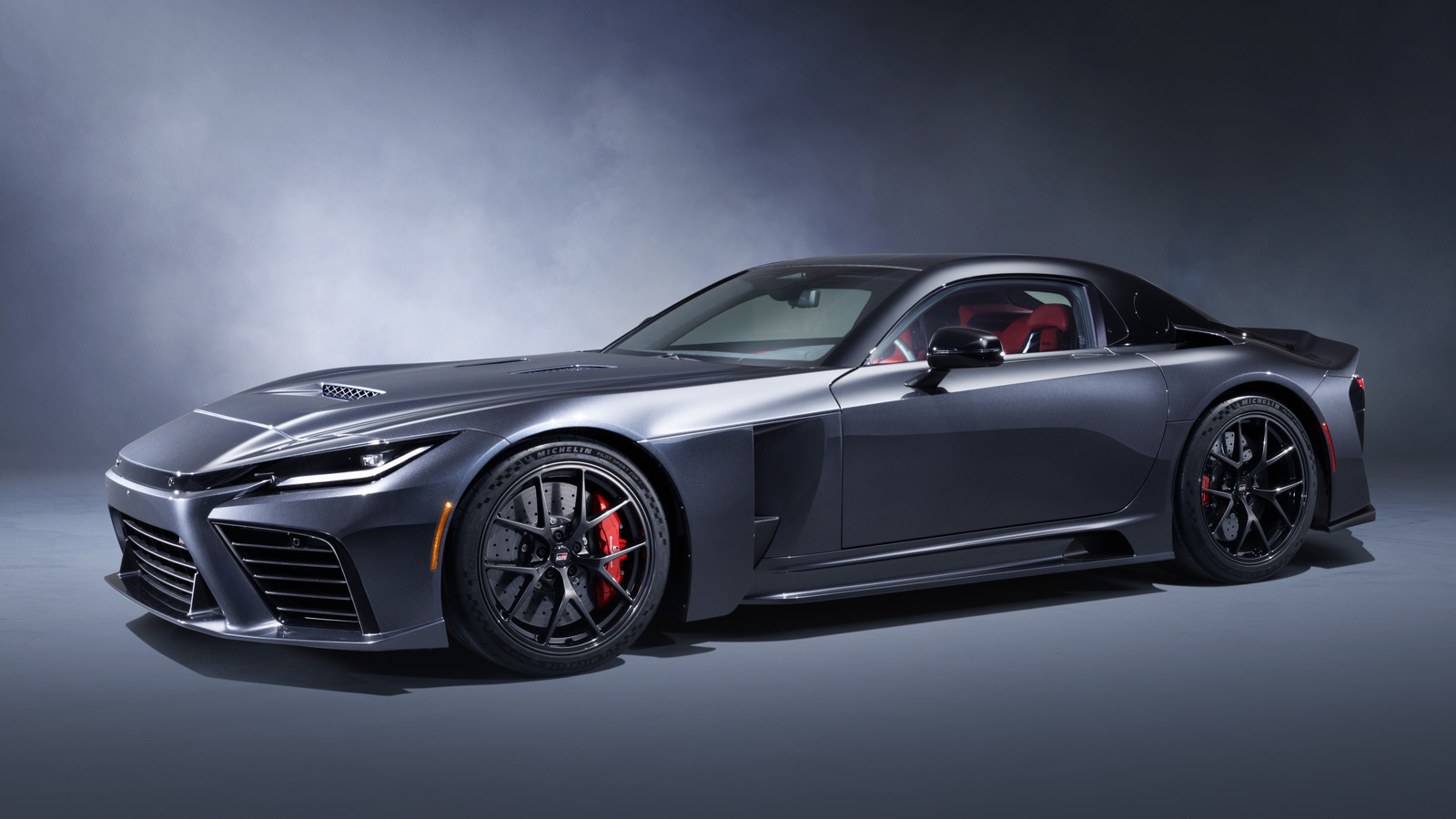
We’ve been eagerly anticipating Toyota’s LFA-succeeding front-engine supercar for years, having seen the GR GT3 race car concept in 2022 and a steady stream of teasers and spy shots since then. Toyota ripped camouflage prototypes of both the road car and the race car up the hill at Goodwood Festival of Speed last year, confirming their V8 power, but there’s still been a lot we didn’t know — especially how the model would be positioned within the Toyota lineup, and if there would be a Lexus version like the Sport concept suggested.
Well, we don’t have to wait any longer. Last night Toyota unveiled the production GR GT alongside the GR GT3 racing variant, and technically neither are actually Toyotas. This car is only Gazoo Racing branded, and it’ll be sold through its own special channels in Japan and at select Lexus dealerships in the U.S., likely for a price of close to half a million dollars. While it’s only being shown in concept form still, the automaker also confirmed there will be an electric Lexus variant, to be called LFA. Toyota says the new supercars are “defined by a driver-first approach to development that involves listening to, understanding, and fulfilling the needs of the person behind the wheel,” and that a one-team approach was taken in development with racing drivers providing vital input.
Lots of firsts
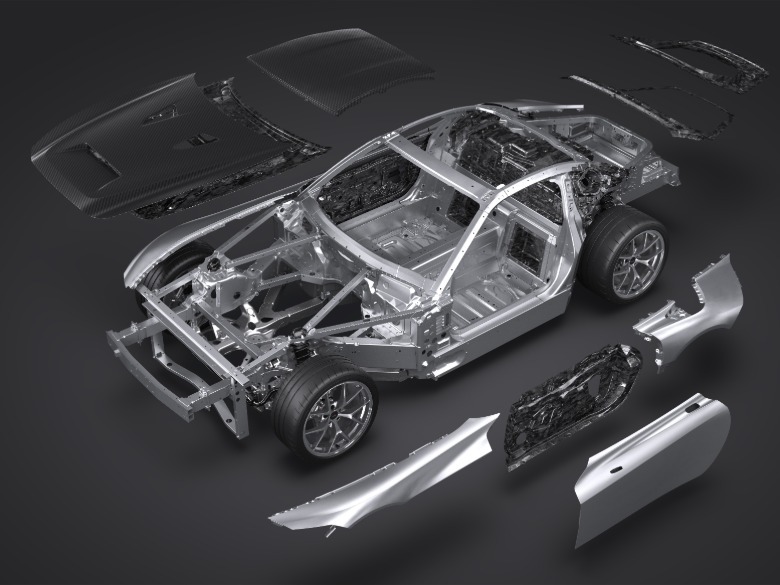
It all starts with the GR GT’s platform and packaging, which is quite extreme and gives the coupe dramatic proportions. It uses Toyota’s first all-aluminum body frame, though carbon-fiber reinforced plastic (CFRP) and other materials have also been used, with the aim of keeping weight down and rigidity high. The frame’s main structure uses large aluminum castings and has “optimal placement” of aluminum extrusions, with advanced joining technologies to put it all together. The inner door skins, hood, roof, and tailgate surround are all carbon, while the rest of the body panels are aluminum. Toyota says the basic structure and chassis components can be shared with the GT3 race car.
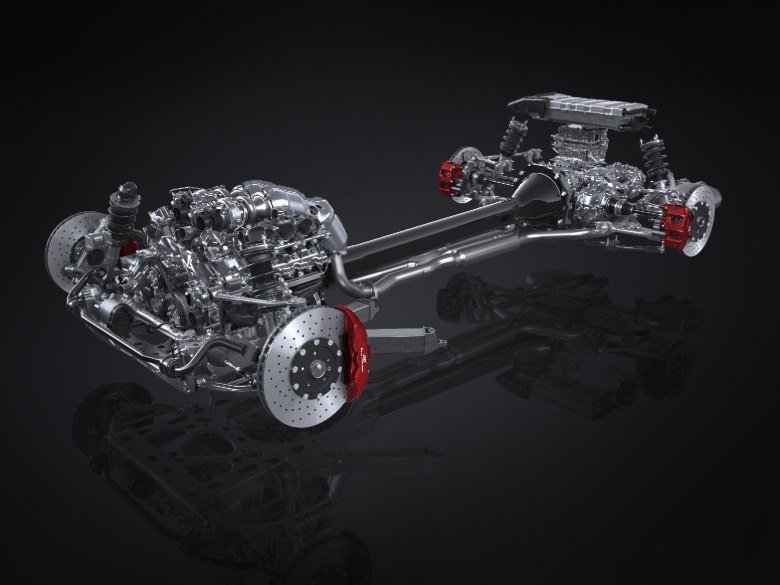
The GR GT’s suspension is a low-mounted double-wishbone setup with forged aluminum arms at all four corners, with Toyota saying the focus was “linear response and a high level of controllability, from everyday use to at-the-limit driving.” Its 20-inch wheels wear Michelin Pilot Sport Cup 2 tires developed specifically for this car, sized 265/35 up front and 325/30 in the rear. That’s a hell of a contact patch. Behind the wheels are Brembo carbon-ceramic brakes, and the vehicle stability control system offers multi-stage adjustment for braking control and driving force via a knob on the steering wheel.
At least 641 horsepower
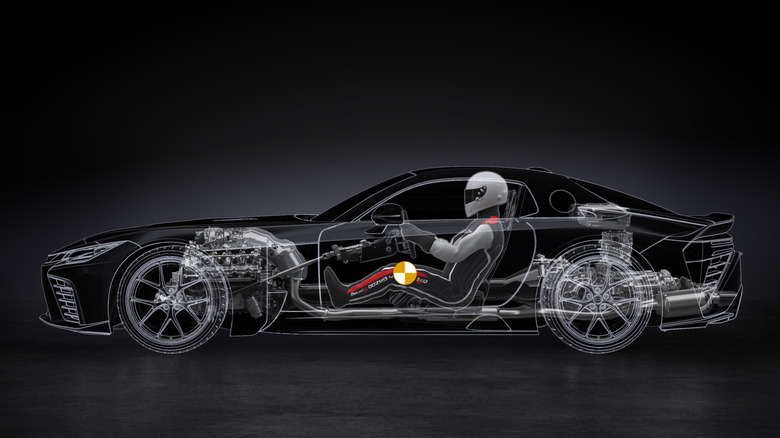
Then you add in the engine, which is Toyota’s first twin-turbocharged V8. The 4.0-liter engine was designed to be as compact and light as possible, with a bore and stroke of 87.5 x 83.1, the short stroke keeping its height lower. It has a hot-vee configuration, so there’s a turbocharger in each engine back, as well as dry-sump lubrication, both direct and port fuel-injection, and a thinner oil pan. The powertrain’s shove is sent to the rear wheels through a CFRP torque tube to the rear transaxle, which integrates an electric motor-generator, an 8-speed automatic transmission with a wet clutch instead of a torque convertor, and a limited-slip differential. In terms of how it sounds, Toyota says development was focused on “creating sound that enables interaction with the car and creating sound that conveys changes in thermal energy.”
 Toyota
Toyota hasn’t finalized the GR GT’s performance figures yet, but it’s targeting an output of at least 641 horsepower and 590 pound-feet of torque, and a top speed of at least 199 mph. Not bad. Because the engine is mounted so low and far back, and because of the placement of parts like the battery and fuel tank, it has a 45/55 front/rear weight distribution, which is quite wild for a front-engine car. Toyota says both the car’s center of gravity and the driver’s center of gravity are “roughly identical,” and it’ll weigh under 3,858 pounds.
 Toyota
And don’t worry, Toyota says that “to ensure continued sales, development is being undertaken to comply with increasingly stringent emissions regulations,” and that serviceability was also a major consideration. The Gazoo Racing team will also be providing support to both gentleman racers and professional teams using the GR GT3, which meets FIA standards. (Unlike the road car, the race car ditches the hybrid system.)
A focus on aerodynamics

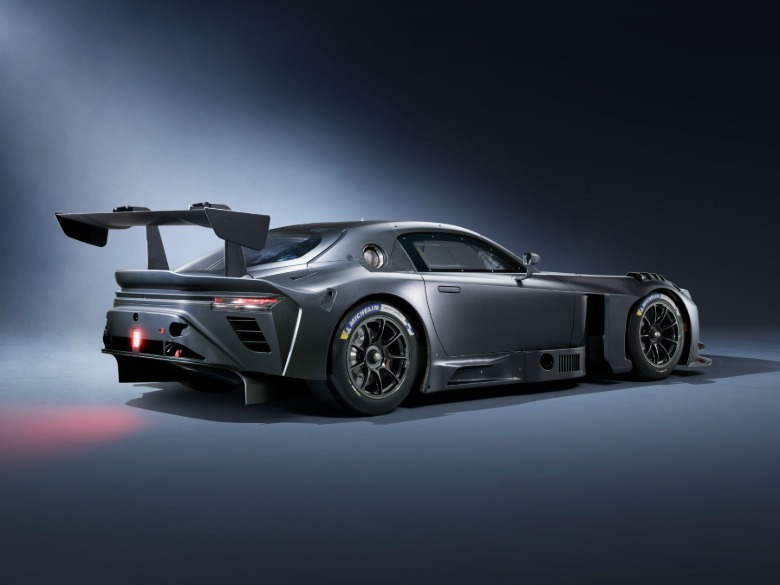
The roadgoing GR GT and racing GR GT3 look closer to each other than maybe anything else on the grid (save for the Porsche 911, I guess), and the styling is totally performance-driven. Toyota says aerodynamics engineers with experience in FIA WEC assisted in creating an aerodynamic model that then informed the car’s packaging, with aero efficiency and cooling performance being the most important aspects. Only after those targets were hit did the exterior designers start sketching with mass production in mind.
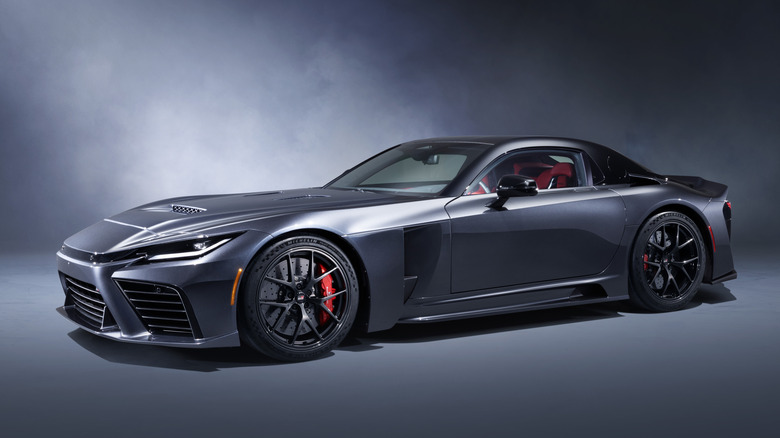
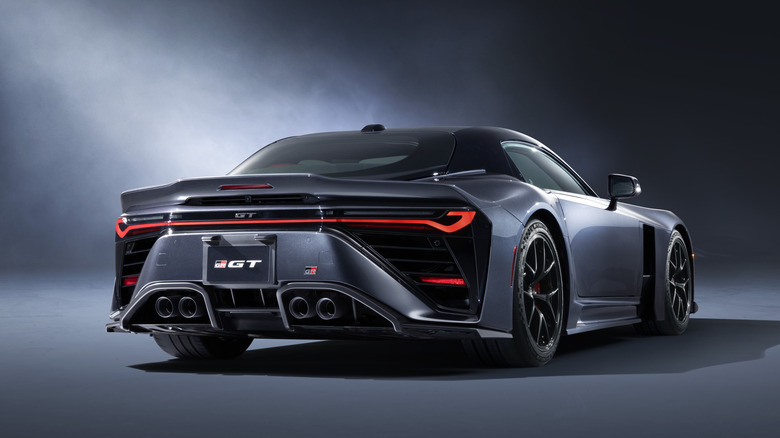
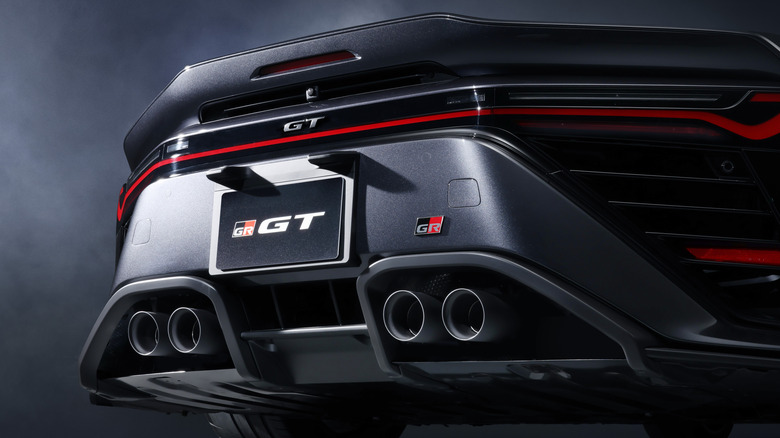
While it’s not exactly pretty, I think the GR GT looks awesome, and there are clear ties to past models like the Lexus LFA and Toyota 2000GT, as well as modern Toyotas in detailing like the headlight and nose shapes. Its hood seems impossibly long and low, the latter thanks to the powertrain packaging — the peak of the hood is just above the top of the front tires. The dash-to-axle ratio is also absurd, with the front fenders having dramatic vertical vents. While the body looks slab-sided at first, there’s a lot of nice detail to the surfacing, and the greenhouse has a classic sports car shape. At the rear, there’s a shapely taillight bar just below a ducktail spoiler, large air vents and four big exhaust tips placed in the diffuser.
 Toyota
It’s not just proportions and styling that make the GR GT look so dramatic, but its actual measurements. This thing is 189.8 inches long, more than a foot longer than the old LFA and a few inches longer than a current Mercedes-AMG GT. Its 107.3-inch wheelbase is about five inches longer than the LFA’s and slightly longer than the AMG’s. Overall height is just 47 inches, only about an inch taller than a Lamborghini Revuelto, and at 78.7 inches wide it’s nearly as thick, too.
Focused on driving
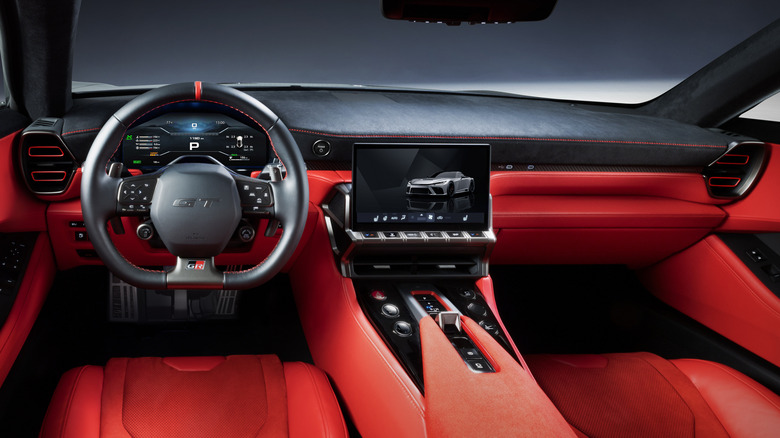
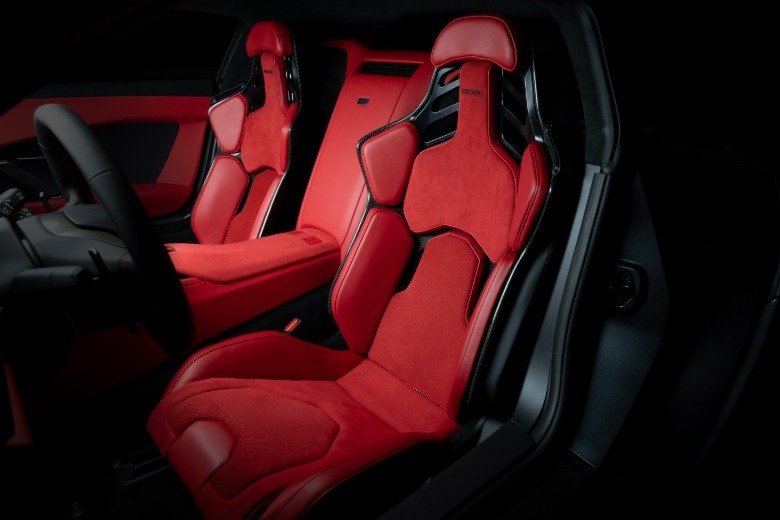
On the inside GR GT’s cabin looks great too, especially as parts-sharing with other Toyotas seems to be restricted to the window and mirror controls on the door panels. Toyota says driving position and visibility were the two most important elements, along with the various buttons and controls being positioned for ease-of-use by the driver. The center screen isn’t too big, mounted on a cool metal frame and freestanding from the shapely dashboard, with a row of physical buttons for volume and climate functions just below it. Toyota says a lot of work went into figuring out the ideal width, height and position of information in the digital gauge cluster so it’s quickly readable when driving on track.
 Toyota
The steering wheel is unique to the GR GT, and hopefully the metal paddles will have as satisfying a click as the ones in the LFA. The shifter is a little toggle switch on the center console, flanked by some round buttons for commonly-used features like the 360 camera and front lift. One major thing I don’t see are cupholders, but there does seem to be both a glovebox in front of the passenger and a storage cubby between the seats, which themselves are extremely cool carbon-backed Recaro buckets.
The trickle-down effect
Beyond Toyota’s racing drivers working alongside the engineers, the GR GT development was also an opportunity for younger employees to learn from longtime experts that worked on cars like the LFA. The automaker relates it to the traditional Japanese shrine ritual called Shikinen Sengu, in which a Shinto shrine’s core structures and furnishings are rebuilt every few decades as a way to pass down manufacturing and artisan skills to new generations. Says Toyota:
Positioned as flagships in the footsteps of the Toyota 2000GT of yesteryear and the Lexus LFA, one of the aims of the development of the GR GT and GR GT3 was to preserve and pass on “the secret sauce of car-making” to the next generation as “Toyota’s Shikinen Sengu”. The two models are the result of veterans of development of the Lexus LFA transferring skills and techniques to younger members, the active adoption of new, Toyota-first technologies for enhanced vehicle performance, and the taking on of numerous unprecedented challenges.
In developing the GR GT and GR GT3, TGR employed multiple methodologies that leverage insights gained from competing in motorsports. The use of driving simulator-assisted vehicle research and development, which is now common in race car development, is an example of such. Introducing driving simulator use early in the development process enabled efficient refinement of fundamental vehicle characteristics from the outset. In addition to using simulators in the creation of each component, extensive real-world testing was done not only on test courses, such as the one at Toyota Technical Center Shimoyama, but also at circuits around the world, including Fuji Speedway and the Nürburgring, enabling verification of at-the-limit driving performance and durability. GT GR testing also took place on public roads to give the model the ability to provide exhilaration, ease of handling, and peace of mind in everyday use.
Toyota says it will be launching both the GR GT and GR GT3 in 2027, with more details about both to come throughout the development process. We can’t wait.

