


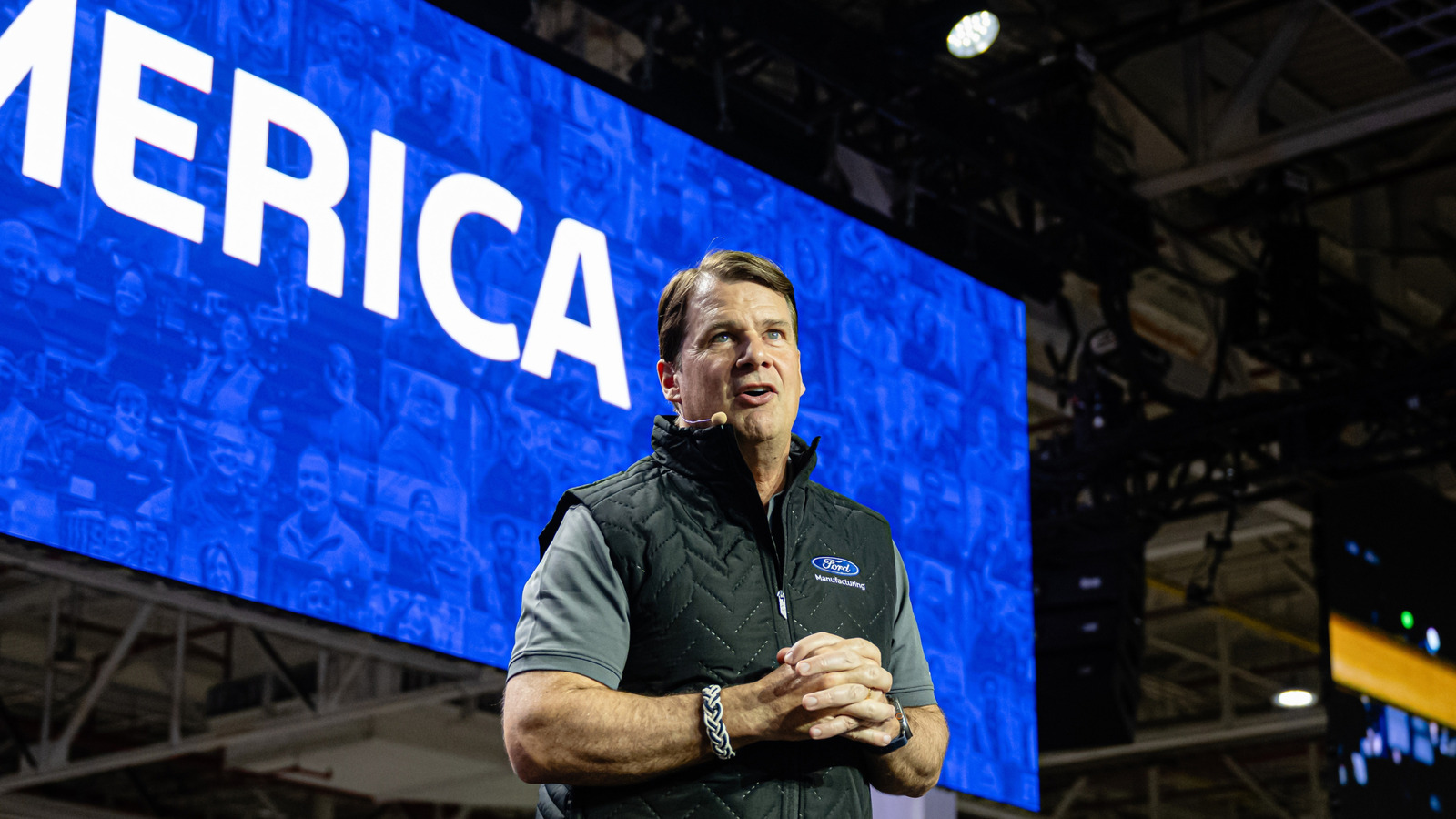
Ford CEO Jim Farley has been out on the stump for several months now, talking about what he calls the “Essential Economy.” He defines this as the roughly 95 million jobs that sustain the backbone of the country, in fields such as construction and agriculture. And skilled trades, including auto mechanics. Farley is also worried – he says that Ford’s dealers currently have 5,000 unfilled openings for technicians, and that the positions could pay $120,000 a year.
This is from the New York Post (citing Farley’s comments on the University of Tennessee’s Haslam College of Business’ “Office Hours” podcast):
“We are in trouble in our country. We are not talking about this enough,” …Farley said. “We have over a million openings in critical jobs, emergency services, trucking, factory workers, plumbers, electricians and tradesmen. It’s a very serious thing.”
Farley is right. Auto technicians are expected to be in high demand into the next decade, but the current generation is retiring and not being replaced by younger workers who want to enter the trade. As he pointed out on the podcast, however, Ford’s dealers need trained mechanics, not just self-taught wrenchers. It can take five years, he said, to properly educate a tech to do something like yank a diesel motor out of a Super Duty pickup.
Supply vs. demand
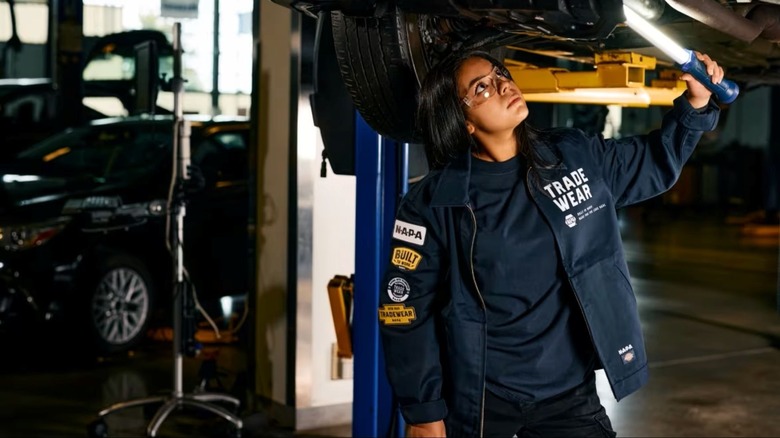
From Farley’s perspective, Ford’s problem in this area is clearly not about demand. The company’s dealers need the skills, and Farley was careful to note that the jobs are ready to go: a technician gets a bay, a lift, and all the tools they require. So what’s undermined the supply? Well, cost is a factor – a major factor. According to the Department of Education’s Integrated Postsecondary Education Data System, an auto technician can expect to spend almost $26,000 a year to attend a trade school.
To partially alleviate that pain point, Ford and its dealers have gone from investing $1 million in a scholarship program that kicked off in 2023 to $4 million earlier this year. That total makes $5,000 scholarships available to 800 prospective auto techs at around 600 schools, Ford said. “In addition to tuition assistance, scholarship funds can be used to cover day-to-day related expenses like living and transportation, childcare, and tools needed for class and more,” the company added. If Farley and Ford continue to be unable to fill the thousands of openings for techs, that $4-million investment could climb higher. It’s worth remembering that customers tend to get upset when dealerships can’t quickly fix vehicles.
A national security issue
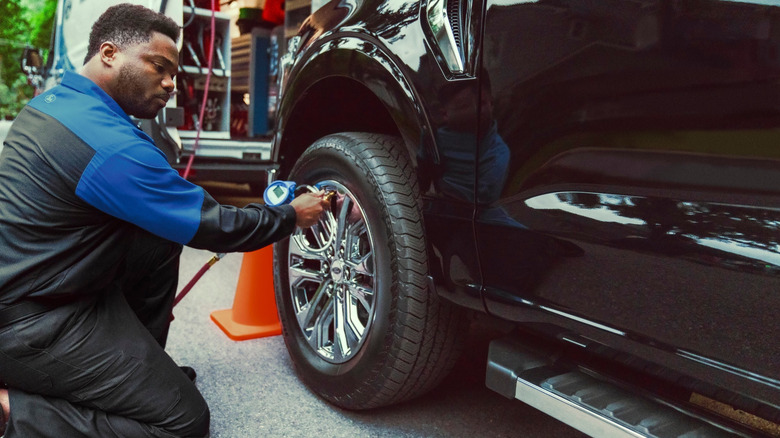
As the CEO of America’s second-largest carmaker, Farley has also framed his concerns about the “Essential Economy” in national-security terms. He thinks that the country can’t protect itself or enter a potential conflict without the technical skills that he considered to be in short supply. It’s probably a good thing to have a significant business leader making this case nationwide, as the trend for decades has been to steer young people into four-year college degrees. But a weakening labor market, combined with ever-rising educational costs, has prompted a debate about whether college is still worth it.
The Federal Reserve Bank of New York says that it absolutely is. The return on investment is between 12-13 percent, and the wage premium is considerable: a high school degree alone gets you a median of $47,000 annually while $80,000 is what you can expect for a bachelor’s. According to the NY Fed, this “wage premium” is currently near all-time highs. Of course, none of this means that you should ignore Farley’s plea to come work for Ford and make 120 grand. What it does mean is that, if you’re at all interested in entering the skilled trades, this is a pretty good time to evaluate your options.

