



October 28, 2025
Did you know that your sweat can actually tell you a lot about your health?
What your sweat says about your well-being: 5 key signs to look out for
Sweat. It’s that natural bodily function we all experience, especially when pushing our limits, feeling the heat, or just plain stressed out. But did you know that your sweat can reveal a lot about your health? That’s right—those beads of perspiration aren’t just cooling you down; they’re sending you signals about what’s going on inside your body. Degree dives into the world of sweat to uncover what those drops might be trying to tell you.
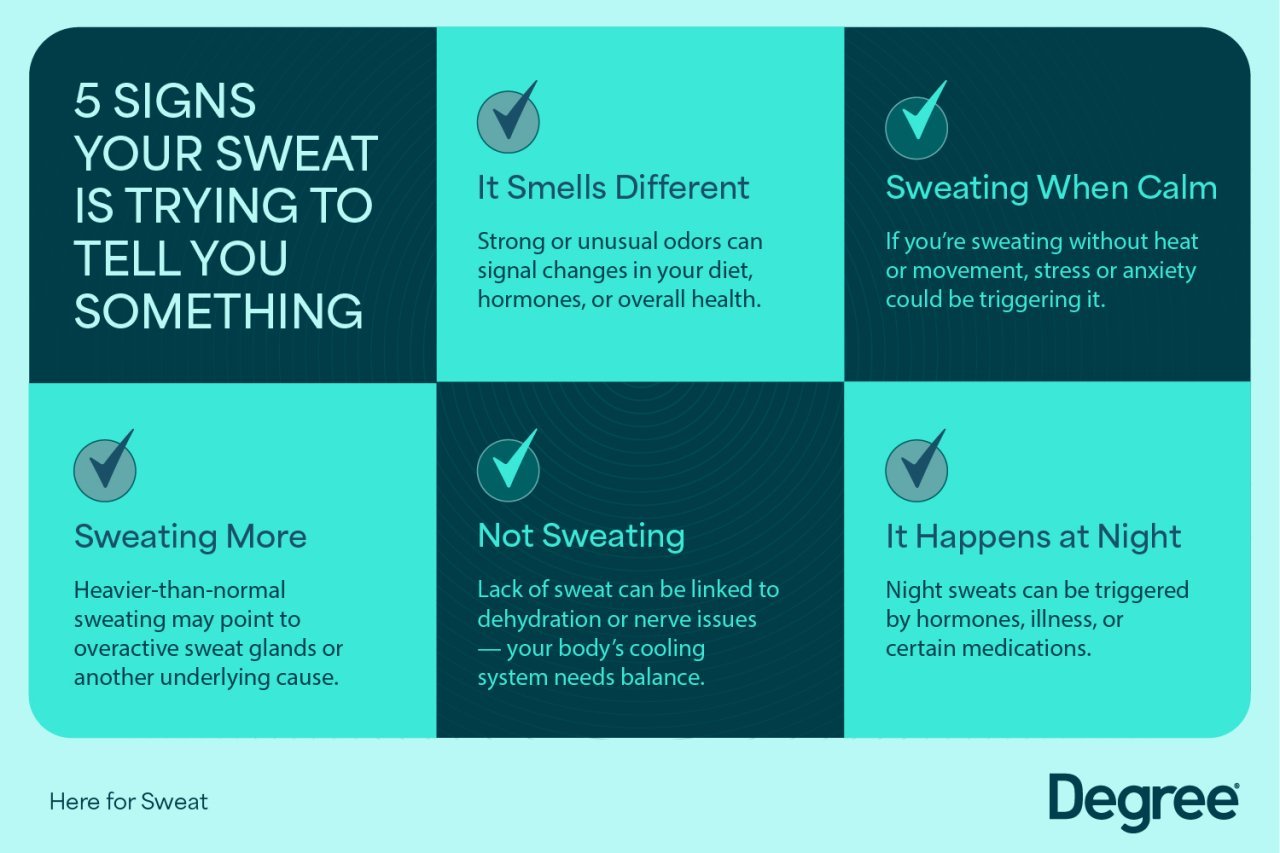
1. The smell test: What different sweat odors mean
Ever caught a whiff of your own sweat and thought, “Why do my armpits smell like onions?” Or maybe you’ve noticed a scent that’s more like celery, cumin, or even fish. Believe it or not, these distinct smells can be more than just a quirk of your body chemistry—they can be indicators of underlying health issues.
Armpits smell like cat pee
If your sweat smells like cat pee, it could be a sign of a metabolic disorder called trimethylaminuria. This condition makes it hard for your body to break down certain compounds, leading to a strong, ammonia-like odor.
Armpits smell like celery, cumin, or curry
If your sweat smells like celery, cumin, or curry, your diet might be to blame—eating these spices often can literally seep through your pores. But it’s not always food. Sometimes, this unusual odor can signal metabolic changes or even infections. So, if the scent lingers and seems off, it’s worth checking with a doctor.
Armpits smell like fish
A fishy odor can also be linked to trimethylaminuria, but it might be worth checking for other conditions, such as liver or kidney issues.
Armpits smell like garlic
Garlic in your diet can end up in your sweat, leaving you with that unmistakable odor. But if garlic hasn’t been on the menu, your body could be sending you a different signal. A lingering garlic smell from your pits could point to metabolic issues or even certain infections.
2. Stress sweat vs. regular sweat: What’s the difference?
We’ve all had those moments—dripping in sweat before a big meeting or during a tense situation. Stress sweat is different from workout sweat. It comes from your apocrine glands and packs a more pungent smell because it’s full of proteins and fats that bacteria love to break down.
Stress, anxiety, and hormone imbalances can all trigger excess sweating. If you’re constantly drenched during stressful moments, it might be time to try a powerful antiperspirant that fights odor for up to 72 hours.
3. Excessive sweating: When is it a problem?
Sweating is natural, but if you’re sweating too much—called hyperhidrosis—it could signal something like a thyroid problem or diabetes. Hyperhidrosis pushes your sweat glands into overdrive, leaving you feeling constantly damp and uncomfortable. Managing it often requires advanced treatments, like clinical protection deodorants.
If you’re sweating loads for no clear reason, it’s a good idea to check in with a healthcare professional.
4. Night sweats: When should you be concerned?
Waking up drenched in sweat can be pretty unsettling. Night sweats can happen for lots of reasons—anything from menopause and hormonal shifts to infections or even chronic conditions like tuberculosis or certain cancers. If night sweats are becoming a regular thing, it’s important to check in with a doctor to rule out anything serious.
5. Changes in sweat patterns: What to watch for
Sudden changes in how much or where you sweat can be a warning sign. If you’re sweating in new areas, it might point to an endocrine issue. Conditions like diabetes or menopause can throw off your sweat patterns, and even changes in diet or meds can affect how much you sweat.
On the flip side, not sweating enough—or at all—can be just as alarming. Anhidrosis, the inability to sweat, could mean you’re dehydrated or dealing with another health issue. If you’re not sweating during exercise or hot weather, it can be dangerous. Stay hydrated and listen to your body.
Tips to manage unusual sweating
Managing unusual sweating involves a combination of lifestyle changes and effective products. Here are some practical tips:
- Stay hydrated. Drink plenty of water, especially during workouts or hot weather.
- Monitor your diet. Certain foods can affect your sweat odor. Keep an eye on what you eat and how it impacts your sweat.
- Use antiperspirant deodorants. Choose antiperspirant deodorants that effectively tackle sweat and body odor.
- Consult a healthcare provider. If you notice significant changes in your sweat patterns or odors, seek medical advice to rule out underlying conditions.
Sweat isn’t just a way for your body to cool down; it’s a valuable indicator of your overall well-being. From distinct odors to changes in sweat patterns, paying attention to your sweat can help you catch potential health issues early. The next time you break a sweat, take a moment to consider what your body might be trying to tell you. Whether it’s a subtle hint or a glaring red flag, your sweat is more than just a byproduct of exertion—it’s a messenger of your health.
This story was produced by Degree and reviewed and distributed by Stacker.
RELATED CONTENT: K. Michelle’s Expertly Clears Delusional Journo During Interview, Affirming Her Rightful Place In Country Music

